Mt Fuji Bike Tour Overview
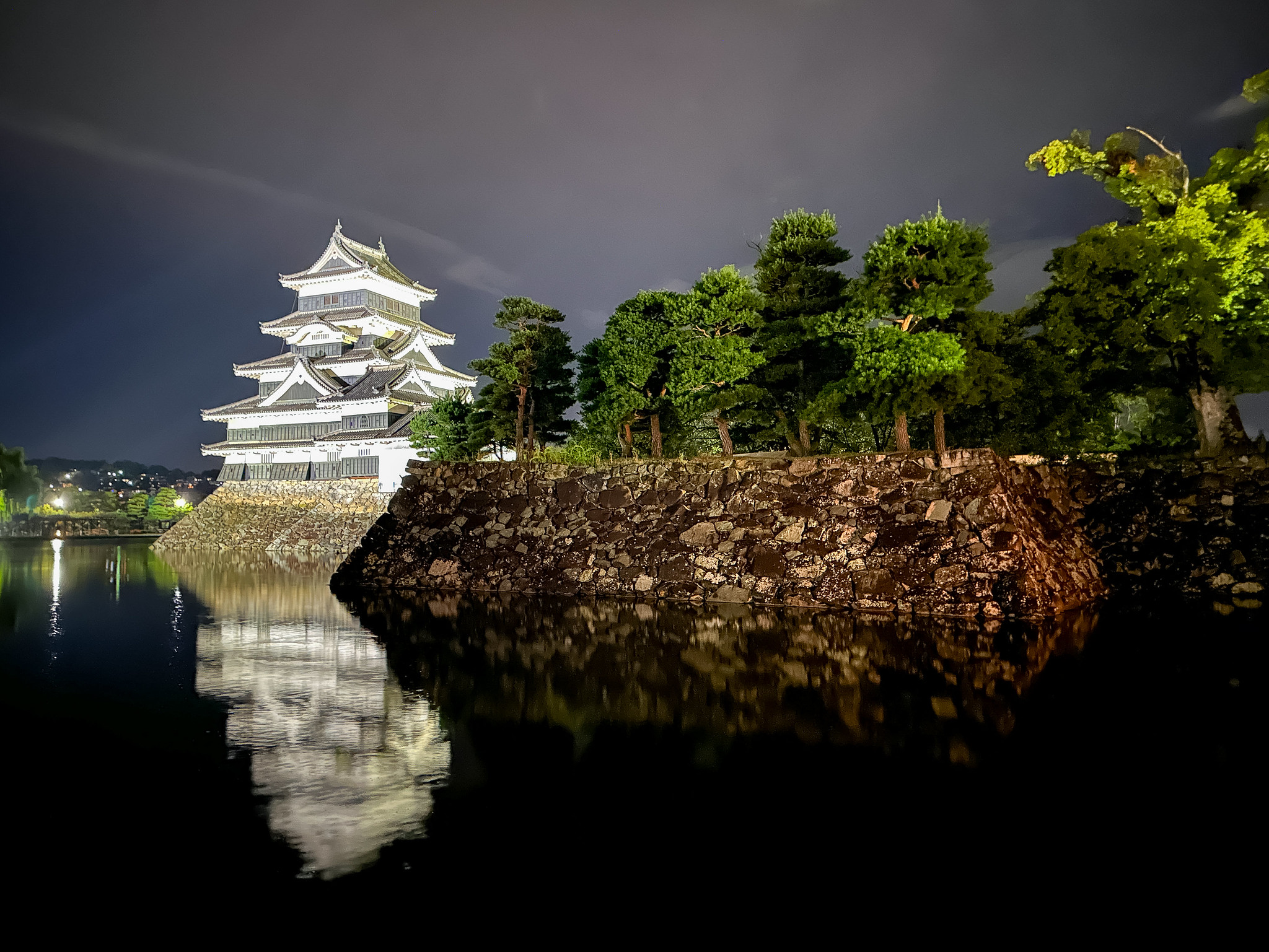
Traverse Japan from north to south, cycling through historic and scenic landscapes. From Matsumoto’s Black Crow Castle to Mt. Fuji’s majestic peaks, explore the Fuji 5 Lakes and Izu Peninsula’s coastal villages. Ride past the legendary Black Ships landing site, witness the intersection of samurai heritage and modernization, and experience the diverse cultural and geographical tapestry of Japan’s alpine regions.
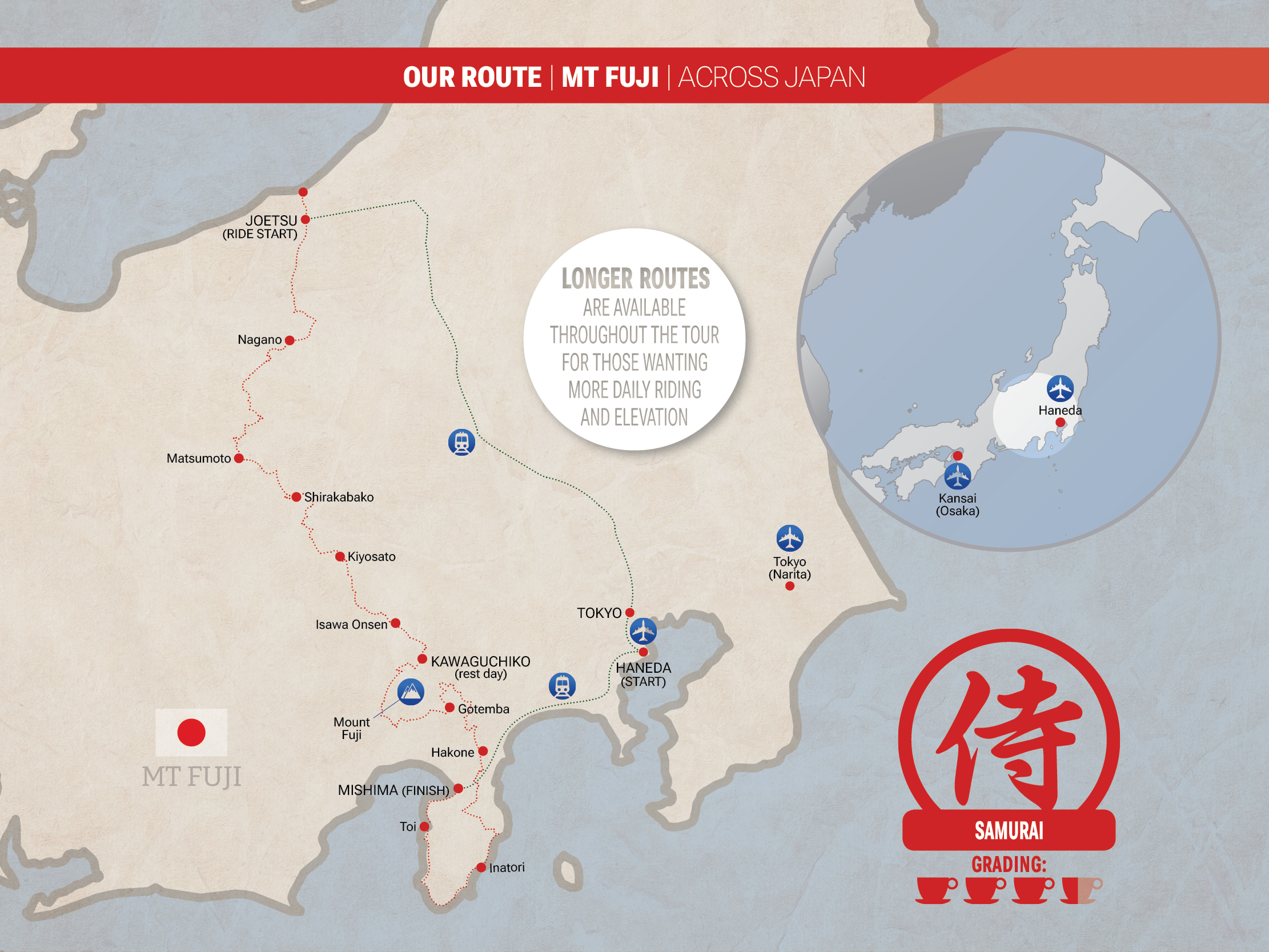
Mt Fuji is a standalone tour. It can be combined with the Hokkaido and Honshu Island tours.

Our Favourites Album

Team Members on this Tour
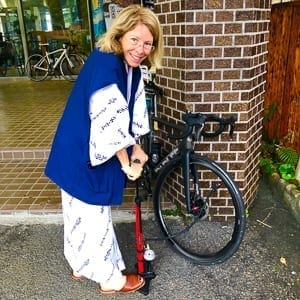
Eri Nozawa - Trip Specialist

First cycling memory:
Pedaling very wobbly without practicing wheels on my beautiful red Bridgestone bike
Favourite bike:
My current Bridgestone bike Anchor. She takes me to so many places and opens my world wider!
Top climb:
Niseko Panorama Line with the view
One thing on your bucket list:
Bike packing in Europe
A special skill you bring on tour:
Positive vibe with an extra watt and smile. Also I can introduce my daily breakfast at home if you are interested!
Favourite Ride and Seek tour gastronomic experience:
EVERY meal after cycling, and first sip of beer after cycling.
Languages:
Japanese & English
Ride and Seek tours you lead:
Samurai tour, and hopefully many more
Nathan Hunter - Trip Specialist
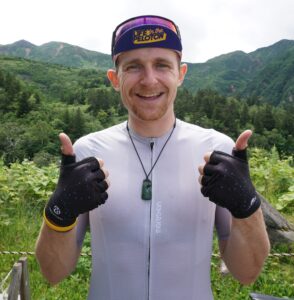
First cycling memory:
It was going on holiday to France with my parents from age 5 and riding my bike around the campsites. I would make up my own Tour De France races, pretending I was a pro and getting my Dad to time me.
Favourite bike:
It has to be my Cannondale Super Six Evo aka Rainbow Chan. Good for long rides, road races, climbs, it takes me everywhere.
Top climb:
Any climb with a switchback, the more the better. Right now it has to be Niseko Panorama Line.
One thing on your bucket list:
To ride the iconic stages/ Climbs of the Tour De France or Giro D'Italia.
A special skill you bring on tour:
My love of talking all things cycling. In Japanese, I'm a bit of a cycling otaku.
Favourite Ride and Seek tour gastronomic experience:
A stop at a convenience store like 7/11 or Lawson to pick up a great Japanese cycling snack like Yokan!
Languages:
English (Scottish Accent Included) and Japanese.
Ride and Seek tours you lead:
Samurai Japan Tours
Mt Fuji Bike Tour Highlights
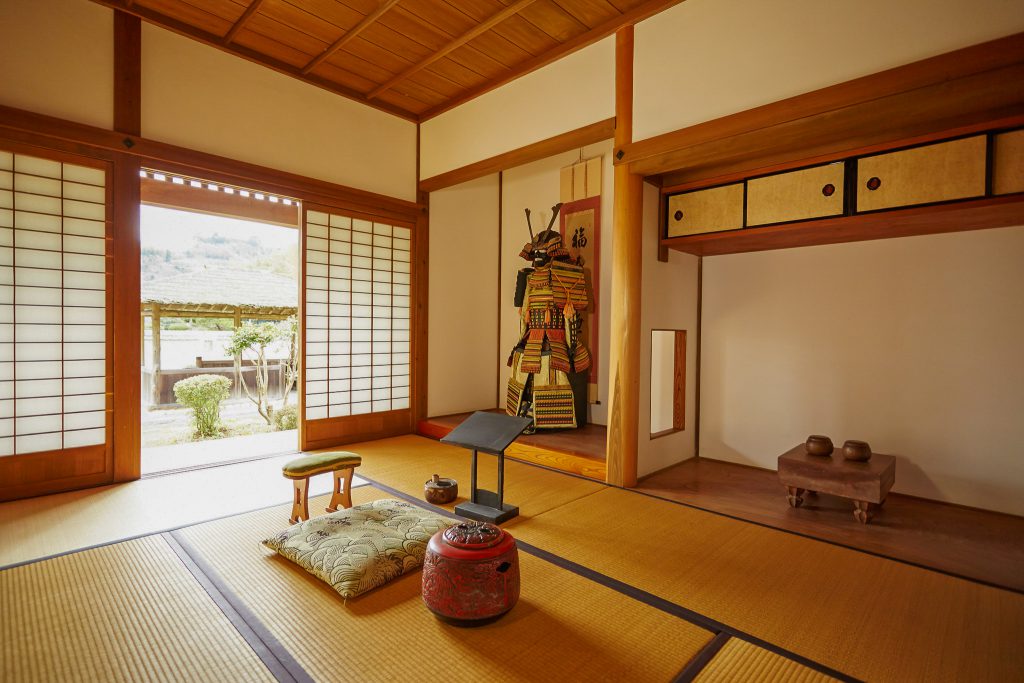
– Explore the ancient Samurai roads and learn about this fascinating period in history.
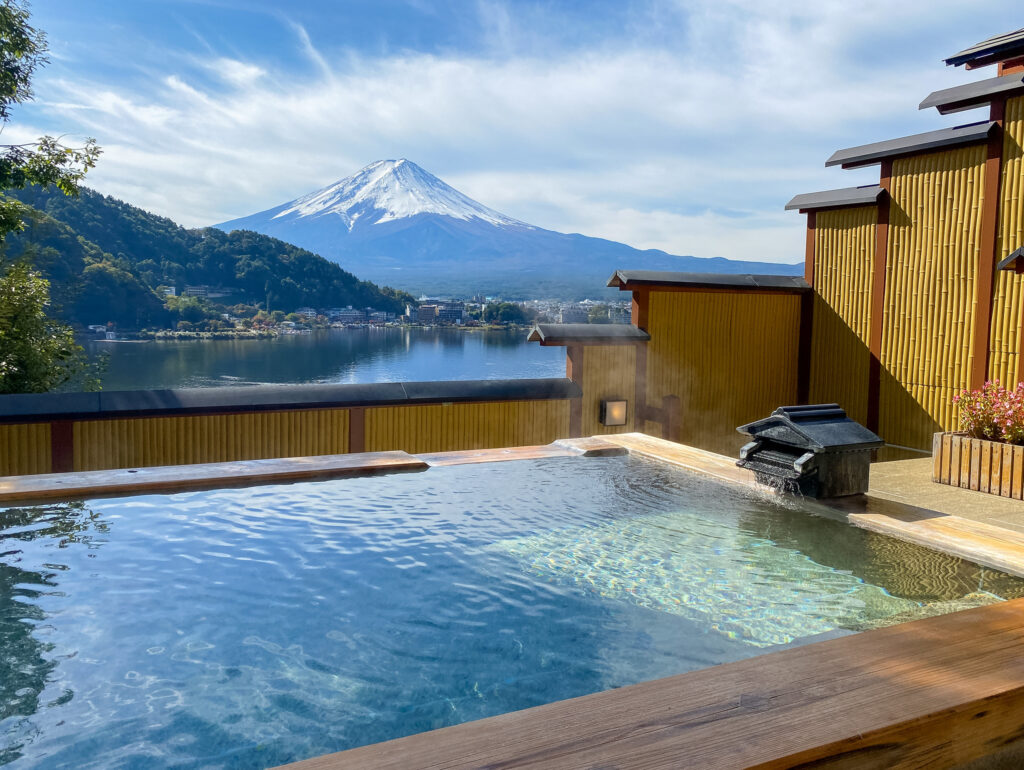
– Indulge yourself in the natural hot springs offered by most of our accommodations.
– Discover the unique tastes of Japanese cuisine that are distinct and varied across the islands.
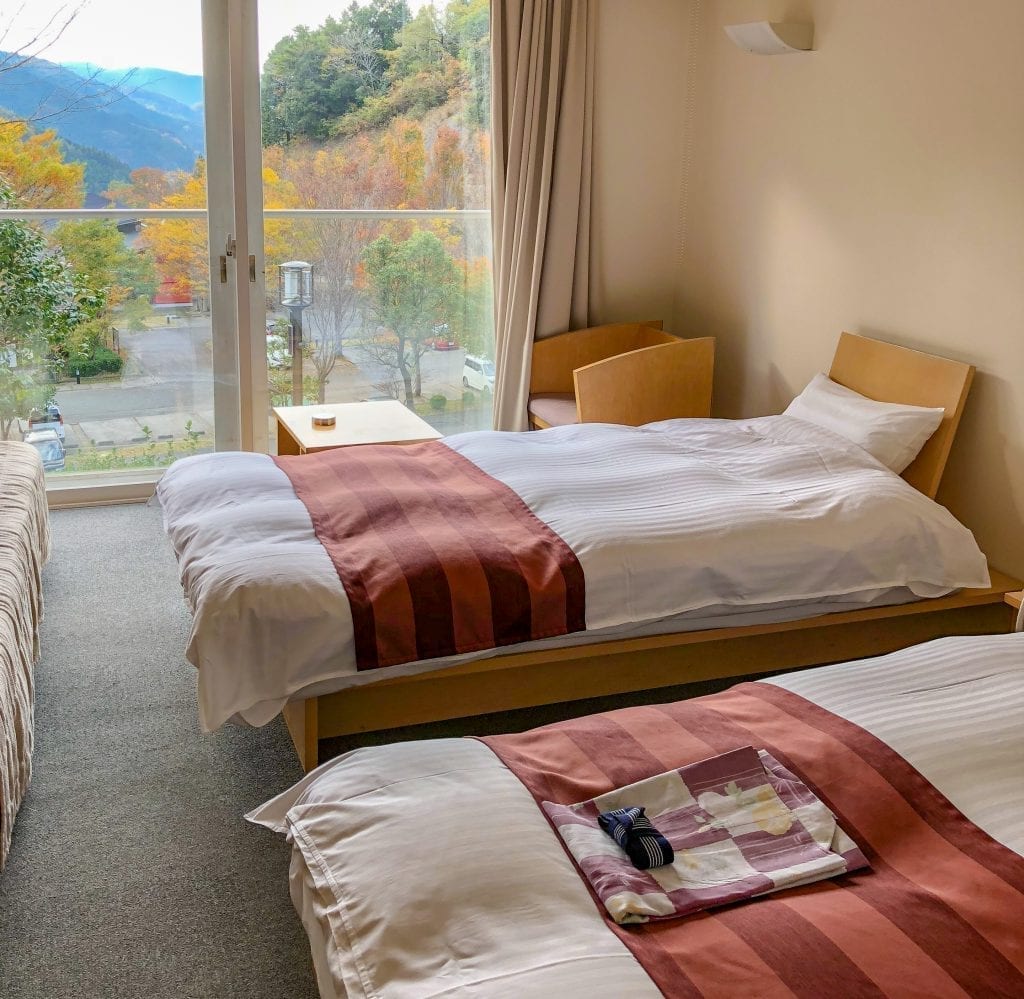
– Experience the delights of Japanese style inns that offer a very different hotel experience to what you might be used to.
– Ride across Japan from North to South, exploring historic landmarks like the Black Crow Castle in Matsumoto, Japan’s oldest original castle.
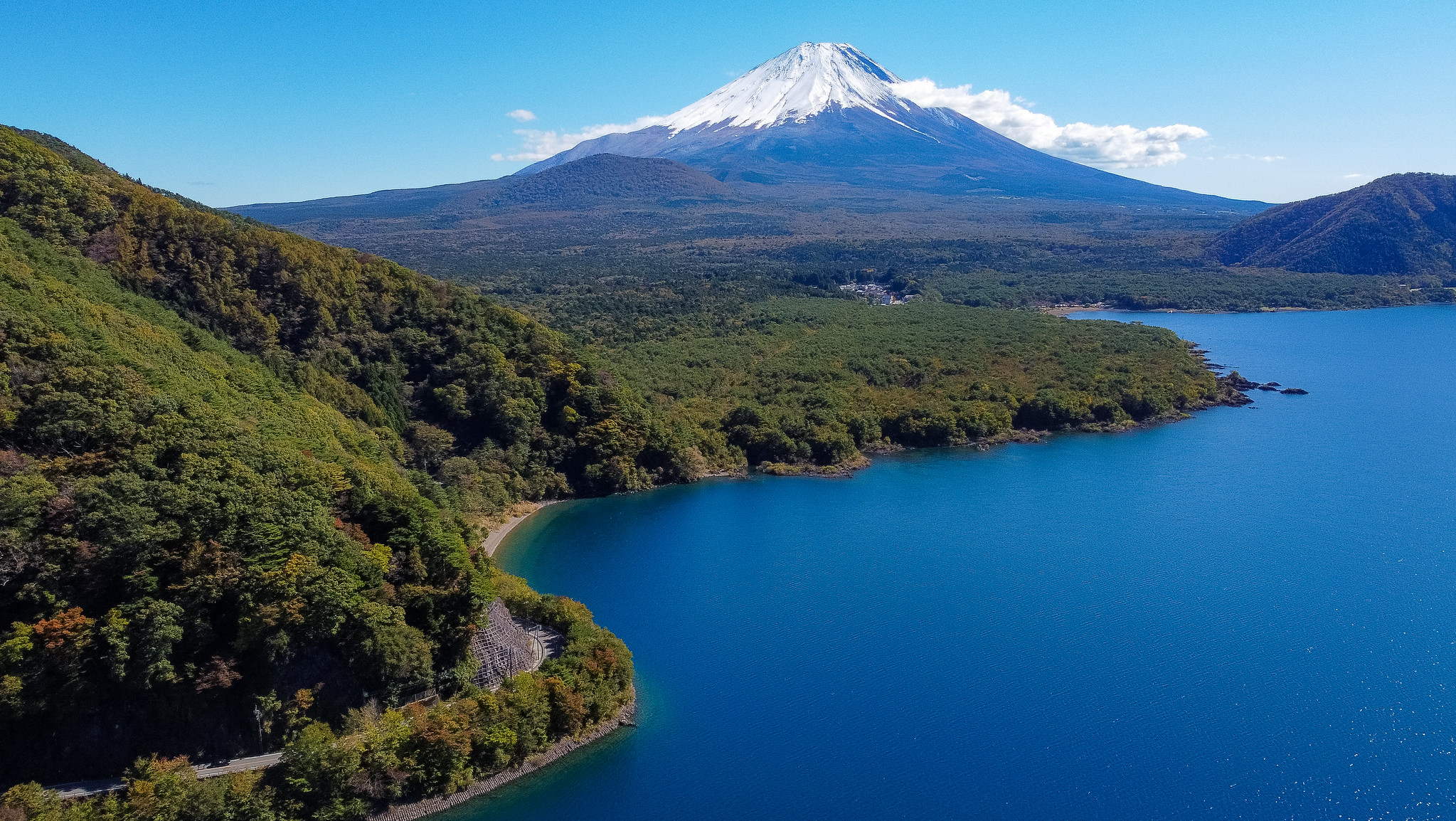
– Cycle around Mt. Fuji, experiencing incredible views of this iconic Japanese mountain from the Fuji 5 Lakes, with the option of riding up the volcano.
– Explore the Izu Peninsula, passing through fishing villages and onsen towns, with Mt. Fuji visible from the shores of the Pacific Ocean.
– Ride past the site where the famous American Black Ships landed, a catalyst for ending feudalism and starting Japan’s rapid modernization during the samurai era.
– Experience diverse landscapes and cultural highlights throughout the Alps that have sheltered much of Japan’s ancient history, on this epic cycling tour across Japan.
Mt Fuji Tour
Tokyo
Tokyo Haneda HND Airport
6pm
Tokyo Haneda HND
Joetsu
The transfer from Haneda to Joetsu is included
Mishima
Tokyo Haneda Airport HND
The transfer from Mishima to Haneda Airport is included. We recommend booking flights departing after 17:00 to allow time to collect your luggage and pack up your bike if required. Guests will travel by train, and guides will transfer luggage and bikes in the van. Bike boxes/bags will be stored at Villa Fontaine Grand Haneda Airport for the duration of the tour.
Mt Fuji Bike Tour Dates 2026
| Stage | Start Date | End Date | Days | Cost |
|---|---|---|---|---|
| Mt Fuji – Across Japan | 19th Sept | 4th Oct | 16 (15 nights) | US$10,200 |
Mt Fuji Bike Tour Dates 2027
| Stage | Start Date | End Date | Days | Cost |
|---|---|---|---|---|
| Mt Fuji – Across Japan | Spring/Summer 2027 | Spring/Summer 2027 | 16 (15 nights) | US$10,200 |
| Mt Fuji – Across Japan | September 2027 | September 2027 | 16 (15 nights) | US$10,200 |
All tours and individual stages are available as a custom tour for your group – contact us for details.
What’s Included?
- Accommodation in our carefully selected hotels (Bed & Breakfast)
- Transfers to and from gateway airports on set dates
- Snacks en route and pre/post-ride nutrition
- Most lunches
- Multi-course group dinners with a focus on the local cuisine *NB we include occasional independent dinners to break up the week.
- Ride and Seek Kit
- Garmin 1030 use with all routes preloaded
- Ride and Seek water bottle
- Kit laundry service once a week
- Passionate, experienced and knowledgeable guides always on hand to help
Not Included
- Alcoholic beverages
- Bike hire
- Occasional lunches
- Pre & post tour accommodation
Supplements
- Single supplement – Our prices are based on twin/double occupancy. If you wish to have your own room, then a supplement of US$90 per night is applicable.
Deposit
- To reserve a place on a stage of this tour we ask for a deposit of US$500 (or your local currency equivalent). We also accept payment in GB£, AU$ and EU€. The final invoice will include any applicable single supplements and bike hire costs.
Useful Information
- Climate – The end of September and October is known as the calm period in Japan after the mid-year storms. Average temperatures in Shikoku during October are 19°C (high is 24°C and low 13°C). Average rain days in October are 8 which is lower than the preceding 5 months. Central Japan shares its latitude with Morocco, southern California and the Mediterranean, about 200km south of Sicily, which provides a useful point of geographical reference.
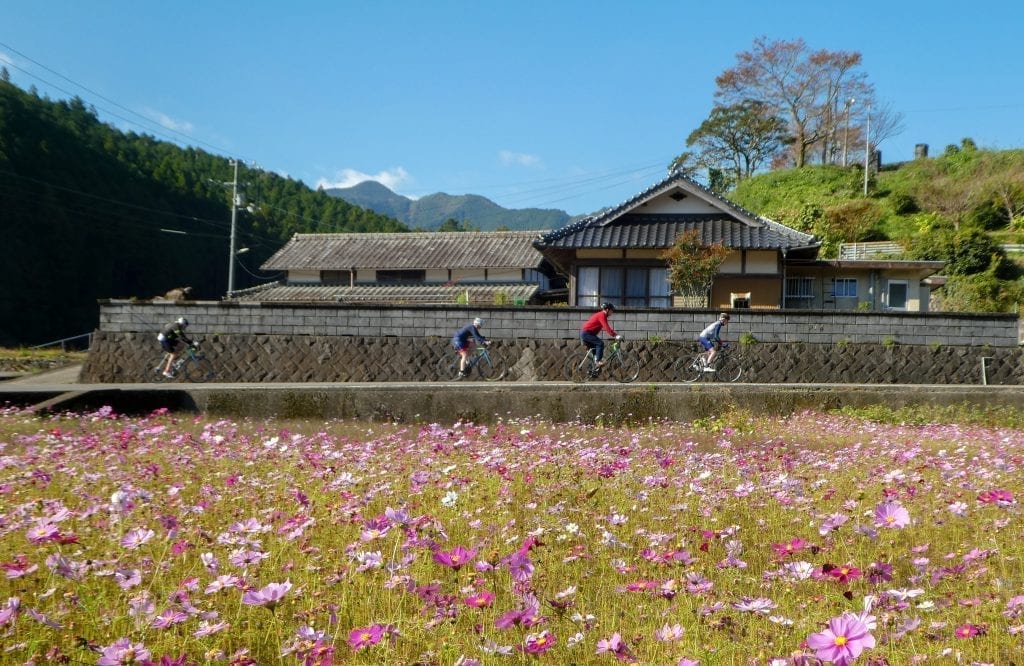
Mt Fuji Bike Tour Food
Cuisine is one of the great highlights of travelling by bike in Japan, and across our Japan tours it becomes a daily window into regional life, history, and culture.
Our Japan Tours covers several regions of Japan, and one of the highlights is the range of culinary offerings. For some of our guests, the dining aspect is the highlight of the entire tour, but for others, it can be slightly discombobulating. The idea behind this overview is to give you a better sense of what to expect on the tour.
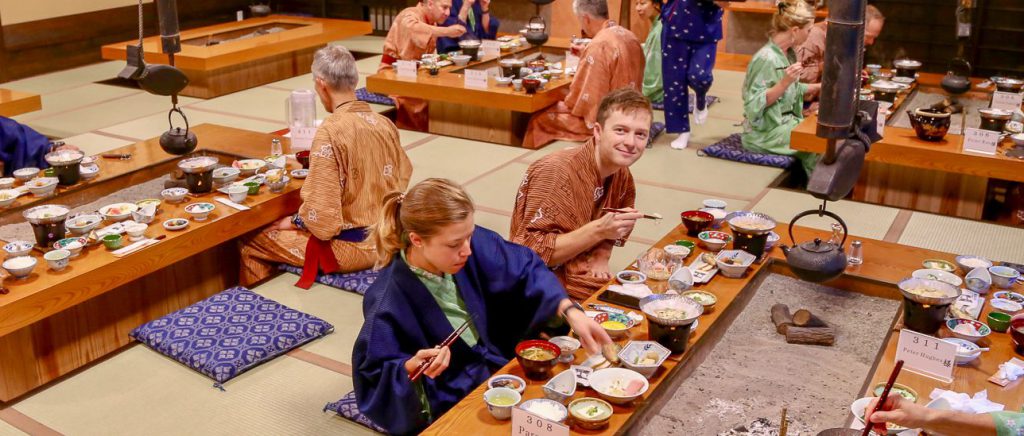
Japanese Breakfast
A Japanese breakfast typically includes steamed rice, miso soup, grilled fish, pickled vegetables, nori (seaweed), and tamagoyaki (rolled omelette). Accompaniments like tofu, natto (fermented soybeans), and green tea are common. It is fair to say it is very different to the traditional Western breakfast that most of our guests are familiar with.
Some of our accommodations will also serve coffee and some pastries, but this is more to sate the Western palate than a reflection of what is considered a normal breakfast. Wherever possible, the guides will seek to offer alternatives, but there is a rigidity to the Japanese travel experience on the road less travelled that doesn’t always make this possible. For what it is worth we suggest that everyone at least try ‘natto’ once in their life. Some of the guides actually claim to pine for it post-tour, but that is not something this author can relate to! This BBC article on natto provides a great insight into what they describe as Japan’s most polarising ‘superfood’!
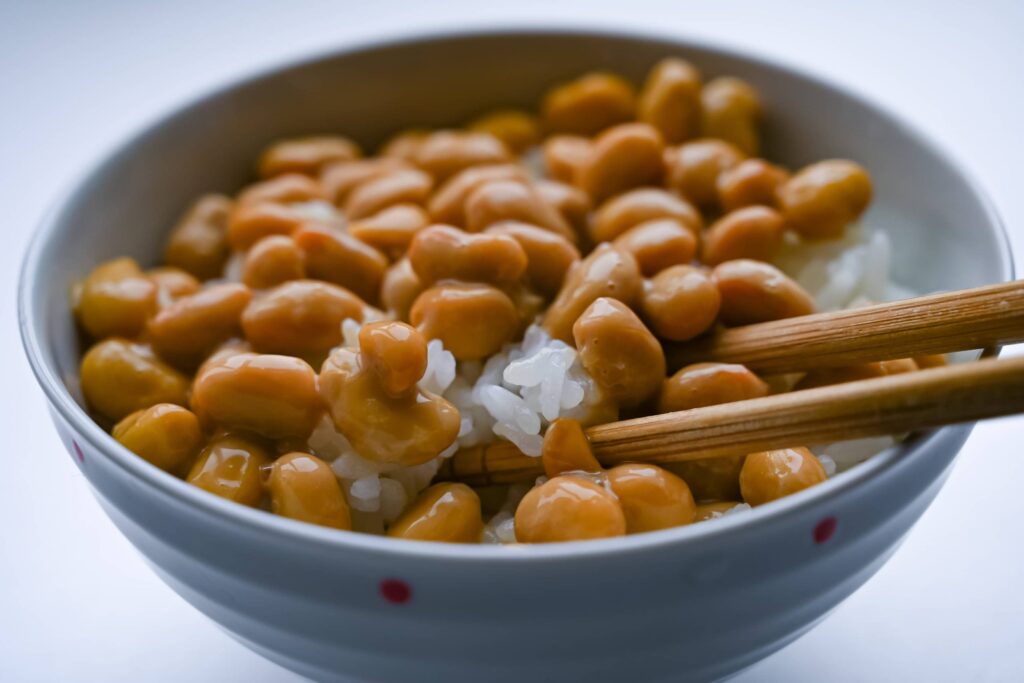
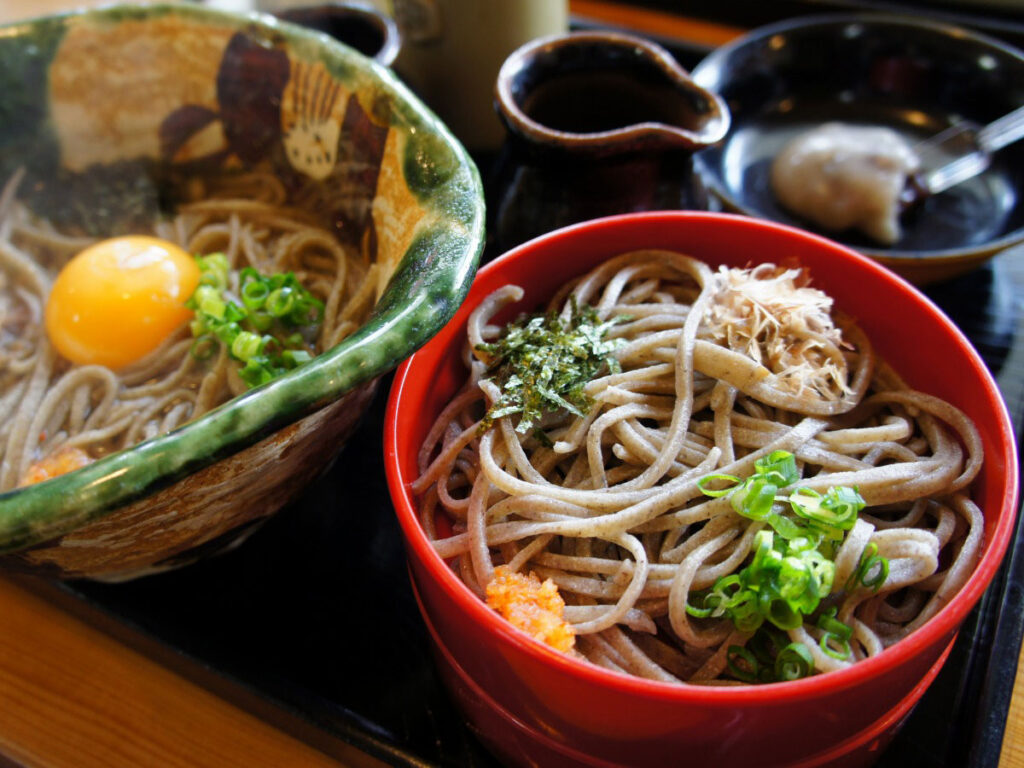
Our Japanese Trip Specialist Eri Nozawa had this to say about breakfast in Japan and natto specifically – “In Japan general, I love my go-to breakfast – Natto and raw egg on top of rice”!! This gives me great energy to get going in the morning, and tasty! It is a very acquired taste, but I love it as I have been eating since I was little. Also, I like Soba noodles, especially when eating cold ones. They have the great flavour of the buckwheat, and each Soba restaurant has a slightly different taste sauce to dip into. And they normally have great selections of Tempra to go with!”
Snacks on Tour
We aim to provide coffee and tea at our rest stops, as well as a range of fruits and sustenance, to energise you for the riding ahead. You’ll also have the opportunity to enjoy the delights of the traditional convenience store experience in Japan. Lawson and 7-Eleven are the main convenience chain options and are cultural phenomena in their own right. Our GM Ben Weigl, who has designed many of the Japanese itineraries, says he often searches out Machi (chewy rice) covered vanilla ice cream balls. He says – “They have been around forever and the packaging hasn’t changed. It is best enjoyed if you can muster some patience as allowing the vanilla ice cream to get a little soft makes them even better – eaten with fingers or a tiny fork.”
Eri and Nate, on the other hand, search out a doughnut hit – “Our favourite snack chain shop is “Mister Donut”!!! Hope you have been before, they have all different kinds of donuts, and some savory things too!”.
Lunch on Tour
Lunches offer a chance to try something different. These stops are intentionally flexible and exploratory, giving riders the chance to sample a wide range of foods. Along the way, you might enjoy regional Japanese specialties, casual noodle shops, bakeries, or even international cuisines such as Italian or Indian. What stands out is the consistency: food is fresh, fast, beautifully presented, and always prepared with care, even in the most unassuming settings.
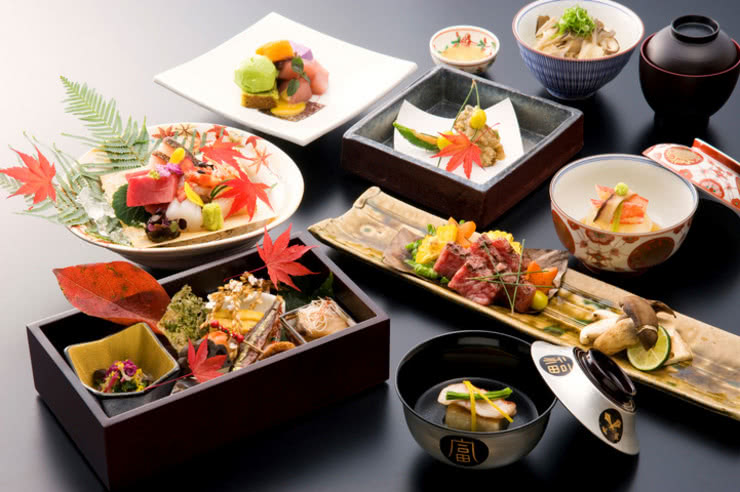
Dinner on Tour
A huge highlight of the Japan Toura is the Kaiseki cuisine, which is a feature of many of our dinners on tour. Kaiseki cuisine is a traditional Japanese multi-course meal that emphasizes seasonal ingredients, intricate presentation, and a balance of taste, texture, and appearance. It showcases the chef’s skill and creativity, offering a harmonious dining experience that blends art and flavour, often enjoyed in a serene and elegant setting. Add into the mix some high-quality sake, and it is fair to say many of our guests consider the gastronomy on this tour to rival all the other tours we run combined! We also find that many guests appreciate the opportunity to eat earlier than is generally the case on the European tours we run. As with the breakfasts, though, there is no great flexibility to change these menus beyond us communicating dietary restrictions in advance of the tour. Personally, I suggest throwing caution to the wind and embracing the range of tastes and flavours that are served as a key part of your immersive travel experience. Our guides are always at hand to explain what it actually is that you are being served.
In terms of personal highlights Eri says – “I loved the meal in Oshima Island near Sukumo. They use all the locally sourced ingredients, and my favorite dish in Shikoku “Katsuo no Tataki” was amazing! This is also called “Wara Yaki”(meaning grilled by rice stalk). This charred bonito fish brings extra flavour.”
Special mention as well to the traditional attire that is provided in your rooms that you can wear to dinner – the yukata. The yukata is a casual summer kimono made of lightweight cotton, often worn in Japan during warm months. It’s typically worn at festivals, hot springs (onsen), and ryokan (traditional Japanese inns). Yukatas are designed to be easy to put on and are secured with an obi (sash). Samurai is the tour that arguably gives you the best opportunity to travel light, given the nature of the clothing that most people wear for dinner and, indeed, for the duration of your stay in any of the ryokans we stay in.
And in this respect, I think it would be remiss not to touch on the whole post-ride experience that is a feature of these tours. On arrival at your accommodation, you’ll find vending machines that cater to all sorts of requirements. The cold, crisp Japanese beer is usually my choice. Once in your room, you generally change into your yukata and then head to the onsen, which, like the kaiseki meals, is a feature on many of the evenings on the Samurai tour. Cold beer followed by onsen followed by Kaiseki cuisine is a post-ride ritual I find hard to beat.
Accommodation
We present a range of accommodation options across this tour, but without doubt, our favourite abodes are the Japanese inns. As with all of our tours we have searched out places that are not only ‘best available’, but also reflect the essence of the area in which we travel. The inns are a wonderful way to immerse yourself in the culture of Japan with their straw mat floors and futon beds. Many of them also offer baths in natural hot springs to soothe those aching muscles at the end of a day on the bike. The traditional cuisine served up in these inns is also a real highlight. Our Samurai tour has a good mix of traditional inns and more western orientated hotels.

Lost Japan (Alex Kerr) – An enchanting and fascinating insight into Japanese landscape, culture, history and future. Alex Kerr is an American writer who has lived in Japan for over 30 years. This book is an ode to the journey he has experienced from Japanese boardrooms to the hidden valley he now calls home. In part a lament to the loss of the Japan of old, it is still a wonderful celebration of a culture he clearly reveres. Winner of the Shincho Gakugei Literature Prize in 1994, Kerr was the first foreigner to win this prize. We recommend this book as a wonderful way to get an insight into Japanese culture both contemporary and that of the past.
Mount Fuji – Sacred Giant of Japan
Rising between the Sea of Japan and the Pacific Ocean, Mount Fuji (Fujisan) is Japan’s highest peak at 3,776 metres and one of the most recognisable mountains in the world. With its near-perfect cone, iconic snowcap and solitary presence, Fuji has shaped Japan’s landscape, culture and imagination for centuries.This tour is a journey in homage to that mountain, not just to learn about Mt. Fuji, but to experience it fully, from horizon to summit slopes, and finally across the sea.
A Monument of Nature and CultureMount Fuji is an active stratovolcano, formed through repeated volcanic eruptions over hundreds of thousands of years. Its most recent eruption occurred in the early 18th century, and while it has remained dormant since, it is still closely monitored and classified as active today.What makes Fuji truly distinctive is its isolation. Unlike the Japanese Alps, Fuji rises alone from relatively low surrounding terrain, allowing it to dominate the skyline and remain visible from over 100 kilometres away on clear days. This singular presence is part of what has made the mountain such a powerful symbol in Japanese culture.
Sacred Ground and World HeritageFor the Japanese people, Mount Fuji is a holy mountain. Long before the arrival of Buddhism, it was revered within Shinto belief as the dwelling place of powerful kami (spirits). Shrines dedicated to Fuji were built at its base and along historic pilgrimage routes, many of them rebuilt over centuries following eruptions, earthquakes and fires.
This deep cultural significance was formally recognised in 2013, when Mount Fuji was inscribed as a UNESCO World Heritage Site for its outstanding cultural value — acknowledging not only the mountain itself, but the shrines, landscapes and artistic inspiration it has generated over millennia.
A Living Presence on the RideOn this journey, Mount Fuji is not simply a backdrop; it is a constant companion. Early in the ride, the mountain appears as a distant silhouette on the horizon, a reminder of what lies ahead. As the days pass, it reveals itself in fragments: glimpsed through valleys, framed by forest roads, or suddenly appearing as you crest a rise.
The route takes you up both the western and eastern flanks of the mountain, delivering panoramic views from over 2,000 metres above sea level as you ride high on its slopes. You circle Fuji, climb toward its shoulders, and experience the sheer scale of the volcano from multiple angles, something few travellers ever do.
The final chapters of the tour carry you toward the Pacific Ocean and the Izu Peninsula, where, weather permitting, you are rewarded with one of Japan’s most iconic perspectives: Mount Fuji rising beyond the sea, viewed across open water. It is a fitting and memorable conclusion.
A Journey of DiscoveryThis tour is a process of becoming intimate with the mountain. Even without studying its history, its importance becomes self-evident. You ride its roads, feel its scale, watch how it dominates the land and sky, and understand — instinctively — why it has been revered for so long.By the time you finish, Mount Fuji is no longer just a famous image or a perfectly shaped peak. It is a presence you have travelled toward, around, and alongside, honoured simply by experiencing it in motion.

Having done all of R&S’s Japan tours (some more than once), I can personally attest to the hard work and attention to detail of Ben, Eri, Nathan, and the rest of the Japan team. It’s a comforting feeling when the tour starts to relax and let the guides do all the hard work and you can simply relax and enjoy all that Japan has to offer (the rides, the food, the sights, and the people). Don’t hesitate to sign up – you won’t regret it.
Wayne R, Samurai Tour 2025
Experiencing multiple stages in a row really helps to get to know the country and the people by immersing you in the culture. By the end of our 6 week Japan trip we felt like we had a more in-depth understanding of the traditions. It’s also fun seeing different areas of a country, especially one like Japan with its varied and beautiful countryside.
Lynne D, Samurai Tour 2025
What I love most about Ride & Seek is how they blend adventure, history, and local culture into every experience, and this Samurai Tour truly captured that spirit. A perfect balance of challenge, beauty, and pure joy on two wheels.
Erwin W, Samurai Tour 2025
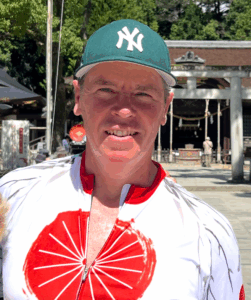
The Tour’s small group format was ideal for Japan and Ride & Seek’s thoughtful selection of Japanese style accommodations and intimate lunch & coffee spots allowed riders to sleep in tatami rooms, wear traditional clothing, bathe in onsens and enjoy traditional food. If you’re looking for a trip that offers both fantastic cycling and the opportunity to really experience a special country, Ride & Seek’s Samurai Tour is a great choice.
Tony R, Samurai Tour 2025

By combining all three segments of Samurai, a truly Epic journey emerges! From the modern and historic cities of Tokyo, Osaka, and Kyoto, each stage of the Samurai Tour flowed with Zen-like continuity. Coastlines, onsens, temples, gardens, forests, and towering ranges blended into a five-week odyssey of cycling, cuisine, and Shinto-Buddhist philosophy. A meditative yet challenging exploration of Japan’s culture. Ride & Seek at its best!
Craig Y, Samurai Tour 2025
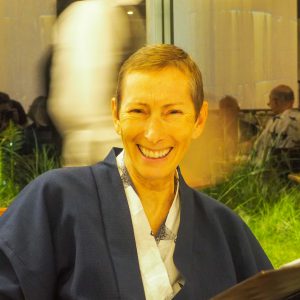
Bicycling on Shikoku was exhilarating. The combination of spectacular riding, out of the ordinary accommodations, wonderfully authentic, delicious and healthy food, and fascinating fellow riders was beyond compare. It was the team, however, that made the trip epic. I experienced Japan in a way that I never would on my own.
Betty V
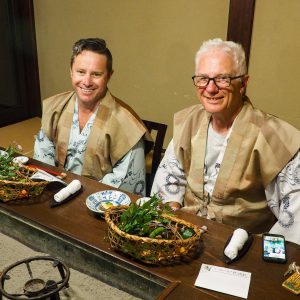
What a Great Experience: riding the countryside, coastline, mountains, bridges, cities and villages with a group of people who became friends during the three weeks of the Epic. The food and accommodation will never be forgotten, nor will the “can do” attitude of Ben, Remi and Ikki. If you get the chance to ride this one – DO IT!”
Chris and Brad P
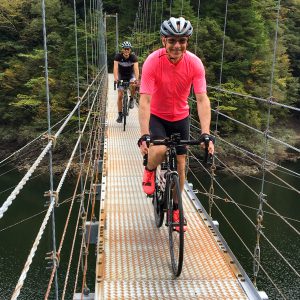
I expected the tour to be mostly a bike trip, but ended up experiencing so much more. I got all the riding I had wished for, but that ended up being only a quarter of the trip. So what made up the remaining 75%? The food experience was another 25%, learning and experiencing Japanese culture another 25% and the last 25% was being with a truly exceptional crew – both staff and guests. A wonderful Epic that I couldn’t fault in any way, and would recommend 100%.
Andy L
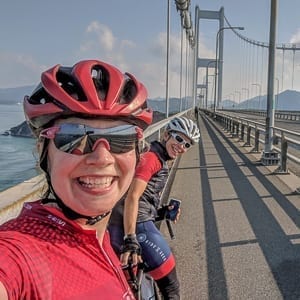
The Samurai tour was unlike any other riding – remote roads through bamboo forests and hillsides, past Buddhist temples and through small villages. The landscape, food, and culture made for a wonderfully unique trip that exceeded expectations. I highly recommend this trip. Thanks for another great tour!
Emily B – Samurai
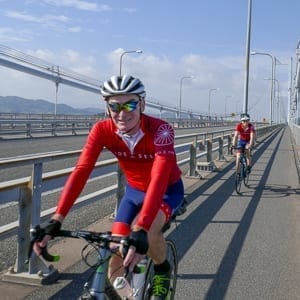
A fantastic experience and aside from the spectacular riding, this is a remote destination to a very different culture and that means embracing the differences and challenges with an open mind. Ride & Seek did a great job of making all that work and helping us communicate and appreciate what was on offer. The trip flowed beautifully and the navigation was so well prepared it felt much easier than expected.
Peter H – Samurai
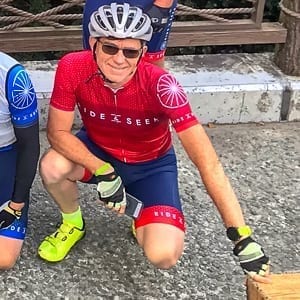
The Samurai tour allows riding through whisper quiet country roads to every cultural experience from traditional country inns to architectural marvels. The Onsen experience, initially a little daunting, becomes a daily highlight. The greatest joy, however, is the countryside itself – truly unique and wonderful.
Laurie T – Samurai
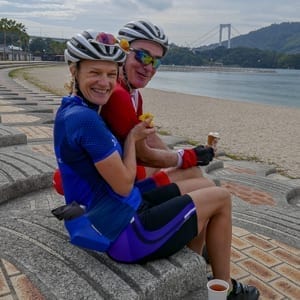
It was a fabulous trip and a wonderful way to experience Japan. Stunning riding and we were so well looked after by the team. They listened carefully when there was a problem and did their best to sort it out.
Vicky I – Samurai

It was a privilege to join the inaugural Samurai tour with Ride and Seek! The riding was as good as I’ve experienced anywhere. We were immersed in pristine beauty, crystal clear rivers and a “back in time” look at rural Japan! I look forward to an expanded tour in the future of other parts of this amazing Island nation.
Jonathan F – Samurai

Exquisite remote riding in pristine surroundings, Samurai, Shinto and Buddhist history, you can’t go wrong with this tour. In true Ride and Seek fashion, every detail accounted for, beautifully organized and run. They have done it again! Thanks R&S for another remarkable experience. This is why I keep riding with you!
Christine C – Samurai

Beautiful countryside with the change of colour Autumn brings, back country roads through Iya Gorge, Yoshino river, over Mt Ishizuchi through remote Shikoku down to the Pacific Ocean before making our way back up to the Shimanto river then over the large suspension bridges that tie Shikoku to mainland Japan. A memorable trip.
Peter R – Samurai
The Samurai Tour was one of my favourite tours of all time. The Japanese people are amazingly friendly, the accommodations surprisingly comfortable, the local food healthy, the hot springs healing, the roads, tunnels and bridges are engineering feats and immaculately maintained and our guides made it all seem easy. Ride and Seek did another terrific job. This tour was a taste of the real Japan, not a made up version.
Sarah R – Samurai
The Trip
Ride in the shadow of mighty Mt. Fuji from the Japan Sea, across the Alps to the Pacific Ocean.
Book Now Schedule a CallTour at a Glance
Mt Fuji – Across Japan Dates: 19th Sep – 4th Oct 2026
Number of days: 16 days
Price: US$10,200
Grading: 
.