Our Guide to Cycling in Colombia


Colombia has been on our radar for years, and when the time came to expand into South America—making it our sixth continent—there was no better place to start. Antarctica is the last frontier!

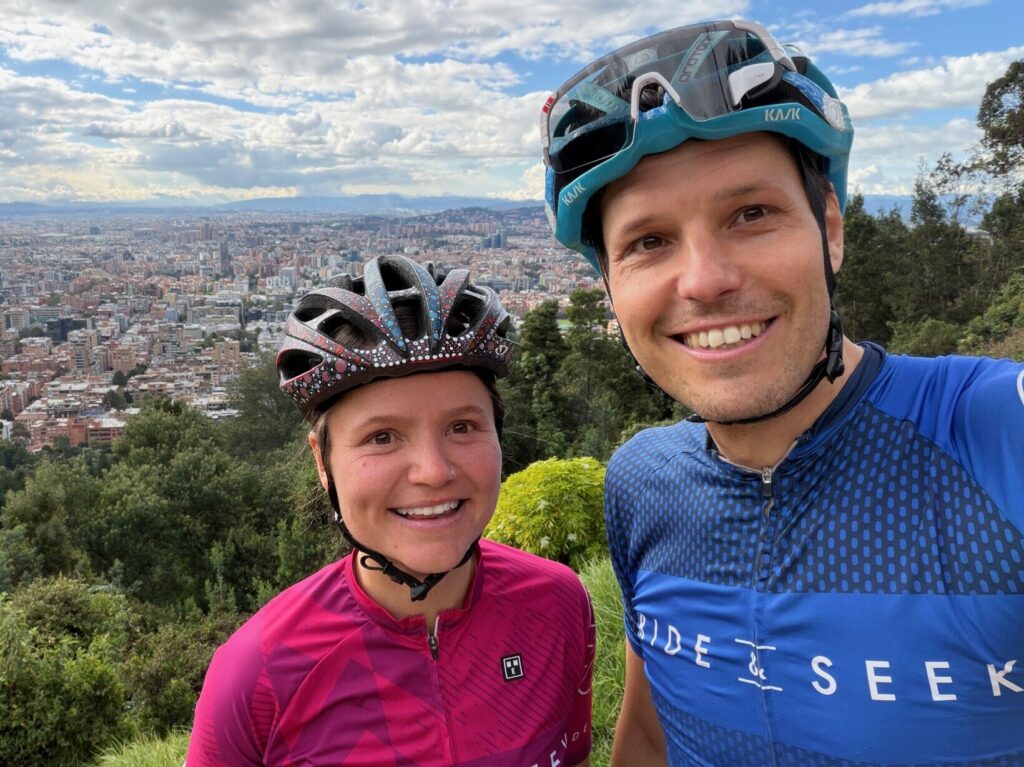
This guide brings together the thoughts and experiences of Beatrice and Ben to offer an insight into cycling in Colombia. With Ben, our General Manager, spending six months on the ground, he has been refining the route, inspecting hotels, and fine-tuning the details to ensure the experience meets our standards. Much of our discussion in the lead-up to this launch has focused on how perceptions of Colombia have evolved — from its turbulent past to the vibrant, safe and culturally rich destination it is today.

Beatrice’s on-the-road perspective has added another valuable layer, helping us paint a fuller picture of what cycling and travelling here truly feels like. And special thanks to Tomas, whose local knowledge, gained from more than 10 years of running bike tours in Colombia, has been instrumental in shaping the culturally immersive itinerary we have today. Together, their insights help explain why Colombia stands out as the ideal location for our first South American cycling adventure.

“Few places combine terrain, culture, and cycling heritage as naturally as Colombia. From the Andes’ high passes to the coffee country and Caribbean coast, every ride draws you into a new landscape and rhythm. Geography shapes everything here — the Andes carve through the nation’s heart, creating thousands of kilometres of roads that range from gentle rollers to lung-searing climbs. But it’s the culture that gives it soul: cycling is part of daily life, from weekend riders on the mountain passes to commuters in bustling city streets. And now, with Colombia open, safe, and welcoming, it’s the perfect time to explore it by bike.”  Ben Weigl
The guide presented below is designed to offer practical insight for anyone considering a cycling trip to Colombia, whether you’re planning your own route or joining us on our Bolivar Tour.

Why Cycle in Colombia?

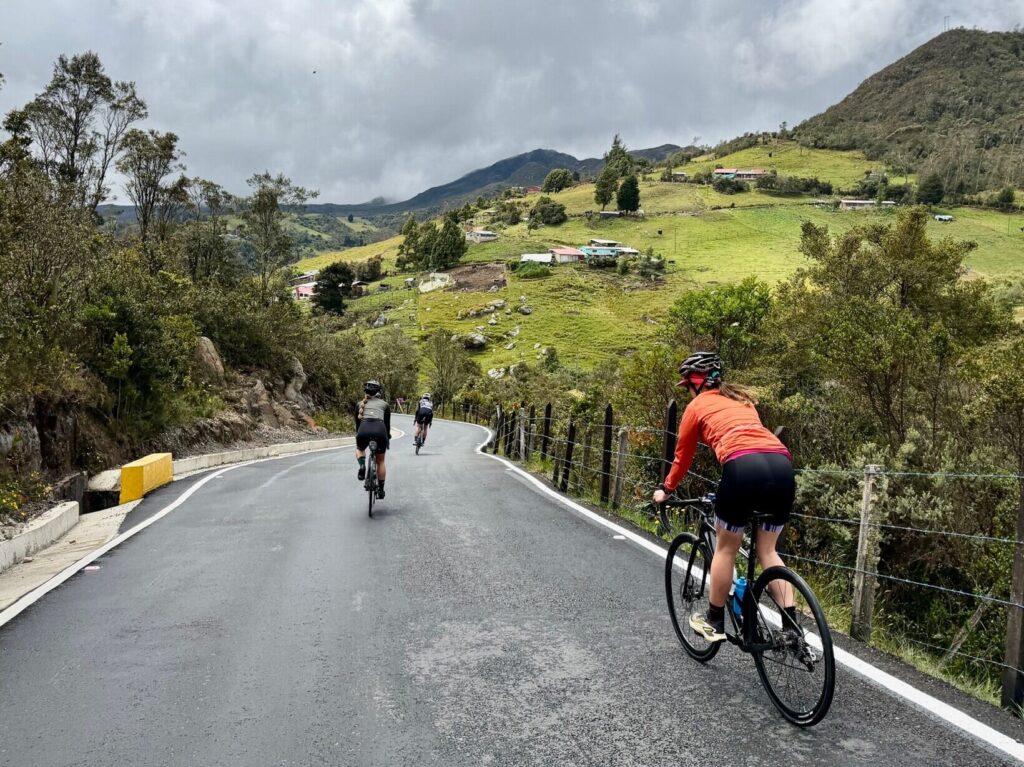
Colombia rewards cyclists who appreciate variety. You might begin your morning at 2,500 metres (8,200 feet) in crisp Andean air, ride through cloud-forest terrain by midday, and finish the day in subtropical warmth.

The Andes dominate the interior, but the country also holds coastal plains, river valleys, and coffee-growing highlands that sit at ideal riding temperatures year-round. Many of these same routes once carried Simón Bolívar and his army toward independence — a reminder that Colombia’s landscapes have long been a stage for endurance, freedom, and determination.
Climate is one of the most practical reasons to ride here. Sitting near the equator, Colombia experiences seasons defined by rainfall, not temperature. The dry months — November through March and July through August — bring the most consistent conditions. Even in wetter periods, rain usually arrives in the afternoon, leaving mornings clear for riding.

“But what makes cycling in Colombia exceptional isn’t just the roads or the weather — it’s the people. Colombians wave from doorways, cheer from roadside shops, and often ride themselves. There’s a shared language around the bicycle, whether you’re passing a weekend club ride or stopping for water at a tienda where the owner asks which climb you’re tackling.” Ben Weigl

Once you leave the cities, Colombia quickly becomes remote. Long stretches of mountain road thread through farming villages, coffee plantations, and valleys where life moves at a slower pace. It’s in these quieter sections that the country reveals its spirit. 

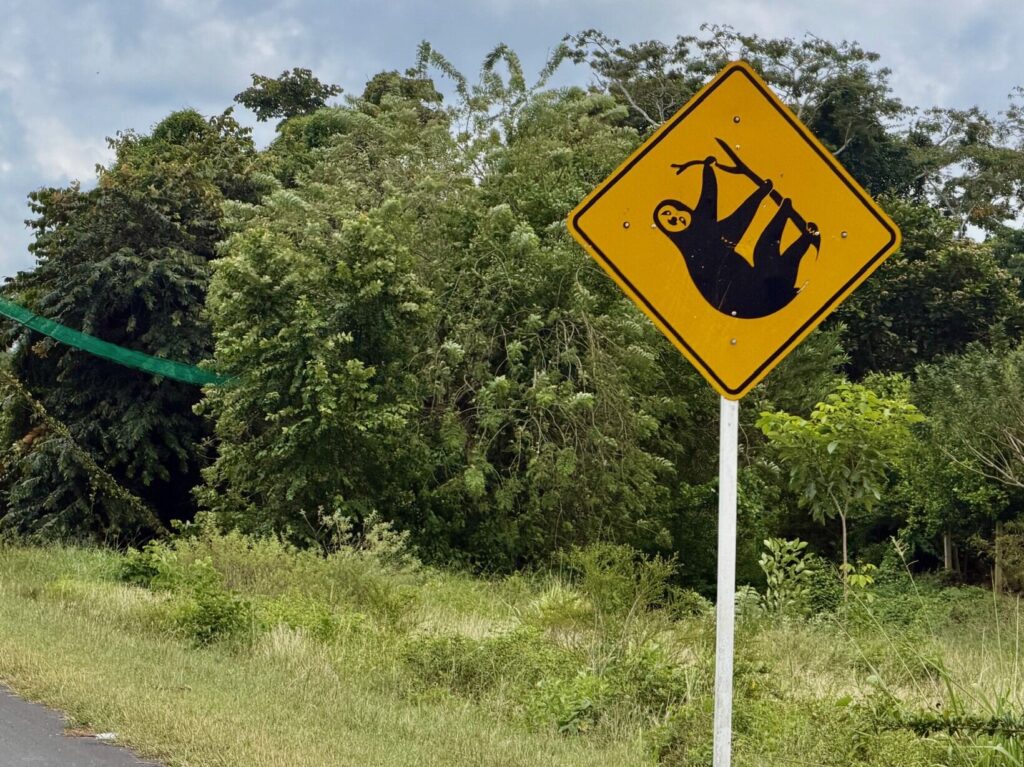
“Cycling in Colombia is wonderful — the whole vibe encourages you to slow down and take it all in. You feel it in the way drivers interact with cyclists, giving space and respect as everyone gets on with their day. And if the sloth signs are anything to go by, this really is a country where you’re meant to take it slow and enjoy the ride.” Beatrice Jeavons
Key Cycling Regions and Tour Routes

Bogotá and Surrounds

Bogotá serves as the logical starting point for most cycling trips, and it’s where Ride & Seek’s Colombian epic begins. The city sits on a high plateau surrounded by rolling hills and peaks, and the altitude alone makes it a training ground. Every Sunday, the Ciclovía closes over 120 kilometres of city streets to cars, filling them instead with thousands of cyclists, runners, and families. It’s less a novelty and more a cultural institution.

The roads leading out of the city climb quickly. Popular routes head toward La Calera, Patios, or Guatavita, each offering expansive views once you’re above the urban sprawl. 

Villa de Leyva

Two hours north of Bogotá, Villa de Leyva offers a completely different vibe. The town itself is colonial, built around a vast cobblestone plaza that seems frozen in the 16th century. The roads leading into and out of town are quiet, winding through high-desert terrain dotted with fossils, olive groves, and Andean farmland.
The Coffee Triangle

The region known as the Coffee Triangle—roughly between Manizales, Pereira, and Armenia—sits at the heart of Colombia’s coffee culture. The roads here roll through plantations, past fincas with sweeping porches, and into small towns where world-class coffee is treated with the seriousness it deserves.

The terrain is less extreme than the high Andes, which makes it ideal for soaking in the unique landscape after some more rigorous days. The climbs are steady rather than punishing, and the descents often lead directly into towns where you can stop for lunch, walk through a market, or visit a working coffee farm.

Alto de Letras

If you’re after a real challenge, the Alto de Letras more than earns its reputation. At over 80 kilometres and rising from around 300 to 3,600 metres, it’s one of the longest paved climbs in the world. The gradient is steady, the surface good, and the landscape changes endlessly as you ride — from tropical heat at the bottom to crisp, thin air near the summit. It’s become a near-mythical ascent thanks in part to features like Simon Richardson’s GCN video, and it genuinely captures the scale and atmosphere of riding in Colombia. The ‘Braking News’ though, is that there is a NEW longest climb called Alto del Sifón, and we have chosen to ride that instead of Letras on Bolivar.

Alto del Sifón

Meet Alto del Sifón — or El Sifón as locals call it. This Tolima giant stretches to about 115 km with more than 4,700 metres of gain, putting it right at the top of the list for longest paved, uninterrupted ascents. It’s not the gradient that gets you, and it’s not a tricky road; it’s the relentless length. To grasp the scale, you’re looking at a climb over four times longer than Mont Ventoux, more than twice Mount Teide, and even beyond Mauna Kea. Alto del Sifón resets the bar: a pure endurance challenge where the real battle is staying steady, patient, and mentally switched on for hours.

We’ve set the tour up so you can ride the whole climb or just a section of it, depending on how big a day you’re after. The road has been newly paved and runs through a national park, which means you can properly get away from the traffic — something Letras simply doesn’t offer in the same way. Having scouted both routes, we’re convinced Sifón is the climb for us.

Cartagena and the Coast

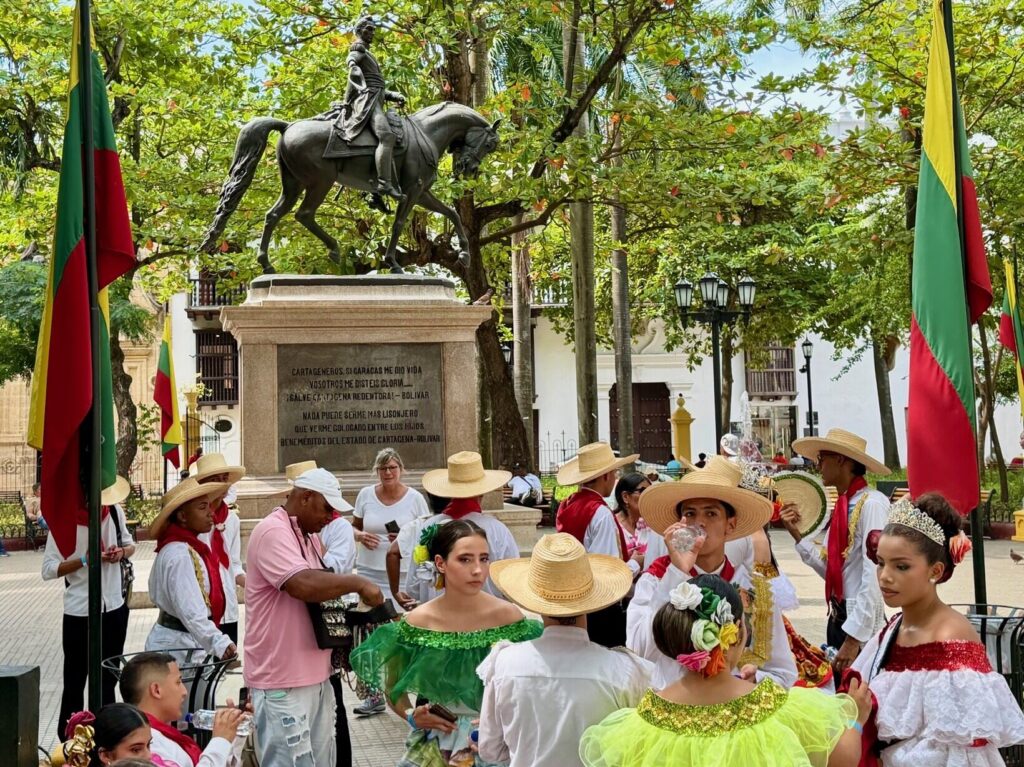
Cartagena makes a fitting endpoint after days in the high mountains, trading altitude and cool air for heat, humidity, and the sound of the Caribbean. It’s also a chance to explore a popular tourism destination in its own right; expect colonial architecture, Caribbean vibes, and food that reflects centuries of coastal trade.

Cartagena’s walled old town is dense with history and energy. Cobblestone streets wind between brightly painted facades, balconies spill with bougainvillea, and shaded plazas offer a place to rest with a cold drink. The city’s food scene rivals any in South America, with fresh seafood, tropical fruit, and inventive local cooking that reflects both Caribbean and Spanish roots.
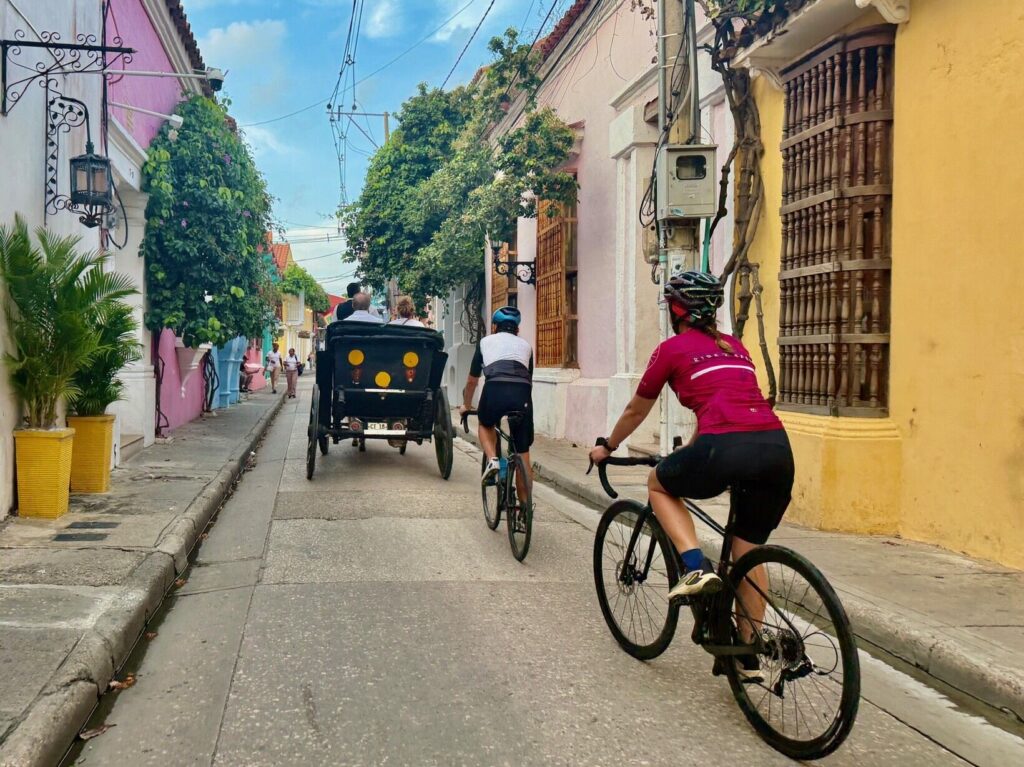
Ride & Seek’s Colombia Cycling Tour finishes here, where the country’s contrasts finally converge — mountains and coast, endurance and ease, history and celebration. Cycling through this landscape, you can still feel that same spirit of independence and pride that defines Colombia today.

Cycling Culture and Daily Life on the Road

Cuisine is a big part of what makes Colombia an unforgettable cycling destination. 

Roadside vendors sell empanadas — fried pockets of dough filled with meat or potatoes — that make ideal mid-ride fuel. Arepas, the corn cakes that show up at nearly every meal, come in dozens of regional variations. Fruit is everywhere: mango, papaya, lulo, guanábana, often sold from carts or small shops along the route.
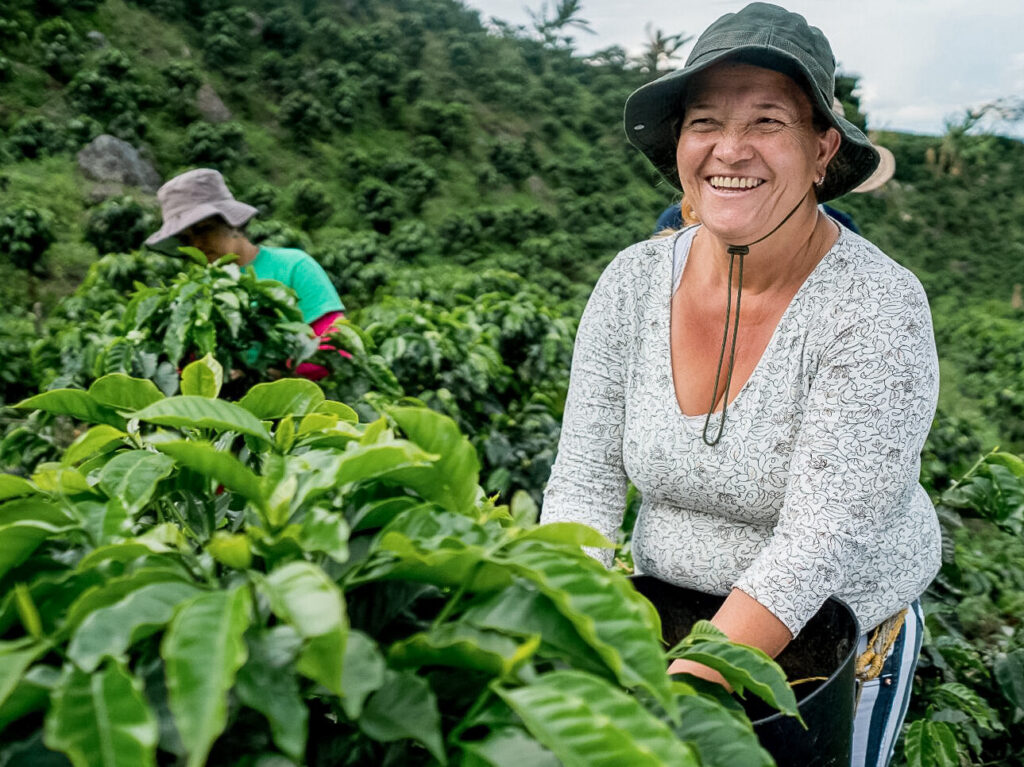
Coffee, naturally, is a ritual. Even the smallest tienda will have a thermos ready, and the quality is consistently high. It’s common to stop mid-morning for a tinto — a small, strong cup — served in a plastic or ceramic mug that you return before continuing.

Downtime between rides reveals another side of Colombia. Markets are practical rather than polished, filled with produce, textiles, and household goods instead of souvenirs. Town plazas fill in the evening as families walk, vendors set up carts, and music drifts from nearby cafés. 

Safety, Infrastructure, and Local Support

Colombia has invested heavily in cycling infrastructure over the past two decades. Major roads include wide shoulders, clear signage, and regular maintenance. In tourist regions, police often patrol routes specifically to support visiting cyclists. The country’s reputation has shifted, and the reality on the ground reflects that change.

That said, altitude requires respect. Bogotá and much of the Andes sit above 2,500 meters, and even fit riders need time to acclimate. Headaches, fatigue, and shortness of breath are common in the first 48 hours. Hydration matters more at elevation, and pacing yourself on early climbs prevents unnecessary suffering later.

Local riding etiquette is straightforward. Drivers generally give cyclists space, especially on mountain roads where they’re used to sharing the pavement. Hand signals are understood, and it’s common practice to acknowledge drivers who wait patiently behind you on narrow sections.
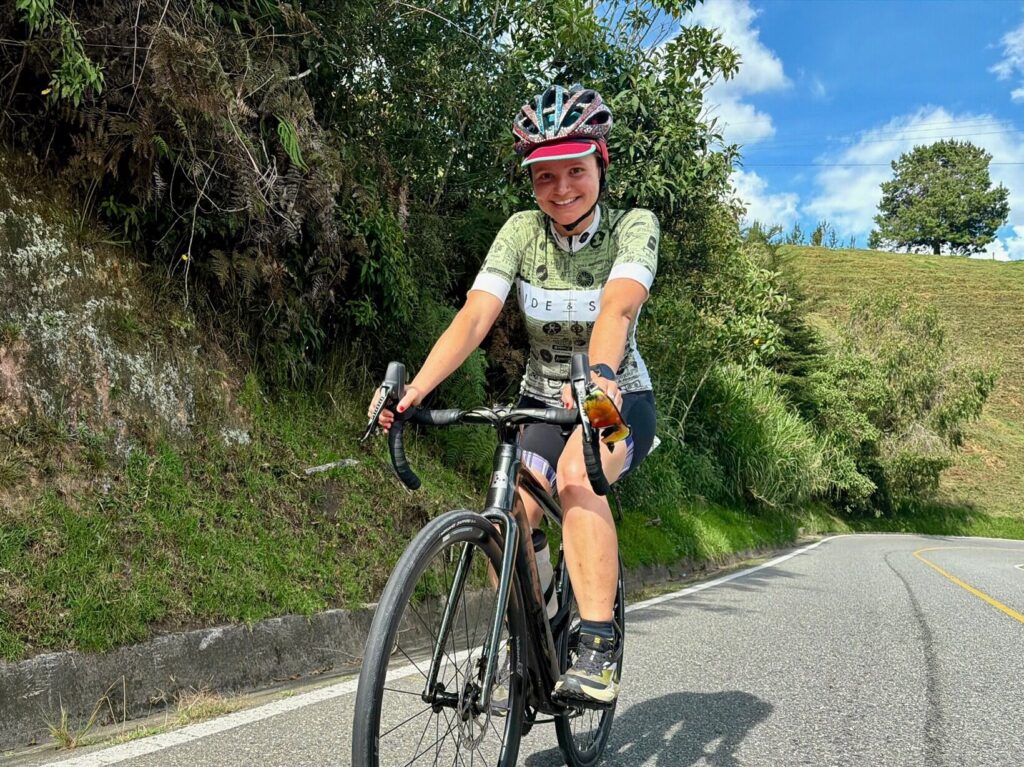
In the words of  Beatrice, who is travelling in Colombia for the first time, offering a fresh and honest perspective on what it’s like to ride here, from her early impressions and favourite discoveries to the practicalities of cycling as a woman and a vegetarian.

Your favourite city or town so far, and why?
Cartagena. The energy, the colourful neighbourhoods, the Caribbean influence — it all feels alive and incredibly welcoming.

Your favourite meal?
I love the plantain that comes with so many meals here, all the amazing fresh fruit — especially green mango with salt and lime (mango biche con sal y limón) — and the soups in the menú del día. Simple, full of flavour, and perfect for replenishing salts after a hot ride.

Your favourite drink?
Definitely lulo juice. Not too sweet, super refreshing, and perfect after a long day on the bike.

What has surprised you most about being in Colombia?
How polite and respectful the drivers are. Even on busy roads they give you loads of space, offer little toots of encouragement, and shout supportive cheers out the window. Cycling is genuinely part of the culture and identity here.

How does cycling in Colombia differ from Europe or Australia, and why?
The drivers! I wish the trucks back in Australia were this polite. The roads often run straight through the heart of each village, so you find yourself riding past kids playing, farm animals, street stalls and everyday life unfolding right beside you. It feels very connected and human. And in the big cities they hold Ciclovía on Sundays, closing major roads to cars so people can ride, run, roller-skate and just be out. It’s amazing.

What’s it been like riding there as a woman?
I’ve felt completely fine and safe. Bogotá, like any big city, has areas you avoid and moments where you stay aware, but overall, the vibe has been respectful and friendly. And there are so many women out riding in the cities — it’s great to see.

How has it been being vegetarian food-wise?
Mostly pretty good. I’m a fairly flexible vegetarian, and while some smaller places have limited options, I’ve always managed to find something delicious with enough protein — as long as you’re happy with beans. In the bigger cities, there are plenty of choices. Traditional food isn’t heavy on vegetables, so a little planning helps.

What’s the terrain been like — any climbs or descents you’ll never forget?
The roads are mostly good, though there are sections with potholes, gravel and rough surfaces that need attention. The climbs are incredible. Colombia is so mountainous that you can be in the heart of a major city one moment and high above it the next, with huge sweeping views in every direction.

Any other insights?
Just how much the country has changed. The old stereotypes don’t reflect the reality on the ground — things are vibrant, colourful and far safer than the stories from 30 years ago would suggest.

When to Go and What to Expect

The dry seasons—November through March and July through August—offer the most reliable riding conditions. Mornings are typically clear, with afternoon clouds or rain appearing predictably enough that you can plan around them. 

Temperatures vary by elevation, but daytime highs in the mountains range from 15 to 25 degrees Celsius, while coastal areas stay warmer. Even the rainy season can be an excellent time to immerse yourself in Colombia’s best cycling; it rarely rains all day and you’ll have less crowds on main roads and lush surrounding landscapes. 

Regional climates differ significantly. Bogotá can be cool and overcast. The Coffee Triangle tends toward warm days and mild evenings. Cartagena is tropical, with heat and humidity that require adjustment if you’ve been at altitude for weeks.

Gear should account for variable conditions. Mornings at altitude can be cold, requiring arm warmers, a vest, and gloves. By midday, you’ll likely strip down to a jersey and bibs. Rain gear is essential, even during the dry season, as weather in the mountains shifts quickly. A good multi-tool, spare tubes, and a pump are standard, though mechanical support is often available on popular routes.

Planning Your Colombian Cycling Trip

Good riding in Colombia is about balance — enough climbing to make it memorable, but not so much that it overshadows the journey itself. Our route is designed with that in mind: challenging enough to satisfy strong riders, yet accessible within our three-and-a-half–espresso-cup grading. It blends steady climbs with cultural immersion at every turn, with optional extensions for those who want to push a little further.

The route was developed by our General Manager, Ben, together with our local partner, Tomás, whose knowledge of Colombian roads and riding culture shapes every stage. It reflects Ride & Seek’s Epic Bike Tour approach: purposeful, immersive, and connected to place. 

The result is a journey that celebrates stunning landscapes, warm hospitality, and the simple joy of exploring one of the world’s great cycling nations.
Frequently Asked Questions About Cycling in Colombia

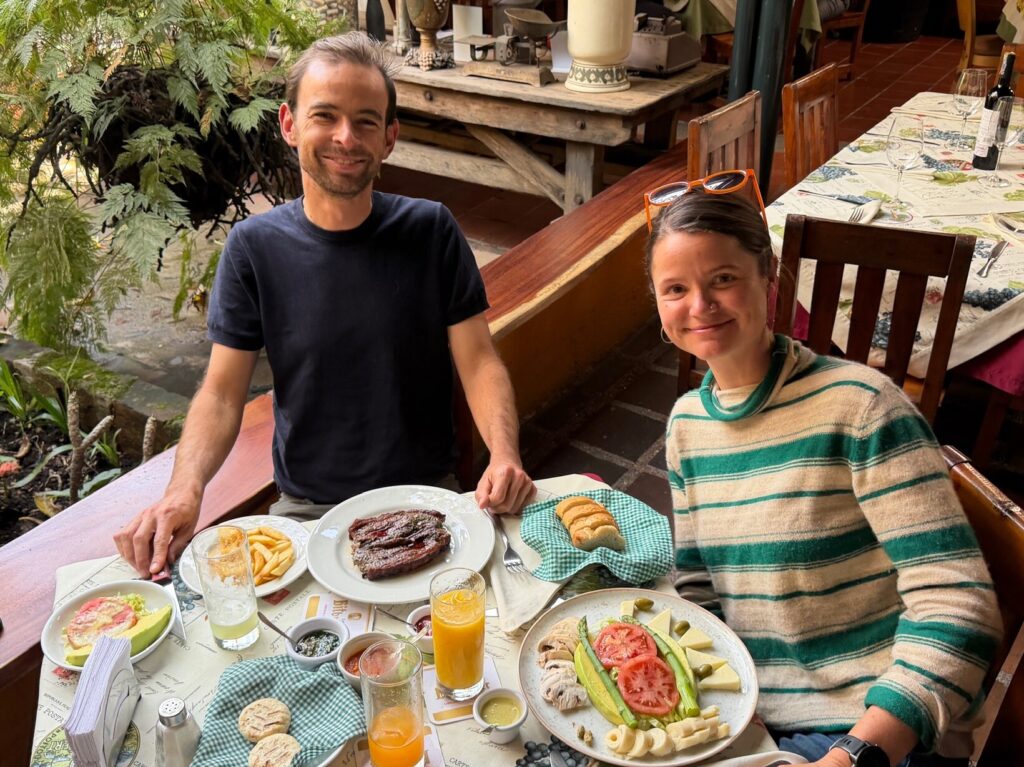
Tomas (pictured above) has played an instrumental role in helping us shape an itinerary that we believe offers the best cycling and travel experience we could provide in Colombia. Drawing on his insight, he also helped us respond to some of the key questions that have come up in the lead-up to creating this tour.

Is it safe to cycle in Colombia?

Yes. Cycling in Colombia is generally safe, especially in areas popular with riders and on established routes. The country has invested heavily in road infrastructure and cycling awareness. Many Colombians use bicycles for daily transportation, and drivers are accustomed to sharing the road. As always, local knowledge helps — guided tours or recommended routes ensure the safest and most rewarding experience.

How popular is cycling in Colombia?

Cycling isn’t just a sport in Colombia — it’s part of the national identity. From everyday commuters to elite Colombian cyclists who dominate international races, the passion runs deep. Cities like Bogotá host weekly Ciclovía events, closing major streets to cars so thousands can ride freely. The sport’s success on the world stage has made cycling one of Colombia’s most prestigious and unifying activities.

Why cycle in Colombia?

Cycling is one of the best ways to explore Colombia’s diversity — from the Andes to the Caribbean coast. The combination of smooth roads, stunning scenery, and warm hospitality makes it a truly unique riding destination. Whether you’re seeking a challenge or a cultural journey, exploring by bike is the way to go if you want to see the real Colombia.

Ready to plan your epic Colombia cycling trip? Get in touch today. 


Lofoten Islands – 10 Things You Might Not Know

Lofoten Islands


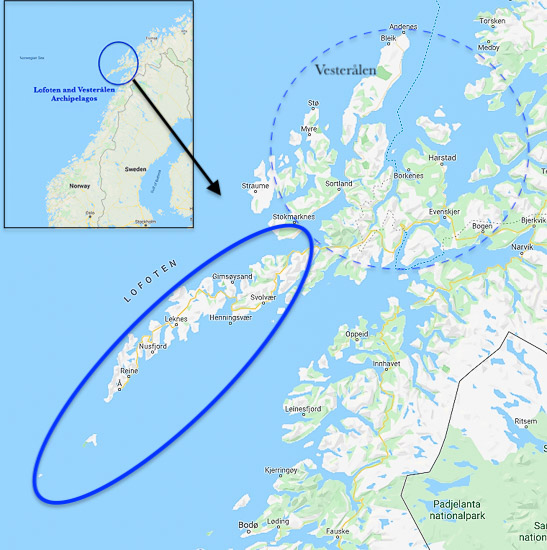
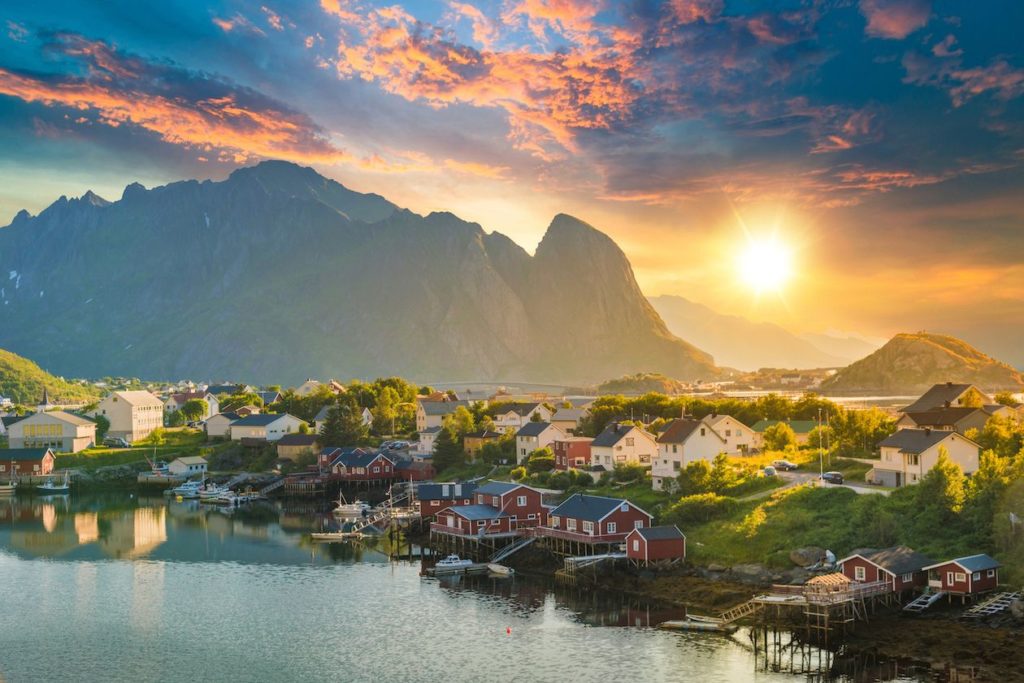
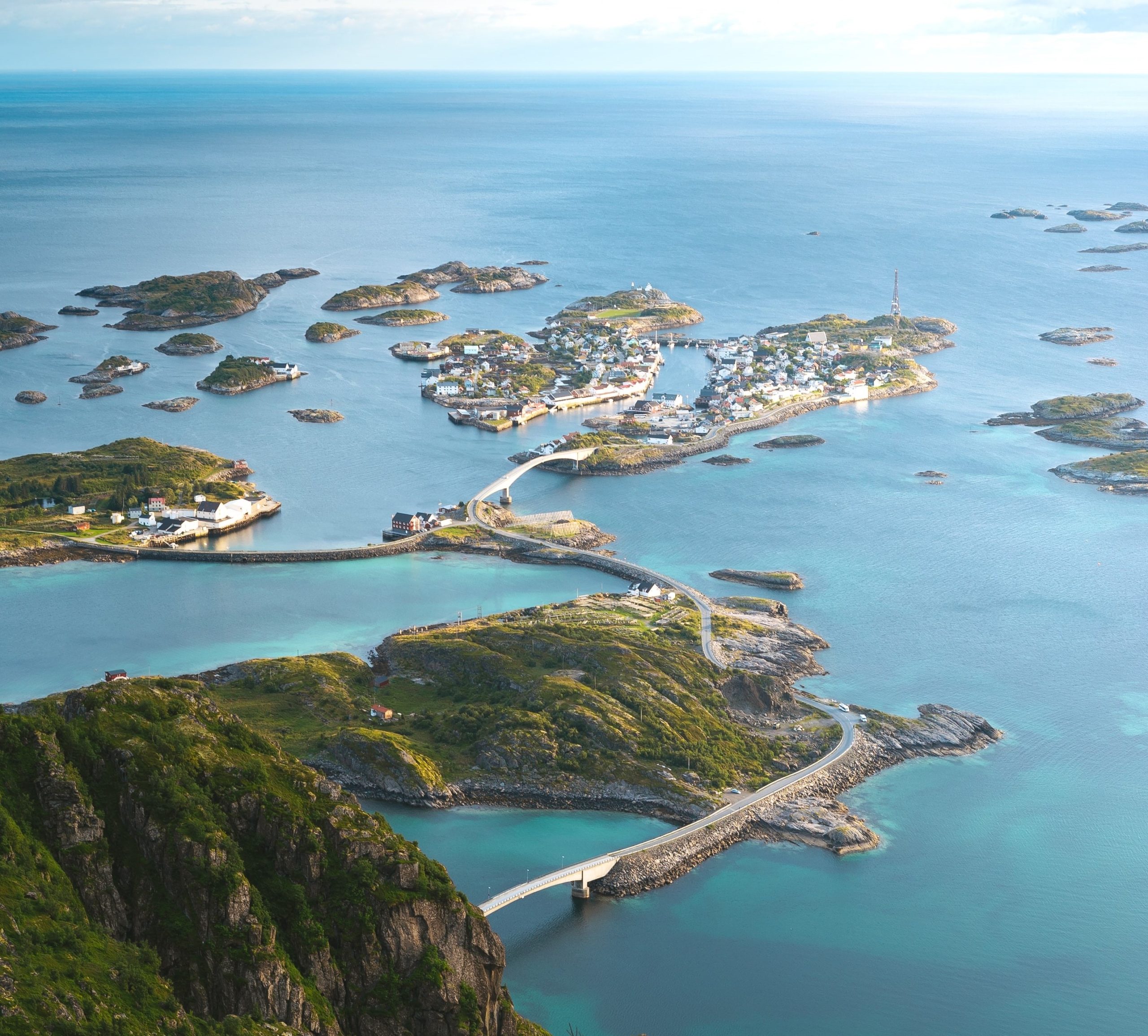
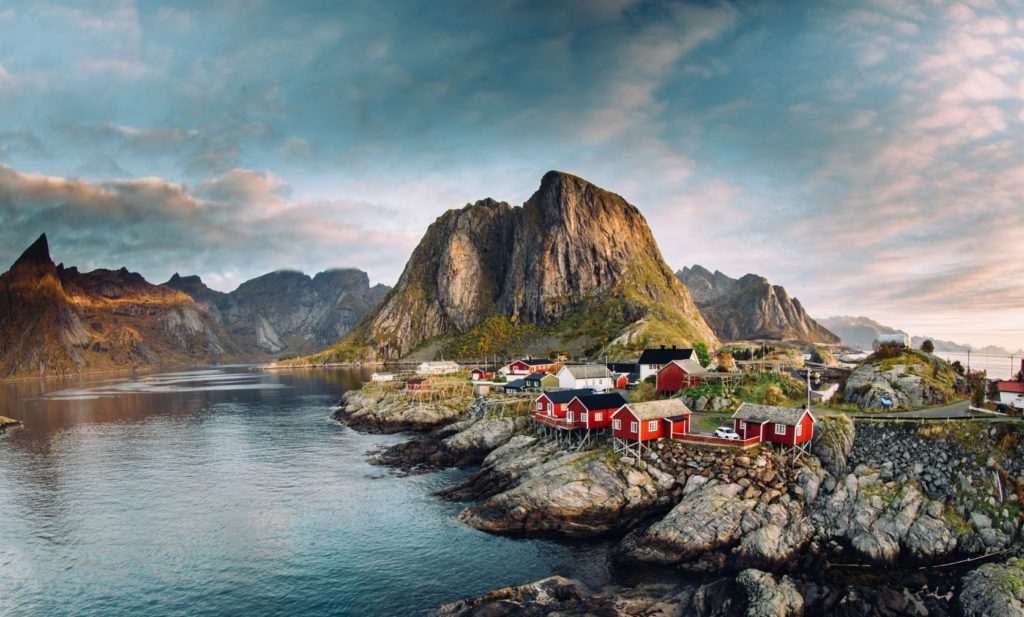
Protruding from the northwest coastline of Norway, 1500 miles below the north pole and 100 miles above the arctic circle, the Lofoten Islands rise from the icy, blue-green waters, as a wall of gneiss bedrock. The height of the mountains here reaches 1000m and the islands themselves are bordered by a white sandy coast. The Lofoten archipelago is known for its remote, rugged beauty. Painters and authors have long drawn inspiration from the islands. Intrepid cyclists are now being attracted to these islands, for a bike tour of epic proportions.

The landscapes are magnificent, with flocks of seabirds scattering the air in search of food and picturesque fishing villages nestled into protected bays. The population of the five main islands is 25,000.

10 Things You Might Not Know About Lofoten

Number 1: The archipelago took its name from the island of Westwogey, which was formerly called Lofoten. Lofoten is translated from Old Norse as ‘trot leg’. Probably, to the inhabitants of that time, the shape of the island resembled the foot of a lynx. 

Number 2: People came here relatively recently, around 6000 years ago. In those days, the conditions for life on Lofoten were very favourable; a cool, but generally mild climate, with a huge amount of fish in the sea and game in the mountains. The rocky islands of today would have been covered in coniferous and deciduous forests.


Number 3: In Svolvær, (midway up the archipelago) the sun is seen above the horizon continuously from 25 May to 17 July. When the midnight sun is seen in the Arctic, the sun appears to move from left to right.


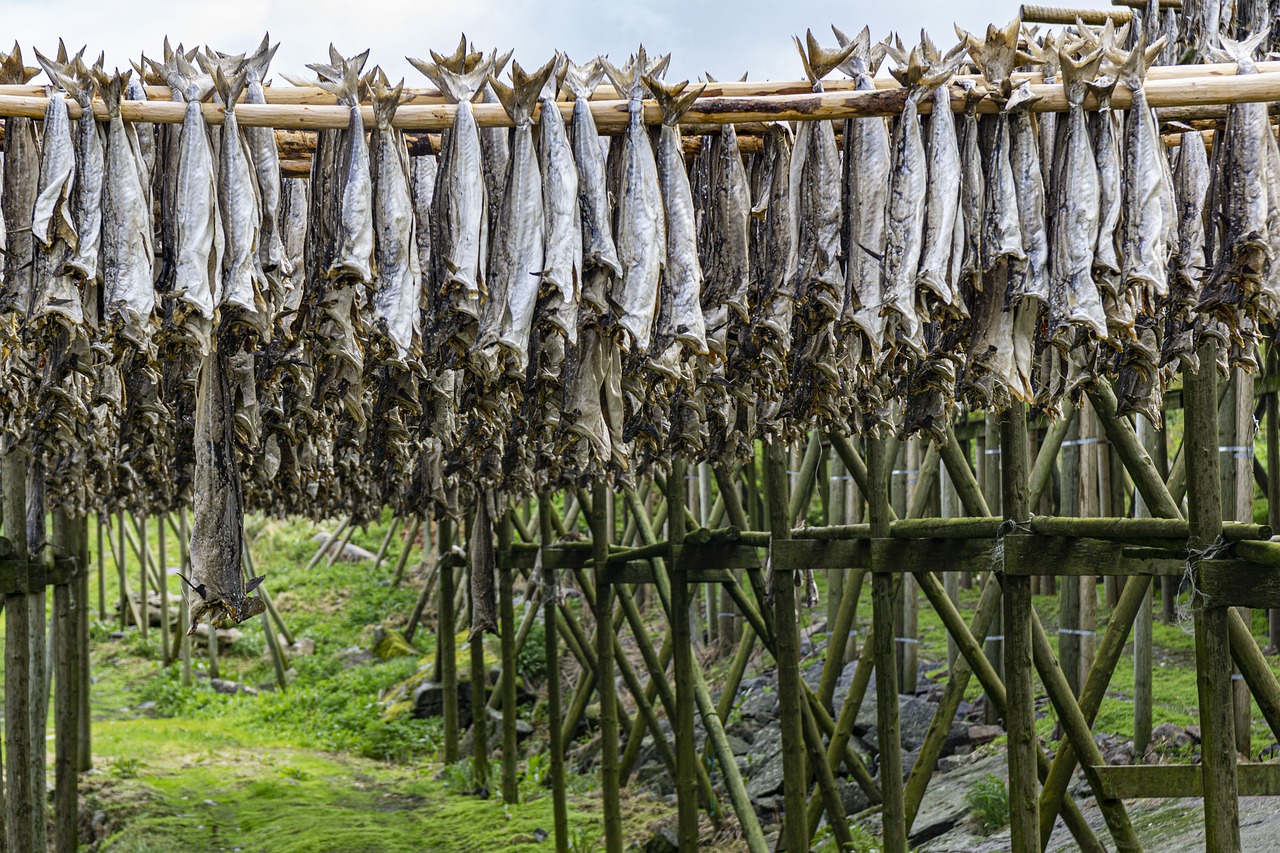
Number 4: Approximately 70% of all fish caught in the Norwegian and Barents seas use the waters around the Lofoten islands as a breeding ground. The islands have been the centre of great cod fisheries for more than 1000 years, especially in winter, when the cod migrate south from the Barents Sea and gather in Lofoten to spawn.

Number 5: The world’s largest deep-water coral reef, The Rost Reef is located 60 miles west of the island of Røstlandet. The reef was discovered in 2002, about 100 kilometres (62 mi) west of the island of Røstlandet. 27 miles long and 4 miles wide, the reef is generated by the coral Lophelia pertusa, and is the world’s largest known Lophelia reef. 

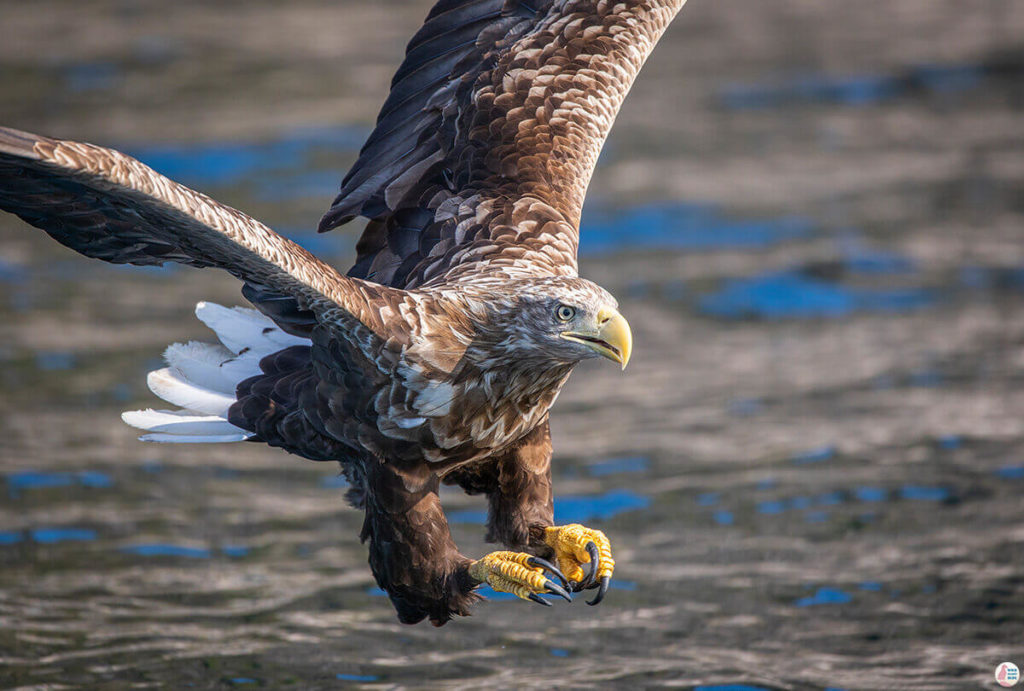
Number 6: Lofoten has a high density of sea eagles, cormorants and millions of other sea birds, among them the charismatic puffin. It boasts mainland Europe’s largest seabird colony. Puffins mate for life. Every year, during the breeding season, pairs separated by thousands of miles, for months on end, somehow reunite at the same burrow. Puffins have special glands behind their eyes that filter excess salt out of their blood and excrete it through their nostrils. This adaptation allows them to remain indefinitely at sea with no reliance on freshwater sources.

Number 7: ‘Operation Claymore’ was the name given to a British commando raid on the Lofoten Islands during the Second World War. The islands were an important centre for the production of fish oil and glycerine, used in the German war effort. The commandos achieved their objective, of destroying fish oil factories and some 3600 tonnes of oil and glycerine. After the raid, the Prime Minister, Winston Churchill issued a memo “to all concerned … my congratulations on the very satisfactory operation”.

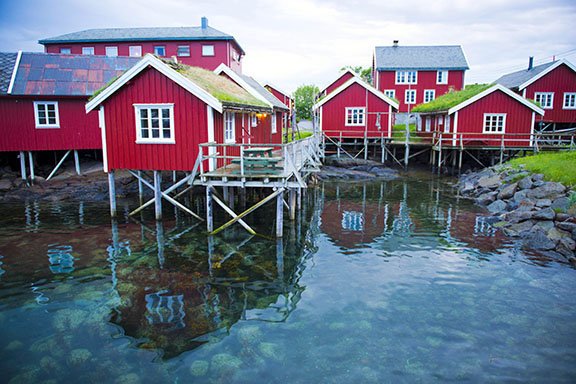
Number 8: The first fishing houses, or Rorbu, were built here in 1120 by the order of King Oysten. Most of the Rorbu belonged to feudal lords at that time, who rented them out, along with tackles and a supply of food. Fishermen paid for the use of Rorbu with almost all of their catch. These days Lofoten fishermen are very wealthy people, and almost everyone has their own Rorbu, (often more than one). The houses are usually rented out to travellers in summer. The price for an overnight stay in a Rorbu is an order of magnitude higher than in an ordinary hotel.

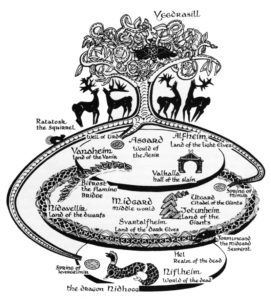
Number 9: In Norse cosmology, all beings live in Nine Worlds that centre around the cosmological tree Yggdrasil. The gods inhabit the heavenly realm of Asgard, whereas humanity inhabits Midgard, a region in the centre of the cosmos. Odin is a one-eyed, raven-flanked god, holding a spear in his hand. Odin pursues knowledge throughout the nine realms. The most popular god among the Scandinavians during the Viking Age was Thor. He wields a mighty hammer called Mjölnir. Thor is associated with lightning, thunder, storms, sacred groves and trees, strength and the protection of humankind.


Number 10: The ‘Lofoten Insomnia’ is a summer bike race held each year in the archipelago. The 234 km race starts from a place called simply Å. This is the most westerly point in Norway. The race begins in the middle of the night and is illuminated by the midnight sun.  

+1 : The Coastal Route between Trøndelag and Bodø

Next-level outdoor adventures await in this cycling paradise. The Coastal Route between Trøndelag and Bodø, was voted one of the world’s most scenic roads.


Pantelleria – a Sicilian Jewel

Could Pantelleria be our next European bike tour destination?

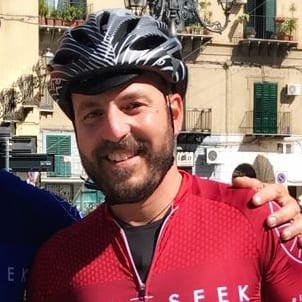
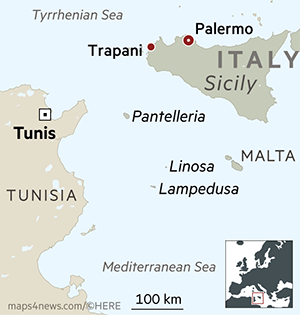
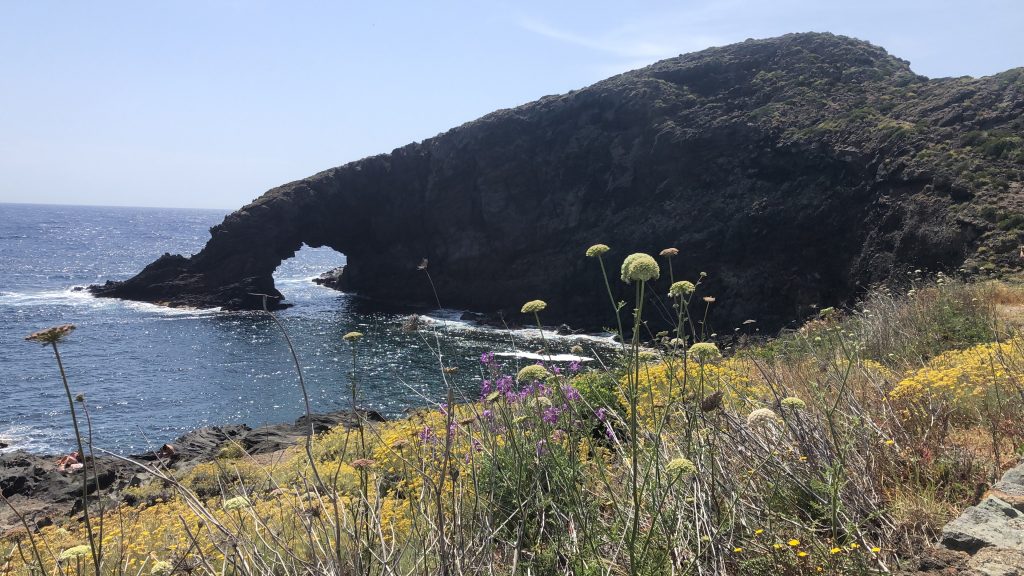
In October we will once again be riding the 3 Islands Tour through Corsica, Sardinia, and Sicily. One of our guides on this adventure, since we first launched the tour in 2016, is proud Sicilian Giuseppe Di Giorgio (pictured above). Giuseppe will be leading us from Palermo to Siracusa on week 3 of this Mediterranean odyssey. When not guiding he is a special needs teacher and agronomist by profession. His passion for Sicily is infectious and his knowledge about his homeland is incredible. As such he was keen to share with us a recent experience he had on the Italian island of Pantelleria, part of the Sicilan province of Trapani. Long since discovered by the cognoscenti – Giorgio Armani spends a lot of time there for example – we thought it would be interesting to present it as a potential 4th island option at the end of what is already an epic European bike tour.

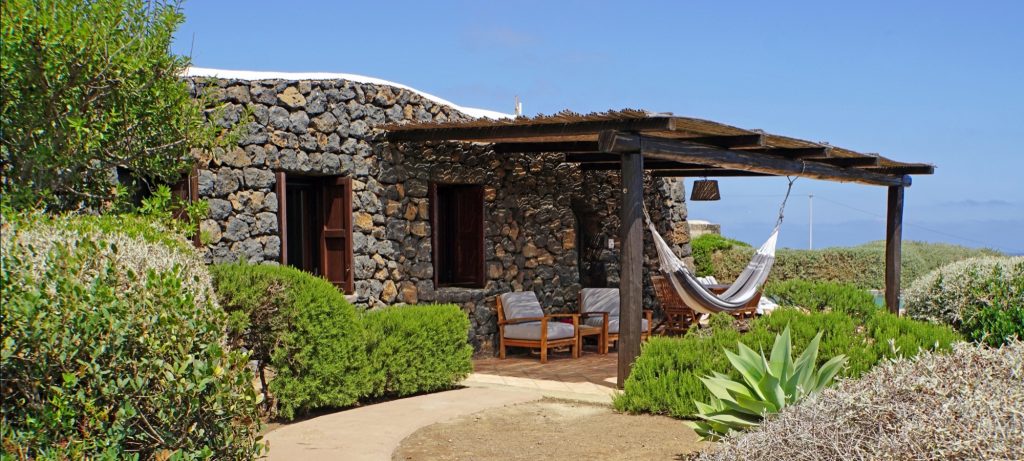
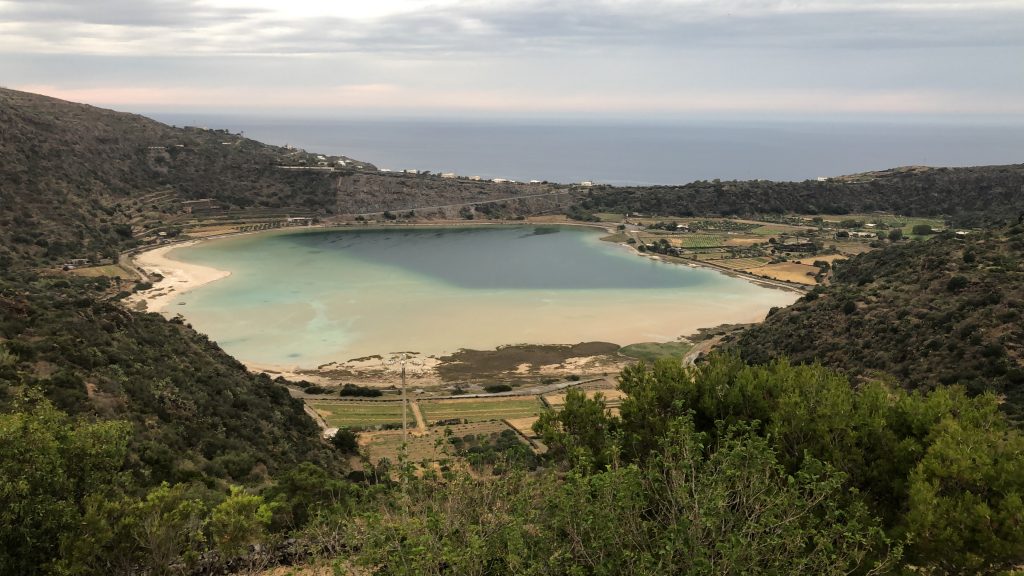
In the words of Giuseppe – 100 Km from Capo Lilibeo (Marsala) and 80 Km from Tunisia, a “black pearl” rises in the center of the Mediterranean – a harsh but sweet and very fertile land, where the luxuriant nature has adapted to live without water, a landing place for all travelers who have always inhabited it, adapting to its wealth. We see this adaptation in the architecture as well. In the ‘dammusi’ houses, born as stone fortresses with barrel roofs and stone walls two meters thick, and the Jardini – large hollow towers that welcome a single citrus tree and shelter it from the wind. the island’s natural gems include the buvìre wells of fresh water at sea level, and the Specchio di Venere – a large natural thermal lake that reflects the colors of the sky.

An example of a dummusi on Pantelleria

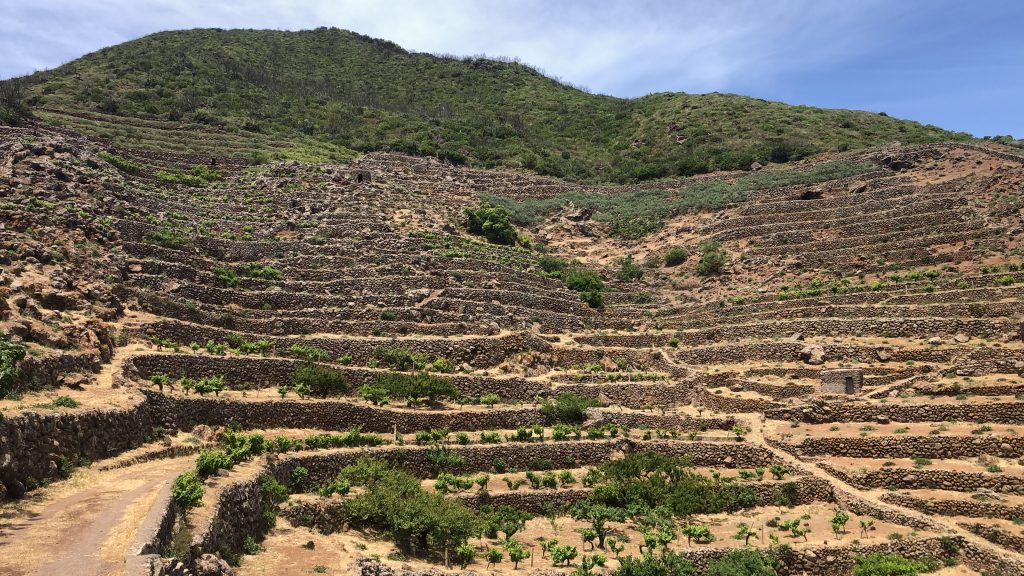
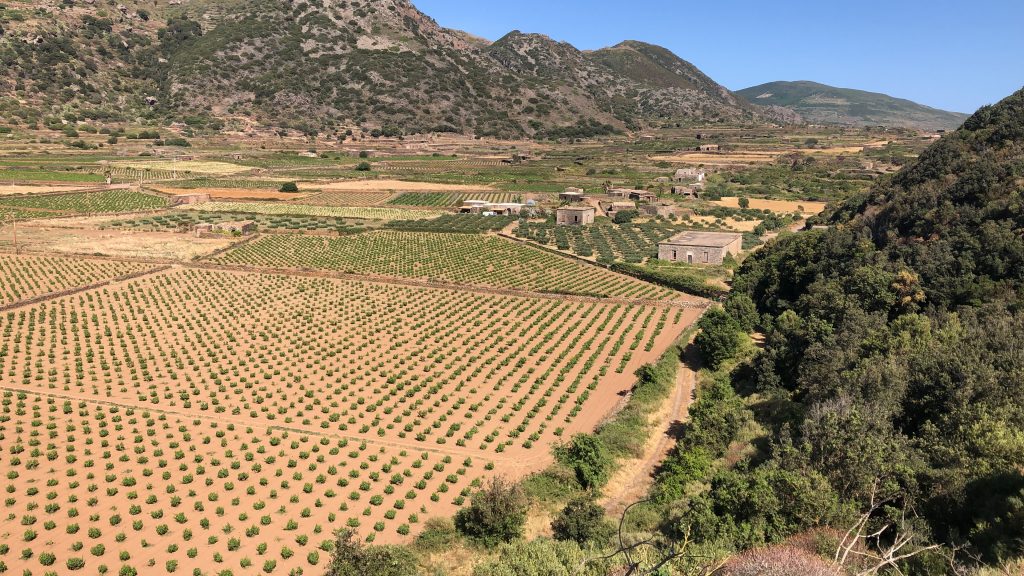
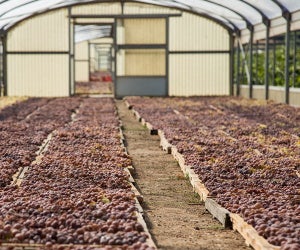
In 2016 the first National Park in Sicily was born in Pantelleria, to preserve its dense Mediterranean woods and its ancient agricultural history, establishing a UNESCO site for the cultivation of zibibbo and the production of sweet passito wine.

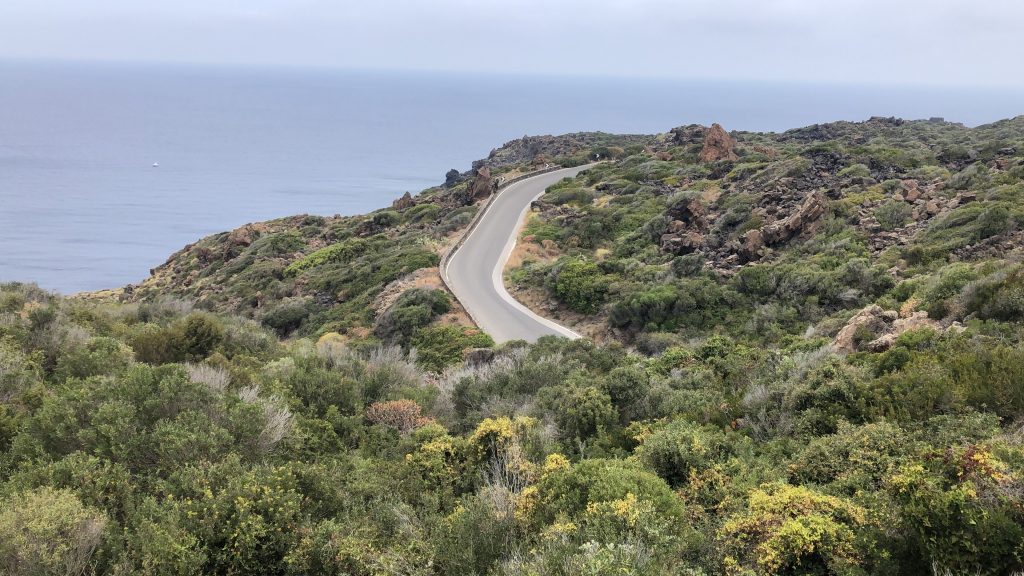
It is here that I spent a period working with the National Park to become an official guide, like Ulysses, and with a desire for discovery I walked the paths, and cycled the ancient Roman roads, meeting caper growers and hearing stories of resistance – those who choose to live on this island must choose to resist adversity and live in harmony with nature.

When you discover something really beautiful you want to share it immediately with your closest friends, that’s why I called Dylan, to suggest he get to know this corner of paradise, and share it with others. I invite you to spend a few days with me in the middle of the Mediterranean Sea, a place of great charm, a crossroads for all people.

Some of my highlights for a stay on Pantelleria

  • Bathing at night in the thermal waters of the Mirror of Venus lake
  • Walking in the Gelfisér lava flow
  • Collecting capers and taste the Passito wine
  • Enjoying an Aperitivo in the Pantelleria garden of Peppe D’Ajetti
  • Cycling all around the island
  • Wine tasting in the dammuso of the Serragghia Plain
  • Eating Pantelleria salad…. capers, oregano, tomatos, onions, potatoes
  • Experiencing a sunset dinner in the port of Scauri
  • Diving among the Punic wrecks with Eddy
  • Taking a sauna in a natural dry bath cave

You can see Giuseppe’s Bio on our Team page, and for more info on our 3 Islands Tour through Corsica, Sardinia, and Sicily you can download the Tour Overview.


Top 10 best coastal cycling routes according to our team

There is something truly special about a coastal cycle ride, complete with dazzling water views as the miles slide by. On our epic cycling tours, we get to experience some of the worlds best coastal cycling. Here are our top 10 routes from our epic cycle tours for your reading pleasure according to our trip specialists.

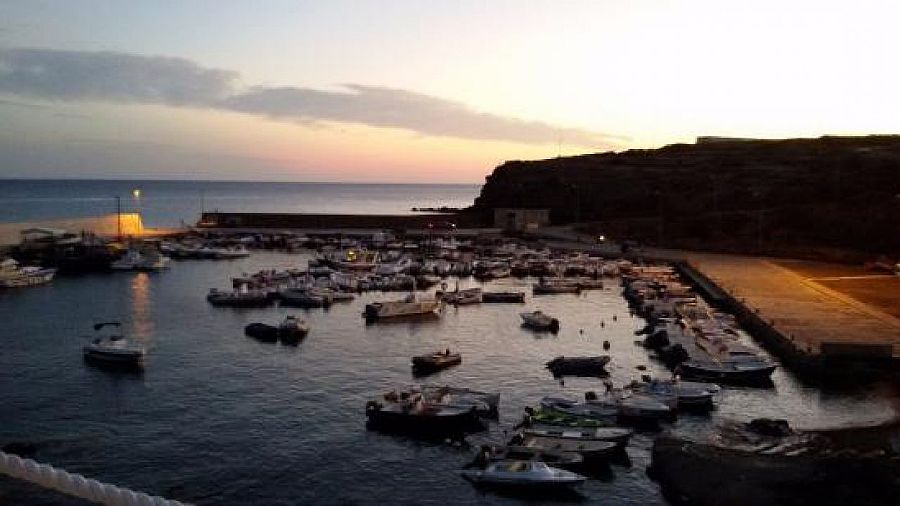
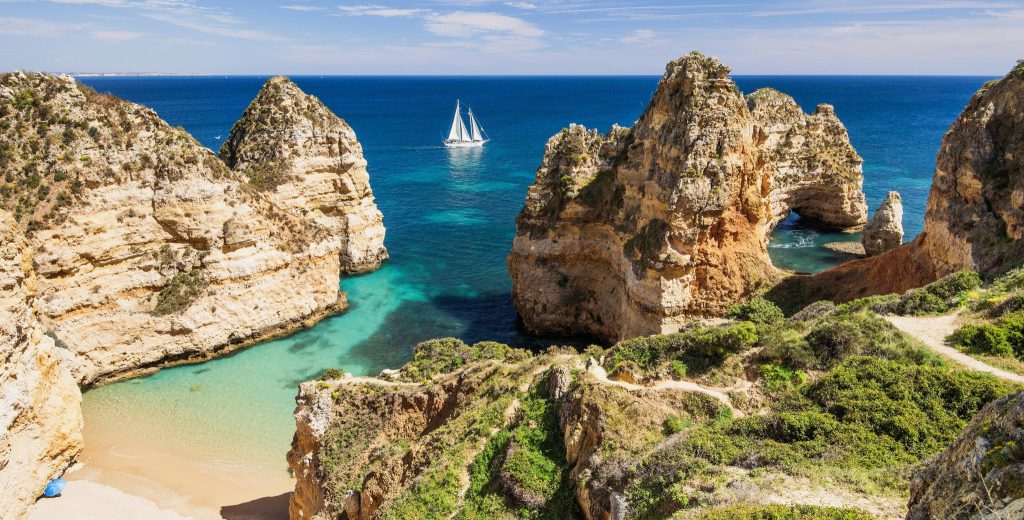
Cycling on the Sardinian coast

1. Sparkling Mediterranean views, colourful Bosa and superb local wines, Three Islands tour, Sardinia, Italy 

Cycling from Alghero to Cabras along the coastal line of northwest Sardinia, we will ride some of the best cycling routes of the island; a journey through 3000 years of Mediterranean history, touching the colourful Bosa on the way. Bosa is one of Italy’s most beautiful towns, with its rainbow of pastel houses a dream for your travel snaps.

The ride starts in one of Sardinia’s most beautiful medieval cities, Alghero, with its lively historic centre. From there you take a rolling road by the stunning coastline – under the wings of Griffon Vultures – followed by a brief hilly section, to end the day immersed in pastures and fertile cereal fields and the vineyards of the Oristano region. An unforgettable day, especially after reaching Cabras for a well-earned sip of Malvasia or Vernaccia di Oristano, the unique local wines. Enrico Casini

Corsica coast ride

2. Pink granite rock formations and coastal ridge riding, Three Islands Tour, Corsica, France

Having been part of all editions of the 3 Islands Tour in their entirety, there are many beautiful coastal rides with stunning scenery that I could write about. However, there is one particular route on Corsica from Calvi to Porto that stands out above the others. This day is my absolute favourite, and it begins literally at the start of the day as we leave the beautiful small and vibrant town of Calvi on an 82km ride with around 1370m of elevation.

Within just two kilometres we are riding on coastal balconies with views of the fantastic cliffs and rock pools below to our right, and equally stunning rock formations of pink granite, inland to our left. This quiet but beautiful road meanders and climbs gently for the first part of the day, before heading slightly inland and onto roads of slightly more challenging construction. Nothing to worry about here though as there is hardly any traffic.

After morning coffee we’re back on the coastal balconies and heading due south, the seawater becomes brighter and more glorious shades of blue. Meandering through tiny resorts we brush shoulders with some tourists, but not too many as we are well away from the large holiday destinations. Crossing the border between Haut Corse and the Corse du Sud we can begin to see the granite formations changing in colour from pink to red.

Later in the day we ascend and skirt around the UNESCO listed Scandola Nature Reserve to the cliff tops that almost completely envelope the tiny yet stunning coastal town of Porto. The views at this point are arguably some of the best seen on the whole tour. We have a great opportunity to stop and photograph the port, from different heights as descend down to our magnificent overnight destination.

My advice to any Ride & Seekers for this day is to not rush this beautiful ride, take your time and shoot some fantastic photos for your everlasting tour memories! The route is around 82km with 1372m of elevation. Richie Mitchell

3. Islands and spectacular Japanese bridges on the Shimanami Kaido, Samurai Tour, Japan

I can probably count on one hand the number of other “serious cyclists” I saw during our 10-day trip riding around Japan’s Shikoku Island. The vast majority use the bike as a means of transport and not so much by the aforementioned “serious cyclists”. But this doesn’t mean Japan isn’t a bike-friendly destination, the cars are small enough to be far less imposing on the road, the drivers are extremely courteous and respectful and the road surfaces and infrastructure are some of the best I’ve experienced anywhere in the world. Nowhere is this more evident than the Shimanami Kaido, 80km of pristine Japanese roads and cycle paths that crosses 6 bridges and 6 islands between Imabari on Shikoku and Onomichi on the mainland of Honshu.

Japan is an island nation and as you cross the Seto (narrow seas) this becomes incredibly evident. The area is actually a volcanic mountain range that was filled in by the sea when the polar ice caps last melted 50000 years ago. The network of bridges spanning this sea is a stunning engineering achievement that allows you to propel yourself high above the container ships and fishing boats, passing way beneath, as you head towards yet another island. Some have coastlines of rugged cliffs and rocks, some with beautiful sandy beaches. The route doesn’t just hug the shorelines though, we meander up through the forests into the inner hills before descending back to tiny fishing villages and towns with beautiful Buddhist temples and Shinto shrines.

And yet with all this natural beauty linked by engineering masterpieces I probably only saw enough “serious cyclists” to fill up the other hand. There were many tourists on city bikes with dresses blowing in the sea breeze, but I still felt a sense of privilege to be able to cycle this incredible route, and couldn’t help thinking that one day I will strike up a conversation with someone else who has ridden it, but that day may be a long time coming!

The cycling route can be ridden in either direction (from Imabari or Onomichi). It is well signposted and maintained, and the bridges of the route are accessed by ramped bridges with a gradual incline. Depending on your cycling level, it can be comfortably completed in a day. James Geen

Cycling off Venice

4. Island hopping from Venice Lido to Chioggia on the Caesar Tour, Italy 

The third week of our Caesar tour (London to Rome) is one for the ages as we ride from Lake Como to the Serenissima – Venice. Along the way, we take on the iconic Stelvio climb and then ride over the stunning Dolomites before descending down to the Po valley and on to Venice. Rather than stay in Venice itself, we base ourselves on the iconic Lido di Venezia that is one of the two barrier islands that serve to protect Venice from the Adriatic Sea.

This 11km long island, that is also the venue for the eponymous film festival, provides us with a novel coastal ride as we island-hop to the mainland and to the charming fishing town of Chioggia that is also known as ‘Little Venice’ and renowned for its beetroot! We start the day by riding the length of the island to catch the scheduled ferry to the other Venetian barrier island of Pellestrina. There are 4 main villages on pretty Pellestrina that are known for their colourful painted houses and large embankments.

What makes this coastal ride so novel is how we get from Pellestrina to the mainland. There is no onward ferry to get us from Pellestrina to the mainland and it here that our friend Mario comes in. When we were conceptualising the Caesar tour we were faced with the quandary of wanting to stay on Venice but not sure how to get off! Mario is a local fisherman who provides the seafood for our fantastic end of week meal at the Osteria Al Merca and had heard about our challenge via the owner. Every time we come through now he comes and picks us up from Pellestrina and takes us to Chioggia.

Thanks to Mario we have created a coastal ride that provides a really interesting insight into a side of Venice that few get to experience whilst enabling us to avoid the traffic and industry that are found on the more conventional routes out of Venice. On arrival into Chioggia we grab a coffee and a local tramezzina sandwich before riding down the coast to the Byzantine jewel of Ravenna. Dylan Reynolds

Tangiers lighthouse

5. Cycling the Mediterranean coast from Fnideq to Tangiers on the Conquest of the Moors Tour, Morocco

Travelling in magical Morocco will make you feel like time stands still. Travelling by bicycle here gives you a true sense of being off the well-beaten path. Our final days riding in Morocco is a real highlight of our epic Conquest of the Moors tour. We ride from our stunning beach retreat near Fnideq towards the Northern Mediterranean coast of Morocco.

Within a few miles, we are skirting around the Spanish enclave of Ceuta, one of only two Spanish enclaves on the African continent, continuing onwards to Plage Dalia on the North coast. We have our coffee stop at Plage Dalia where we sample Spanish influenced seafood and snacks our friend Ahoud’s fish cafe. With the crystal clear waters calling, a swim is also an option for those looking for a dip in the Med.  From here we follow a remarkable coastal ridge road, beach hopping between Plage Kasar Sjir and Plage Oued Alain before our final ride into atmospheric Tangiers. Ben Weigl

Marco Polo coast road

6. A cycling paradise with dazzling sea views, Marco Polo Tour, Albania

Let’s face it, none of us, before going to Albania for the first time, would have thought of finding one of the most beautiful coastal paths in the Mediterranean. Well, get ready to be surprised by this corner of paradise for cyclists, a series of hairpin bends that you would expect to find in the Dolomites, are set in a mountain overlooking the sea in the wonderful Llogara park in southern Albania, on the Canale di Otranto. Mythical places that remind us of Homeric legends, but also where the sounds and morphology of the Balkans magically meet with the colours and warmth of the Mediterranean. So let’s get rid of prejudices and set off on a bike to discover this wonderful territory.

We leave the lively avenues of Vlora along a coastal path that initially follows the city beach and then continues along gentle cliffs and small seaside hamlets. After passing Orikum, we enter the park in a mountain landscape, after a memorable climb of over 15 km we reach the Llogara pass (1,050 m above sea level). From here we enjoy a wonderful panorama that sweeps from the coasts of Puglia to the Greek island of Corfu, to then dive into the exciting bends overlooking the sea that bring us back to the coast between olive groves and small villages clinging to the cliffs. The town of Saranda, in the far south of Albania, is the perfect place to end an unforgettable day. Marcello Usala

Hvar coastal ride

7. Crystal clear Adriatic waters, UNESCO sites and lavender, Marco Polo Tour, Croatia

Starting our day in Stari Grad (Hvar), we head straight towards the incredible Stari Grad Plains, a world heritage listed UNESCO site. The Stari Grad Plains, built in the 4th century by the Ionian Greeks, are agricultural drywall formations and shelters which are still used to grow grapes and olives today. From there we head through pretty port towns Vrboska and Jelsa and into the wilder centre of Hvar island, riding through pines and rugged rocky landscape.

As we turn and head towards Hvar Town, the final 20km of the ride brings with it jaw-dropping sea vistas and lavender fields. The route meanders through Brusje with its fragrant lavender fields (blooming late June/early July) and onwards with sensational sea views to either side. It is a feast for the senses as we head towards our destination of Hvar Town. We finish the day at the hip Hula Hula bar for sundowners and toast a wonderful day on the bike. Megan Reynolds

Cycling Cap Corse

8. The dizzying heights of Cap Corse, Three Islands Tour, Corsica, France

We leave Bastia behind heading North on the Eastern coast of Cap Corse, we ride a series of little ports, beaches and marinas before the climbing begins. The elevation begins to increase as we climb into the hills to the Northernmost point of Corsica where views of Ile de la Giraglia will await us. As we turn to head back down the Western side of the cape, the coastal views just keep coming. And it is spectacular. The route takes us along cliffside roads, high above the sea with breathtaking views.

The route takes in some of the islands most fascinating historical remnants, the Genoese towers. The watchtowers, built in the 16th century, were manned to signal the arrival of potential Barbary pirates. Fires were lit to communicate between the towers and with the surrounding villages. Some of the towers still remain today, of which you will see some fine examples along our route.

The route continues down the coast, taking in the incredible black sand beaches surrounding Nonza and onwards to finish in Saint Florent. Set on a sparkling bay, this medieval village is perfect for an evening aperitif overlooking the marina. Simone Scalas

Lunch on Lake Trasimeno

9. Cycle a real historical battlefield at Lake Trasimeno, Hannibal Tour, Italy  

“Cycling around the battlefield at Lake Trasimeno is one of my historical highlights of the Hannibal epic. Rare indeed is it to be able to walk (cycle!) through the exact location of such an iconic battle. but thanks to the ancient sources and the unique geography, we can!” Ben Kane.

On tour, we depart from Pienza (Tuscany) and ride past the noble vineyards of Montepulciano before we make our way to the site of one of Hannibal’s most famous and bloody battles, Lake Trasimeno. To this day, this battle is considered by some to be the greatest ambush in history, with 15,000 Roman soldiers losing their lives, with Hannibal losing only a mere 1500 by comparison.  The battle was reportedly of such proportions that the waters of Lake Trasimeno ran red for days with blood from the nearby battlefield.

In present times, there is still recognition of Hannibals greatest victory, with many information boards which mark significant sites and provide further information on the battle. For our guests on tour, we also picnic at the lake itself during our day ride and contemplate the events of this historical place. From there, we continue through the Umbrian countryside to our destination of Todi, a majestic hilltop town.

10. Tiny coves and temples on Noto Peninsula, Samurai Tour, Japan

Our detailed GPS routes allow riders to get off even the quiet coast routes and be led through the laneways of little fishing villages. The inhabitants here continue to live with the rhythm of the ocean as they have been for centuries. Smooth, fantastically engineered roads greet you as you weave along the coast with expansive views of the Sea of Japan. You will cycle in and out of small coves tucked in among the cliffs dotted with fishing craft.  Temples and shrines decorate the most beautiful hilltops and rock outcrops. Once off the bike, unwind in one of the hotel natural hot springs which are often placed where they afford a slower more contemplative coastal view. Finish the day sampling a wonderful collection of the local fruits of the ocean, decorated so beautifully, it can be said that we dine on ‘edible art’. Ben Weigl

We hope you have enjoyed our round-up of the best coastal routes. Let us know in the comments if you have ridden any of these or give us a heads up on your favourite coastal routes!


Top 10 memorable moments in 2019 according to our team


As we look forward to the start of our 2020 season, we are reflecting on a epic 2019 season. We all know those moments when travelling where some sort of magic happens. All seems right in the world, your every day worries far from your mind. You sit back and think there is no place you’d rather be. Whether it is a particularly special sunset, making a new friend from a foreign land or a particularly scrumptious meal. There are many moments like these that stay in our memories long after our tours are over.

So we asked our team what their best epic cyle tour magic tour moments were off the bike. A pretty tough ask considering what we pack in during a season but we have collated some of our favourites here:

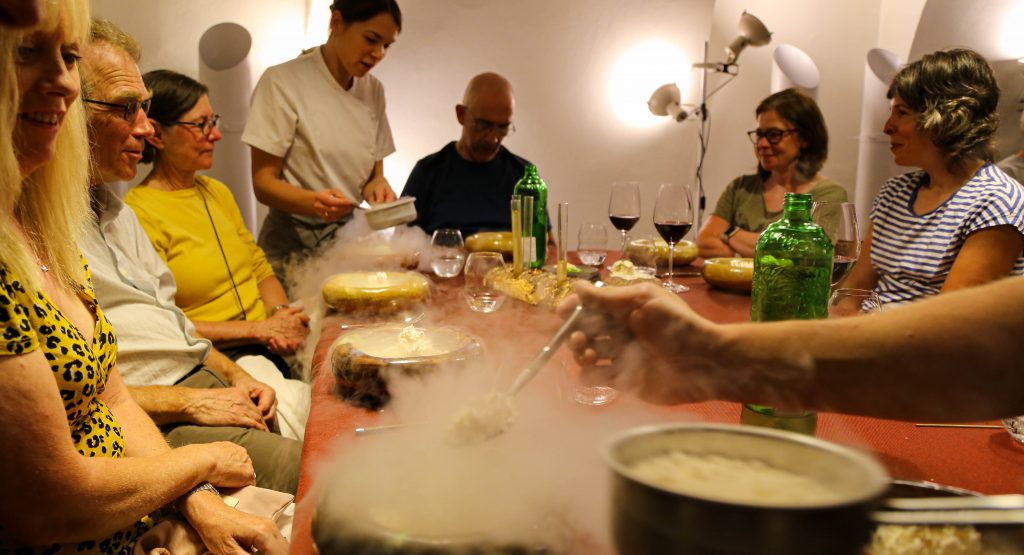
1. Nouvelle cuisine with Lithuania’s best chef, Vilnius (Napoleon Tour)

“When we arrived at this beautiful restaurant we knew we would be treated to a special dinner. The chef is considered the best in Lithuania and joined us for each course to provide a description of each creation of our tasting menu. It added a special element to the meal and led to many of us photo documenting our culinary journey. The chef was even generous enough to share his secret seed bread recipe with me too!”” Colette Saunders

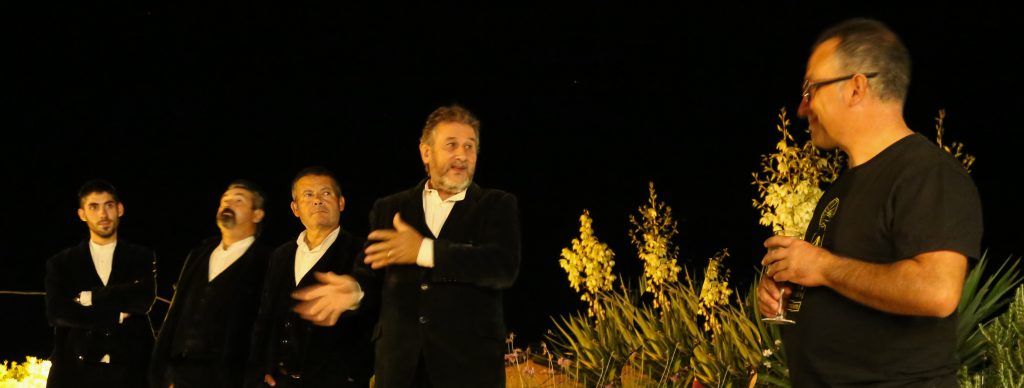
2. A private concert of true Sardinian folk songs, Sardinia (Three Islands Tour)

“With a perfect setting outside on the terrace of our Albergo diffuso hotel in Cabras Sardinia, I arranged a private concert with a “Canto a Tenore”, a group of Sardinian 4 singers performing traditional and ancestral songs using just their voices (or ‘A Cappella’).  For me, this singing group is special being friends of mine who also sang at my wedding. This type of singing is called the Cantu a tenore and is practised in groups of four in a close circle. For me it is a true taste of Sardinian culture and a powerful performance to witness.” Simone Scalas

3. History direct from a local in Berlin (Iron Curtain Tour)

“To commence the Iron Curtain tour we arranged for a bike tour around the city, led by Peter who recounted his stories of trying to escape East Berlin. He tried 3 times, the third attempt of which he succeeded. Providing this historical context is extremely important to us at Ride and Seek and the personal experiences of Peter had us hanging on his every word. ” Dylan Reynolds

4. Lunching like a king from Paris to St Petersberg (Napoleon Tour)

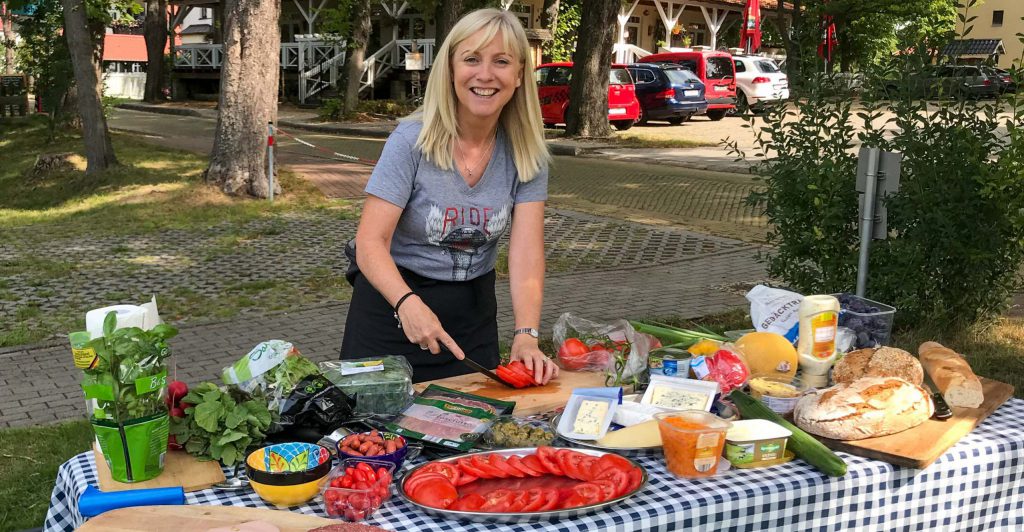
 “The Napoleon tour has many picnic’s, being a little more off the beaten path. For me the highlight of this tour was the superb picnic’s prepared with love by Colette. We pride ourselves on great picnics, but I think Colette’s really are something special.” Gabriel Donati

5. Exquisite dinner overlooking an archaeological marvel, Agrigento, Italy (3 Islands Tour)

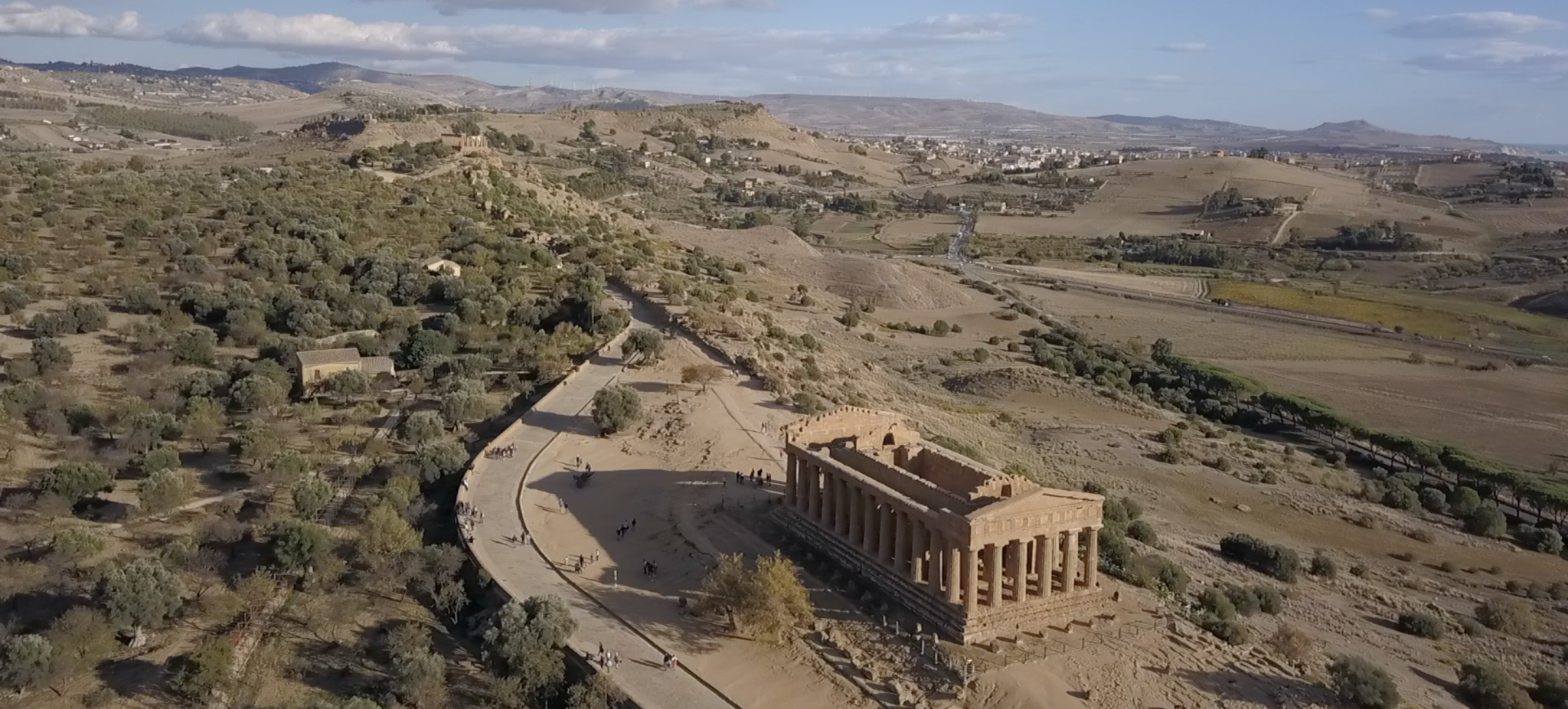
“As part of the Three Islands tour, we visit the Valley of the Temples in Agrigento, Sicily. The Valley of the Temples is an archaeological site with the remains of seven temples in the Doric style. Our sunset dinner at Villa Athena for me is magical, enjoying a Sicilian feast overlooking this extraordinary historical site. It’s a dinner that remains long in my tour memories.” Richie Mitchell


6. A spa with an extraordinary view, Japan (Samurai  Tour)

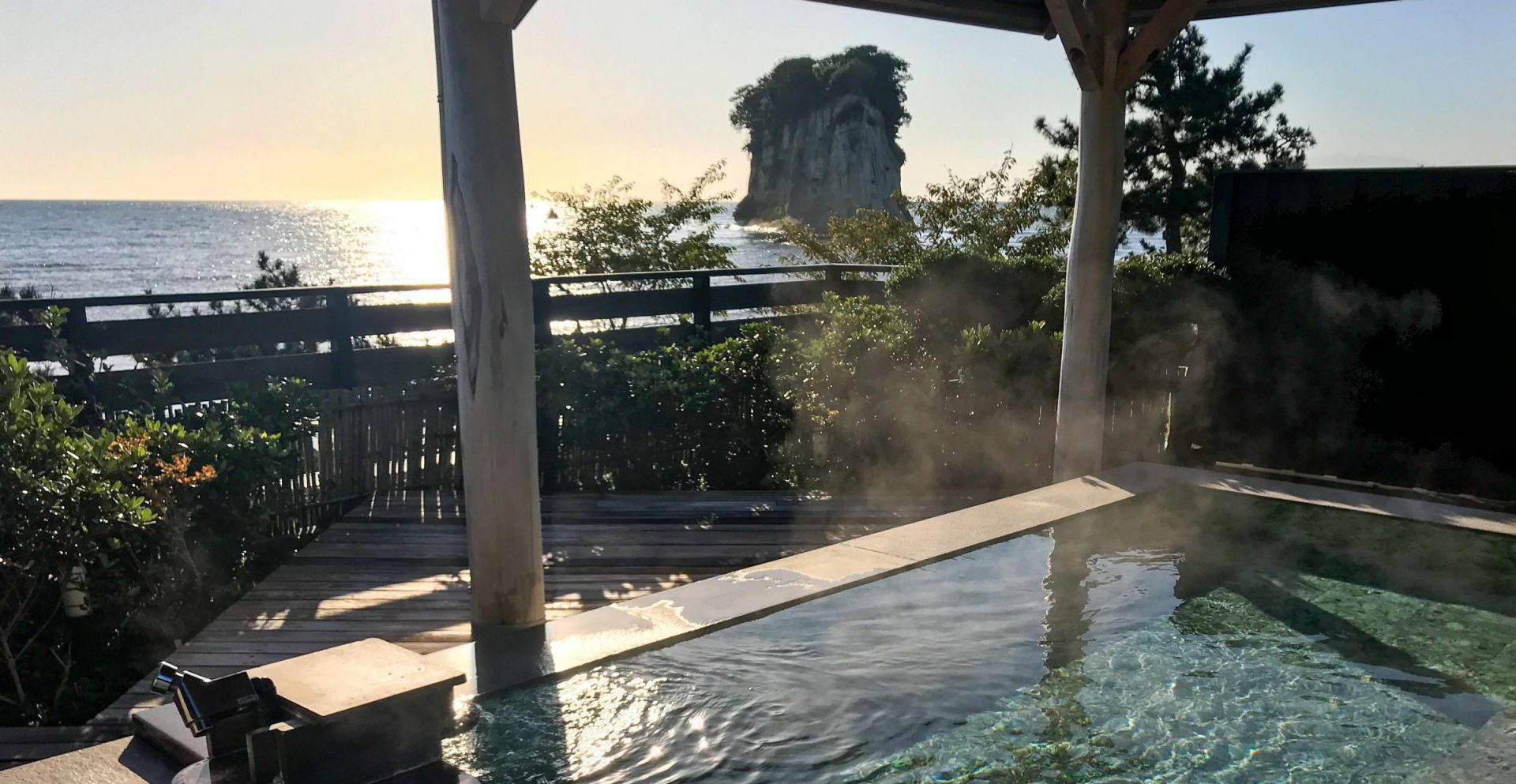
“One of the best things about cycle touring in Japan is the Onsen (spa) culture. Nothing soothes the muscles like a soak in the onsen after a long day in the saddle. It is even better when this is combined with a great view like our hotel near battleship rock on the Noto Peninsula.” Ben Weigl

7. Sunset dinner overlooking Lake Como, Italy (Caesar Tour)

“What an awesome way to start the tour. Our Caesar custom tour starting from Como took the funicular to Brunate for a sunset dinner and drinks. It was a beautiful evening, great food and wine and great company. It made for a truly memorable start to the tour.” Chris Small

8. A Catalan feast and memorable spot for a historical chat in Madremanya, Spain (Hannibal Tour)

“An outstanding tour memory for me is the family-run boutique hotel in Madremanya at the start of the Hannibal tour. Before an incredible tasting menu (off the scale delicious!), as the guests enjoyed a local wine, I weaved the story of Hannibal’s extraordinary exploits, and how he shook Rome’s foundations to the core.” Ben Kane


9. Spontaneous swimming on the Tatsukushi Coast, Japan (Samurai Tour)

“Arriving at a pretty beach on the Samurai tour, we grabbed our swimmers out of the van and dove in the surprisingly warm sea for a dip. Some of us paddled in our kit, some of us swam far out to sea. It was a moment of freedom and embracing simple pleasures. And to top it off, the stop was planned to have access to a shower and change facilities, followed by a beautiful morning tea of matcha cake, fresh cut-up fruits, energy bars, and hot tea and coffees.” Meg Reynolds

10. A superb slow food dinner in an Albanian Agriturismo (Marco Polo Tour)

“Scouting is usually a very busy time with not much time for sitting down to a proper meal. This year, Dylan and I scouted the Marco Polo tour and found a gem. We have always embraced the ‘Slow Food’ ethos so finding an agriturismo in Albania with a ‘slow food’ menu was both surprising and exciting. The Agriturismo hotel was once used to intern political prisoners but now provides employment for many in the local community. And the food was incredible. We can’t wait to take our guests back there in 2020 to eat and stay.” Marcello Usala

What were your favourite travel moments of 2019? Share your thoughts in the comments