Reconquista: A Day in Tangier

Tangier, situated on Morocco’s northwest coast, overlooks the Strait of Gibraltar, linking the Mediterranean Sea and the Atlantic Ocean. With a history dating back millennia, Tangier has been a crossroads of civilizations, attracting literary figures like Paul Bowles and William S. Burroughs in the 20th century. Its cultural allure, strategic location, and literary associations have made Tangier a magnet for artists, writers, and travellers seeking inspiration and adventure. That is why we are here!

We’ll have a walking tour on the first day of the second stage of Reconquista, but if you arrive early, take some time to wander into historic Kasbah, a maze of narrow alleys and charming squares. Discover the Kasbah Museum, housed in the former Sultan’s palace, showcasing Moroccan artifacts and stunning views of the Strait of Gibraltar.

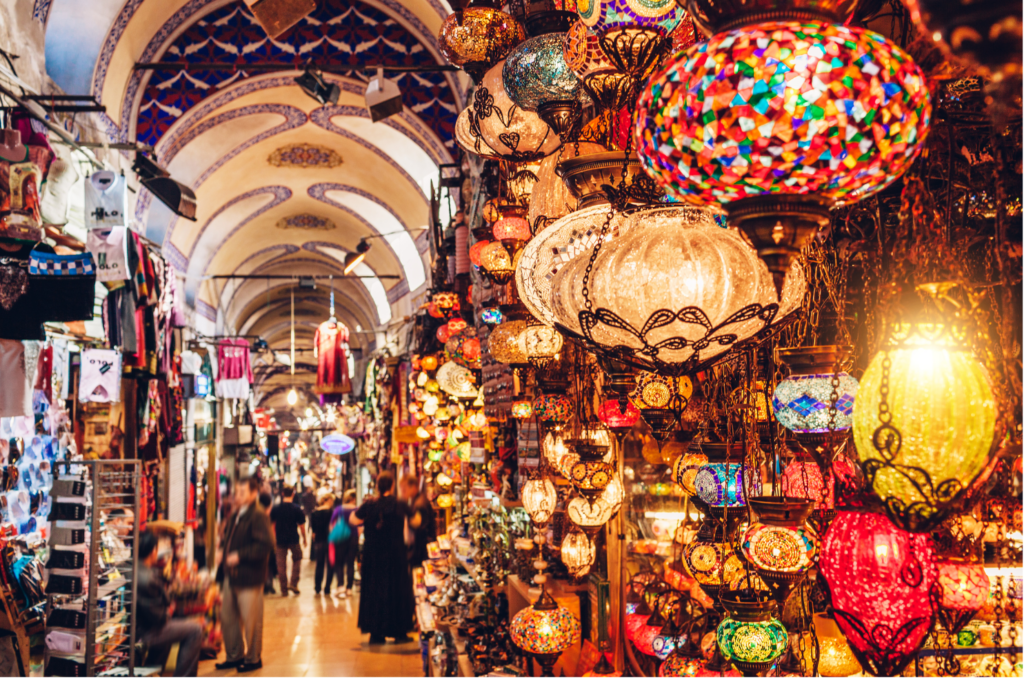
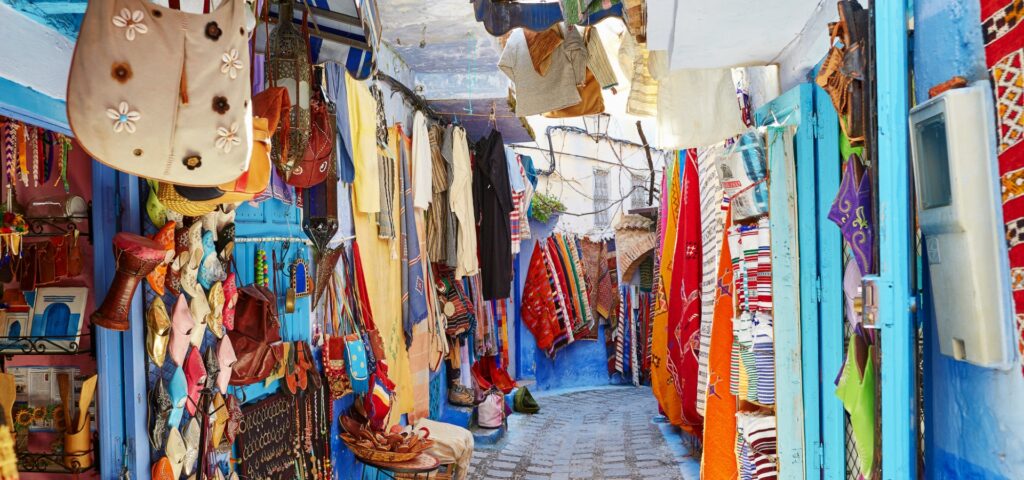
Continue to the Grand Socco, the city’s bustling square, where you can immerse yourself in the vibrant atmosphere and shop for local crafts and souvenirs. Don’t miss the Mendoubia Gardens nearby, a tranquil oasis with lush greenery and towering palm trees. The Grand Socco, Tangier’s bustling square, pulsates with energy and vibrant activity. Surrounded by historic buildings and bustling markets, it serves as a vibrant hub where locals and visitors converge. Here, the aromas of spices mingle with the sounds of commerce, creating a sensory tapestry that epitomizes Tangier’s rich cultural essence.

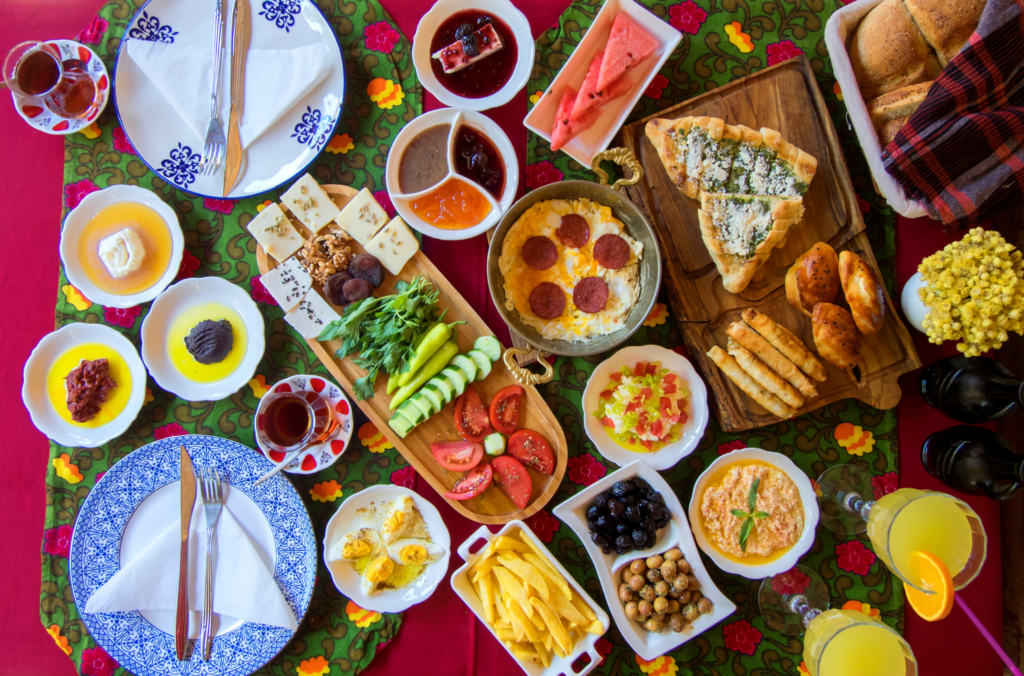
For a taste of Tangier’s culinary delights, head to the Petit Socco, known for its authentic Moroccan cafes and street food vendors. Indulge in flavorful tagines, couscous, and pastries like msemen and chebakia, accompanied by sweet mint tea or freshly squeezed orange juice.

After lunch, explore the American Legation Museum, housed in a historic building and showcasing Tangier’s role in American diplomatic history. Wander through its galleries and learn about the city’s cultural significance as a meeting point for artists, writers, and diplomats.

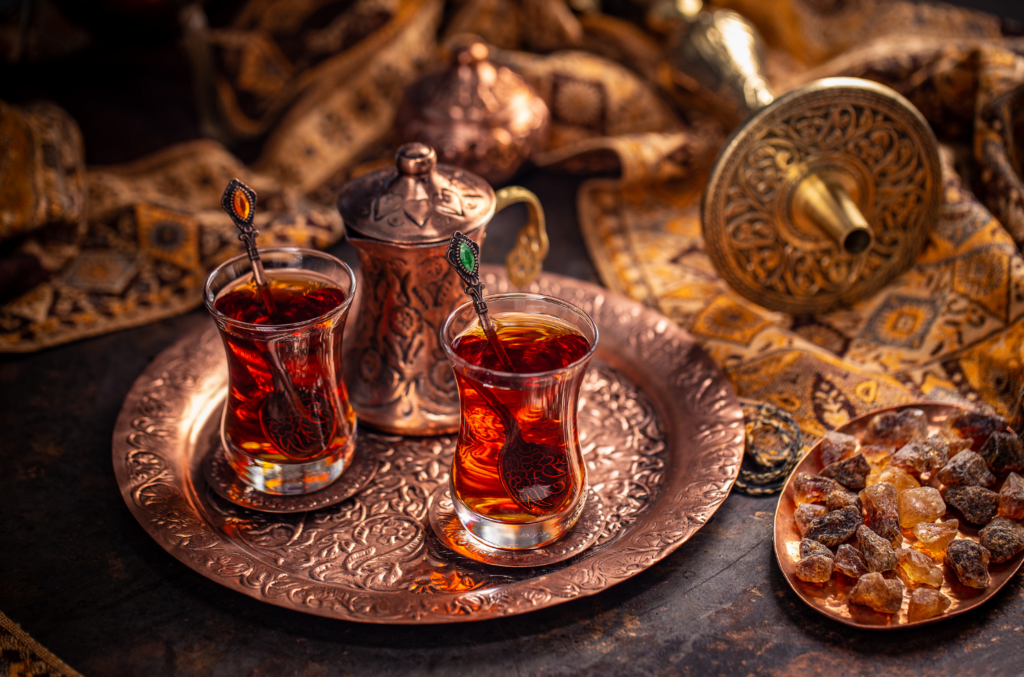
On your walk around be sure to experience Tangier’s local ambiance with a refreshing mint tea at Café Hafa or Place de Parc. Join the locals in savouring this traditional drink amidst the lively atmosphere, soaking in the city’s vibrant energy and cultural charm.

As you wander through Tangier’s vibrant streets, you’ll encounter remnants of its storied past, including its connection to the Reconquista. Tangier was briefly under Spanish control during this period, serving as a strategic outpost in the Christian reconquest of Spain from Muslim rule.

Before concluding your day, take a leisurely stroll along the picturesque promenade overlooking the Mediterranean Sea. Enjoy panoramic views of the coastline and watch as the sun sets over the horizon, casting a golden glow over the city.

In just one day, Tangier offers a captivating blend of history, culture, and culinary delights, leaving visitors enchanted by its timeless charm and rich heritage. It serves as a great starting point for stage 2 of the Reconquista.


Reconquista: A Day in Cordoba

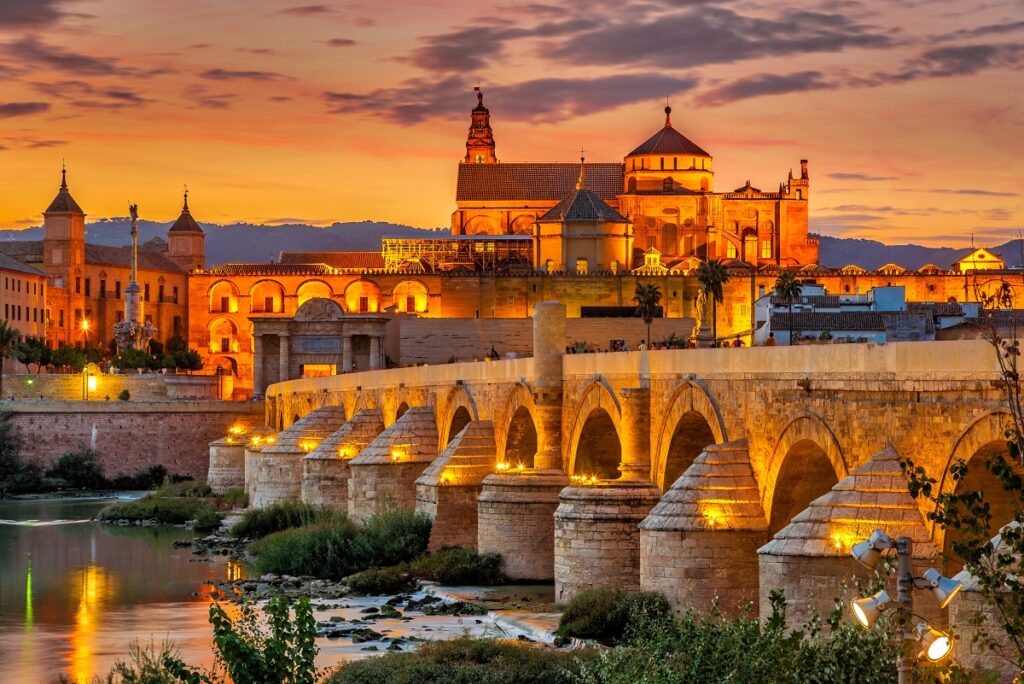
Cordoba, Spain, is a captivating destination steeped in history, culture, and architectural splendour. It is an enchanting starting point for your tour as it played a pivotal role in the Reconquista, the Christian reconquest of Spain from Muslim rule. Captured by the Christians in 1236, the city’s Great Mosque was converted into a cathedral symbolizing the triumph of Christianity. Cordoba’s strategic location and cultural significance made it a key battleground in the centuries-long struggle for control of the Iberian Peninsula.

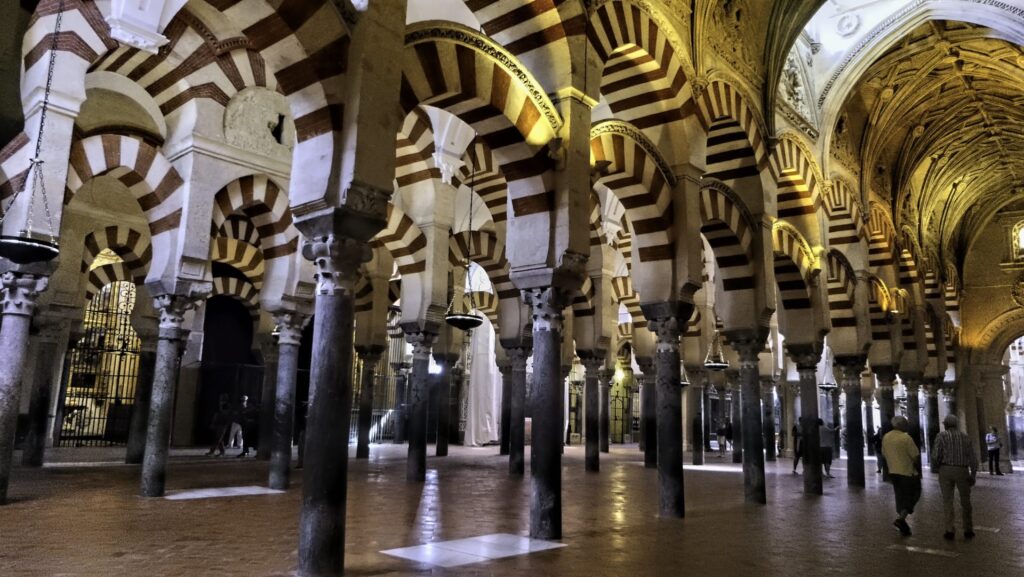
That Great Mosque-Cathedral of Cordoba (Mezquita-Catedral) is the jewel of the city and symbolises the city’s rich heritage, blending Islamic and Christian influences. On our first day, we have a guided tour of the city that culminates at the Mezquita. We have secured tickets that need to be dated and time-stamped in advance. You’ll be spellbound by its mesmerizing arches, intricately carved columns, and serene courtyards, offering a glimpse into Cordoba’s diverse past.

The winding alleys of the Jewish Quarter (Judería), where whitewashed buildings adorned with colourful flowers line the streets, are also worth exploring. Discover hidden squares, quaint shops, and the medieval Synagogue, reflecting Cordoba’s multicultural tapestry.

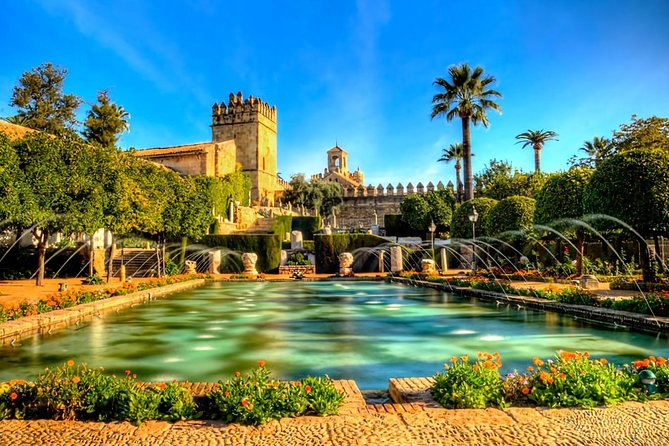
And if you have extra time before the tour start the Alcazar de los Reyes Cristianos, a fortified palace with lush gardens and striking Moorish architecture, is well worth a visit. Explore its majestic halls, towers, and tranquil ponds, offering respite from the bustling city.

Andalusian cuisine is celebrated for its rich flavors and diverse influences and reflects the region’s vibrant cultural heritage. Cordoba boasts a culinary tradition characterized by fresh ingredients, aromatic spices, and hearty dishes. Indulge in local specialties such as salmorejo, a refreshing cold tomato soup, and flamenquín, a breaded pork roll. Andalusian cuisine also features an array of seafood delicacies, Moorish-influenced desserts like pestiños, and the world-famous tapas culture, inviting diners to savor the essence of southern Spain.

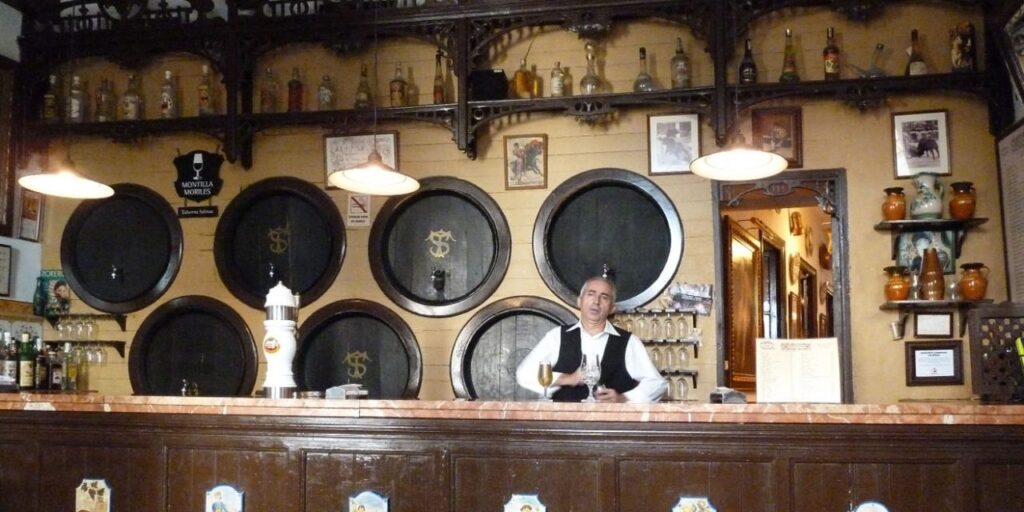
Taberna Salinas, serving traditional tapas with a modern twist is a favourite of ours for indulging in flavorful dishes like salmorejo (cold tomato soup), rabo de toro (bull’s tail stew), and flamenquín (breaded pork roll), accompanied by local Montilla-Moriles wine or refreshing Tinto de Verano.

And finally a leisurely stroll across the Roman Bridge (Puente Romano) at dusk, admiring the illuminated Mezquita-Catedral and the Guadalquivir River, which reflect Cordoba’s timeless beauty. With its rich history, captivating sights, and delectable cuisine, Cordoba invites travellers to immerse themselves in its enchanting allure. It is a very apt city to embark on our Recinquista tour.


Who was Kōbō Daishi?

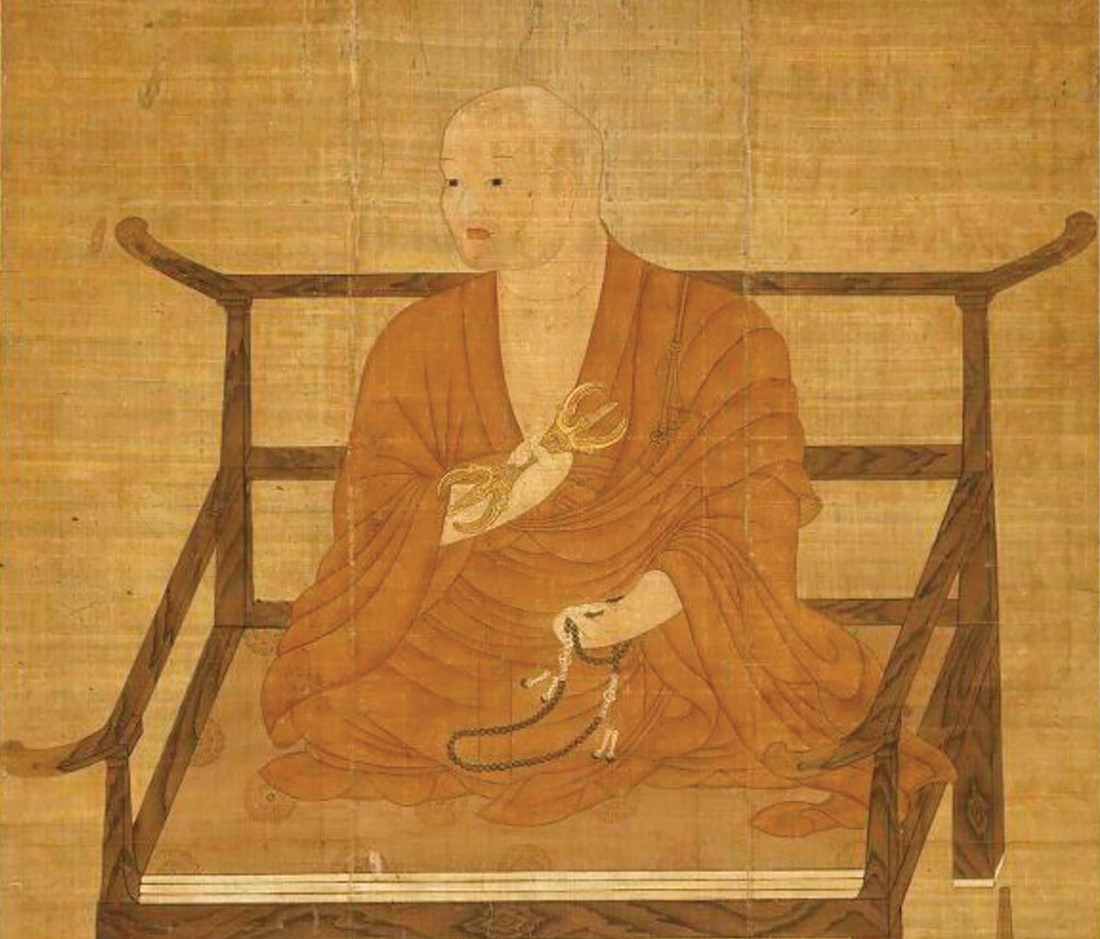
The Japanese Buddhist priest Kūkai, (774–835 CE) continues to be one of the most popular historical figures in Japan today. He introduced Shingon esoteric Buddhism into his country during the early Heian period, (794–1184).

The emperor awarded him the posthumous title of ‘Kōbō Daishi’, (Great Master Who Propagated the Dharma). Kūkai also exerted major influences on the development of Japanese calligraphy, poetry, and literary theory. He drew the plans for what has become one of the major spiritual and tourist destinations in Japan, the Mount Kōya Temple complex, which is designated as a UNESCO World Heritage Site. He also constructed ponds and irrigation systems still in use today, on his native island of Shikoku.Kobo Daishi (Kukai), via Tricycle Buddhist Review

Due to his significance in Japanese Buddhism, Kūkai, (meaning air-sea) is associated with many stories and legends. One such legend attributes the invention of the kana syllabary to Kūkai, with which the Japanese language is written to this day.

In another legend, Kūkai was welcomed by two Shinto deities, (a male named Kariba and a female named Niu) whilst searching for a place to build a temple on Mount Kōya. Kariba was said to have appeared as a hunter and guided Kūkai through the mountains, with the help of two dogs; one white, one black. Later, both Kariba and Niu were interpreted as manifestations of the Buddha Vairocana, who was the central figure in Shingon Buddhism and subject of Kūkai’s lifelong interest.

Early life

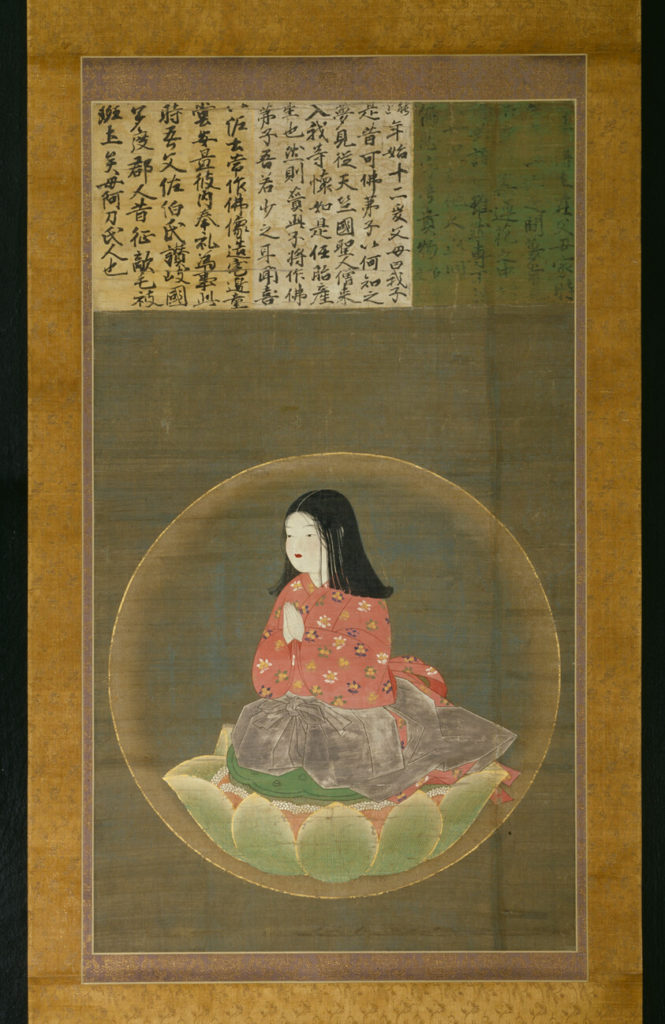
His first name is generally believed to be Mao, (meaning true fish). He was born on June the 15th, Houko 5, (774) in the precinct of Zentsū-ji temple, in Sanuki province, on the island of Shikoku. His family were members of the aristocratic Saeki family. The family home was very religious. One day, his father and mother had a simultaneous dream, of an Indian Buddhist monk riding on top of a glittering violet-coloured cloud, which entered into the mother’s chest. At Shingon, June 15th takes the name of ‘Aoba Matsuri’ (Fresh Leaves Festival) and marks Daishi’s birthday.Portrait of

His childhood involved making Buddhist images in the dirt, collecting grass, or wood to make shrines and worshipping the Buddha. At seven years of age, he ascended the nearby Shashin ga Dake Peak and prayed to the Buddha: “When I become big, I want to aid the ailing. If I shall have that power, please bless me with a long life,” and then he jumped off a high cliff into the ravine. From below, a beautiful sound manifested, along with a celestial maiden. Young Mao was saved. He was overjoyed and thus became even more zealous in his studies.

By the age of 14, he was studying at Sanuki. When he was 15, he left for the capital (Nagaoka) and studied the writings of his uncle, the Confucian scholar Ato-no Otari, and entered university at the age of 18. There he encountered a monk who first raised his interest in Buddhism by revealing a technique of repetition to better remember texts.

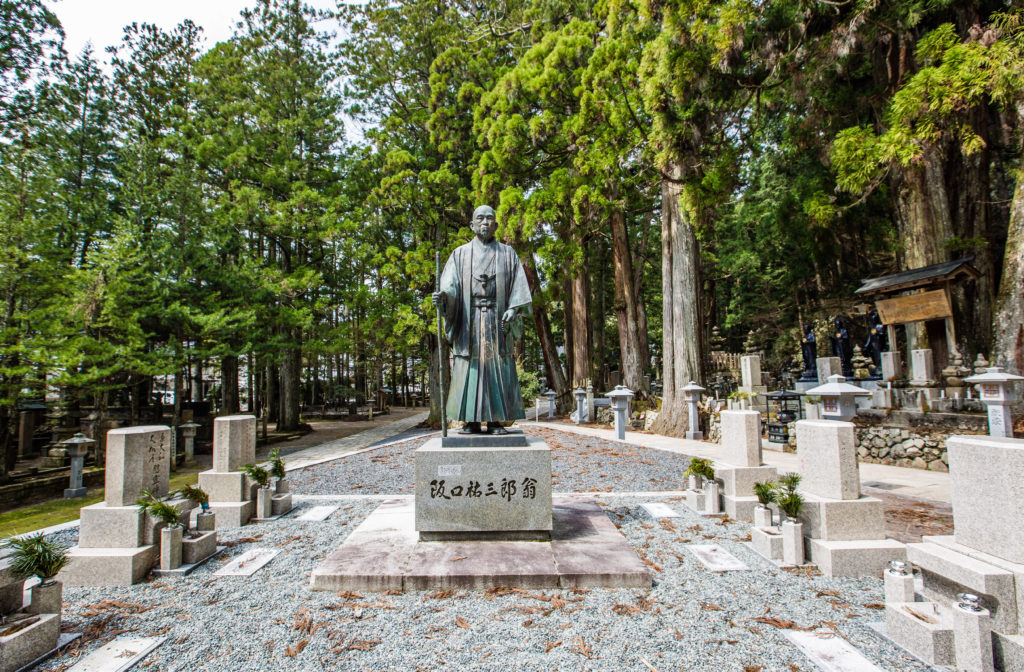
At age 20, he overcame the resistance from his family and entered the priesthood at Makino Osanji in Izumi no Kuni (Osaka) and adopted the name Kukai. His deliberations on the merits of the three main schools of thought – Buddhism, Confucianism, and Taoism – are set out in his ‘Indications’, a fictional discussion, written circa 798 CE, between three men. Each man represents one of the three branches of philosophy. Needless to say, the Buddhist is the more convincing of the three.Statue of

Shingon Buddhism

Kukai’s studies of Chinese classics at the capital allowed him to visit China as part of a diplomatic embassy between 804 and 806 CE. He studied there under the master Hui-kuo, abbot of the Ching Lung, (Green Dragon) Temple and was chosen as the master’s successor. Thus he became an advocate of esoteric Buddhism, or mikkyo, which meant that only the initiated, (only those who gave up their worldly life and resided in a monastery) could know the Buddha and thus achieve full enlightenment.

The Shingon (True Word) Sect, which Kukai studied in China, stipulated that ideal leadership should not be based on Confucian principles, (as was hitherto the case) but on the teachings of the Buddha, which would be revealed to an emperor on his succession, following certain esoteric initiation rites. Consequently, priests, (with their privileged knowledge) had the highest status in the state according to Kukai, higher even than emperors.

Crucially, Shingon Buddhism proposed that an individual could achieve enlightenment in their own lifetime and need not wait for death. Rituals included meditation carried out while the body was held in various postures, sacred hand gestures, (mudras) and the repetition of secret mantras. Great importance was given to the power of prayer.

Despite Kukai’s own aristocratic background, he was known to have practised what he preached and lived the life of an ascetic, as reflected in this poem from the Seirei Shu, ‘Collected Inspirations‘, an anthology of his works compiled by his disciple Shinzei:

Valley water – one cup in the morning sustains life;
Mountain mist – one whiff in the evening nurtures the soul.
Hanging moss, delicate grasses suffice to clothe my body;
Rose leaves, cedar bark – these will be my bedding.
Heaven’s compassion spreads over me the indigo canopy of the sky;
The Dragon King’s devotion passes round me curtains of white clouds.
Mountain birds sometimes come, each singing its own song;
Mountain monkeys nimbly leap, displaying incredible skill.
Spring flowers, autumn chrysanthemums smile at me;
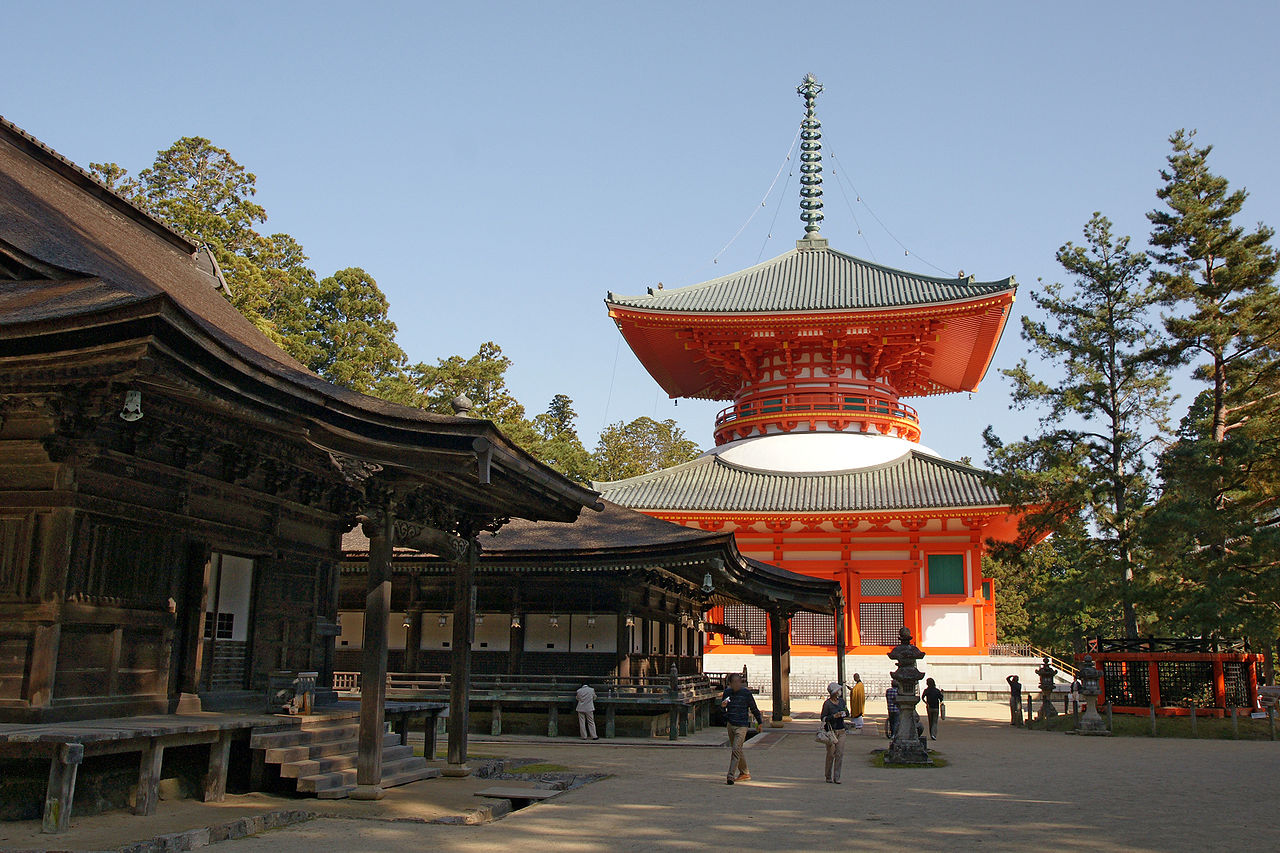
Dawn moons, morning winds cleanse the dust from my heart.Danjō-garan, head temple of Shingon Buddhism, Mount Koya

Mount Kōya

In 816, Emperor Saga accepted Kūkai’s request to establish a mountain retreat at Mount Kōya, as a retreat from worldly affairs. The ground was officially consecrated with rituals lasting seven days. Kūkai’s vision was that Mt. Kōya was to become a representation of the Mandala of the Two Realms, that form the basis of Shingon Buddhism. At the centre of the temple complex sits an enormous statue of Vairocana, who is the personification of Ultimate Reality.

The project was not fully realised until after Kūkai’s death. The temple remains the headquarters of the Shingon Buddhist Sect.

Death

Kūkai believed that rather than use this short life to promote the teachings, he should enter the next realm and help rescue those suffering throughout eternity. Daishi passed away on March 21, Jouwa 2, (835) at the age of 62 and left future matters to his students. For one week, until his passing, he purified one room of his dwelling. He ate nothing and purified his body with perfume. He sat in the lotus position, put his hands in a mudra form and entered into the meditation of Maitreiya. Legend has it that Kūkai has not died, but has entered into an eternal samadhi, (meditative trance) and is still alive on Mount Kōya, awaiting the appearance of Maitreya, the future Buddha.

Shikoku henro

The Shikoku Pilgrimage, also called the ‘Shikoku henro (四国遍路)’ or the ‘88 pilgrimage’ was established over 1,200 years ago. Inspired by Kūkai, the standard walking route, (approximately 1,200 kilometres, or 750 miles long) can take anywhere from 30 to 60 days to complete. The pilgrimage is traditionally completed on foot, although modern pilgrims use cars, taxis, buses, motorcycles, or bicycles. The pilgrimage and its customs are deeply ingrained in the people of Shikoku. Visitors are often moved by their legendary hospitality of the local people and the osettai culture. *Osettai is the act of giving gifts to pilgrims on the henro. Shikoku Henro (Shikoku Pilgramage)


The Romans in Britain

For more than 400 years, the Roman Empire had a profound influence in Britain. The Romans called the British Isles ‘Britannia’. The actual occupation lasted from 43 AD to 410 AD, although the Romans first entered Britannia in 55 BC under the leadership of Julius Caesar. He crossed the channel and landed his forces in Kent. The ancient Britons fought valiantly and Caesar was forced to retreat and spend the winter in Gaul, (France). He returned in 54 BC with five Roman legions, (around 30,000 soldiers) They marched across Kent and eventually crossed the River Thames. Caesar was successful in forcing some of the barbarian tribes of Britannia to pay tribute to the Romans in return for peace, but he didn’t actually conquer the lands.
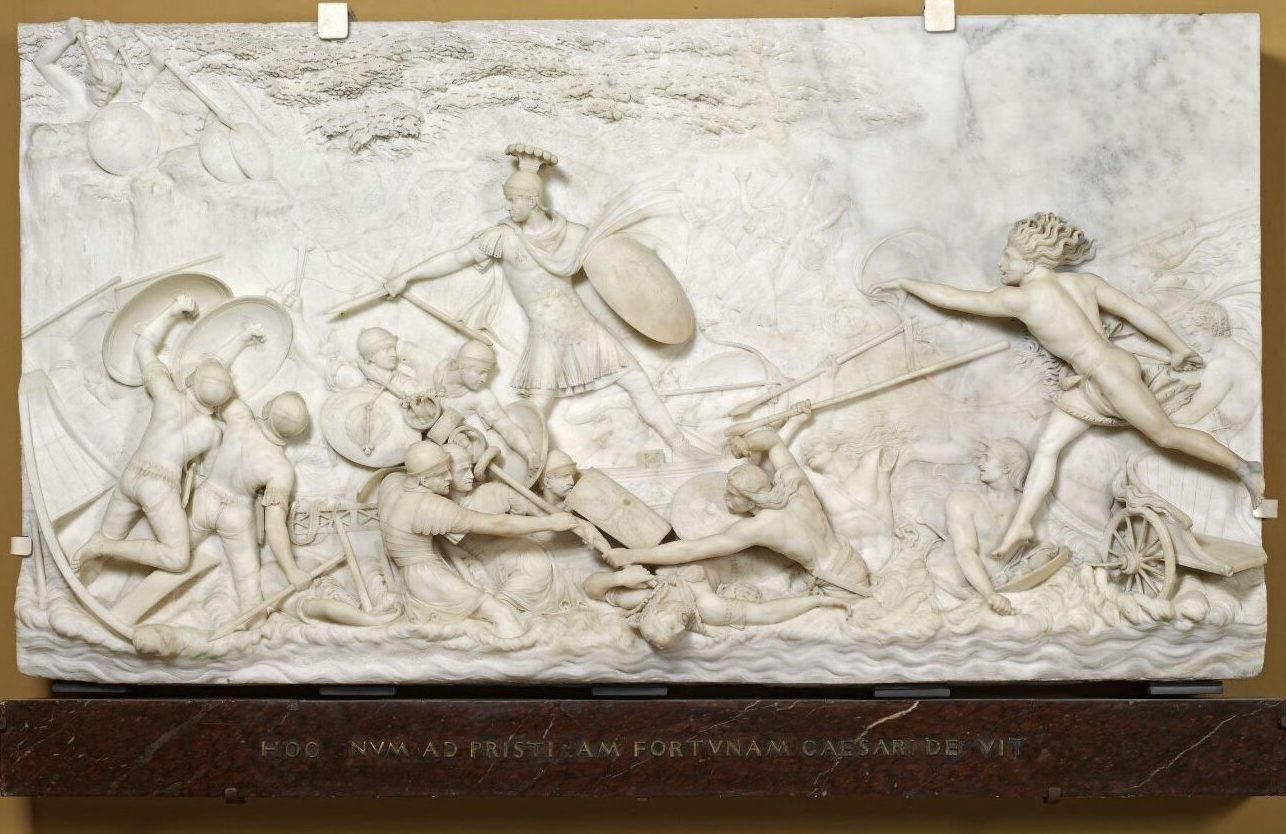
John Deare’s marble relief of Caesar’s invasion of Britain, on display at the V&A, London

Emperor Claudius wanted to gain more power, by controlling more lands. In 43 AD he sent his trusted general, Plautius, with four legions of Roman soldiers, to conquer Britain and once again, the barbarian tribes of Britannia fought back. The Romans managed to defeat the Catuvellauni, (the most powerful Belgic tribe in ancient Britain) and then began organising their conquests, progressing north and west. By 47 AD, the Romans held all the lands southeast of the Fosse Way.

In 60-61 AD, an armed uprising by native Celtic Britons took place, led by Boudica, the Queen of the Iceni tribe, (who were based in present day Norfolk). The uprising was motivated by the Romans’ failure to honour an agreement they had made with Boudica’s husband, Prasutagus, regarding the succession of his kingdom after his death.

Boudica led an army to Camulodunum, (Colchester) and burnt it to the ground. The city had been made into a ‘colonia’ for Roman military veterans. These veterans had been accused of mistreating the locals. A temple had been erected  to Claudius, (a former emperor) in the city, at great expense to the local population, which also caused much resentment. Boudica’s forces then went on to destroy Londinium, (London) which, since 43 AD, had grown into a thriving commercial centre, containing a large population of traders and Roman officials. She then led her army north, to Verulamium, (St Albans).
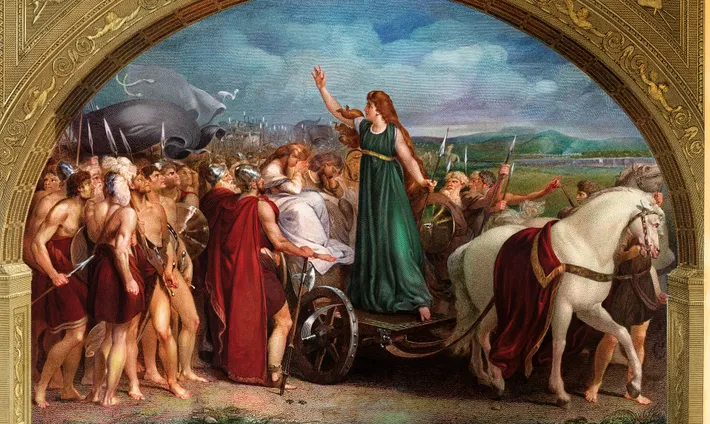
Print by William Sharp, from the engraving by Thomas Stothard, displayed at the National Portrait Gallery, London

Around 61 AD, Gaius Suetonius Paulinus, the conqueror of Mauretania, (modern day Algeria and Morocco), became the governor of Britain. After conquering Wales and ultimately the island of Mona, he marched towards Verulamium, (St Albans) for what would be the final battle against Boudica and her army of rebels. Paulinus only had two legions available to him, (12,000 men) The Britons outnumbered the Roman forces by twenty to one. Although the Britons were gathered in considerable force, (more than 230,000) the Iceni and other tribes had been disarmed some years before and it is thought they may have been poorly equipped for battle.

The Roman army was well-trained, well-armed, highly skilled and heavily protected. Native Britons were skilled at riding two-wheeled battle chariots and using spears, but they wore very little armour. Paulinus chose to engage the Britons in a defile, (a narrow gorge) with a wood behind. The defile opened out into a wide plain in front of his legionnaires. The walls of the gorge protected the Romans from surprise attacks and the forest behind prevented Boudica from deploying chariots and attacking from the rear. Paulinus defeated the rebels in the ‘Battle of Watling Street’. Boudica died soon afterwards. Tacitus, (a well-respected Roman historian and politician) states that 80,000 Britons fell that day, with the loss of only 400 Romans.
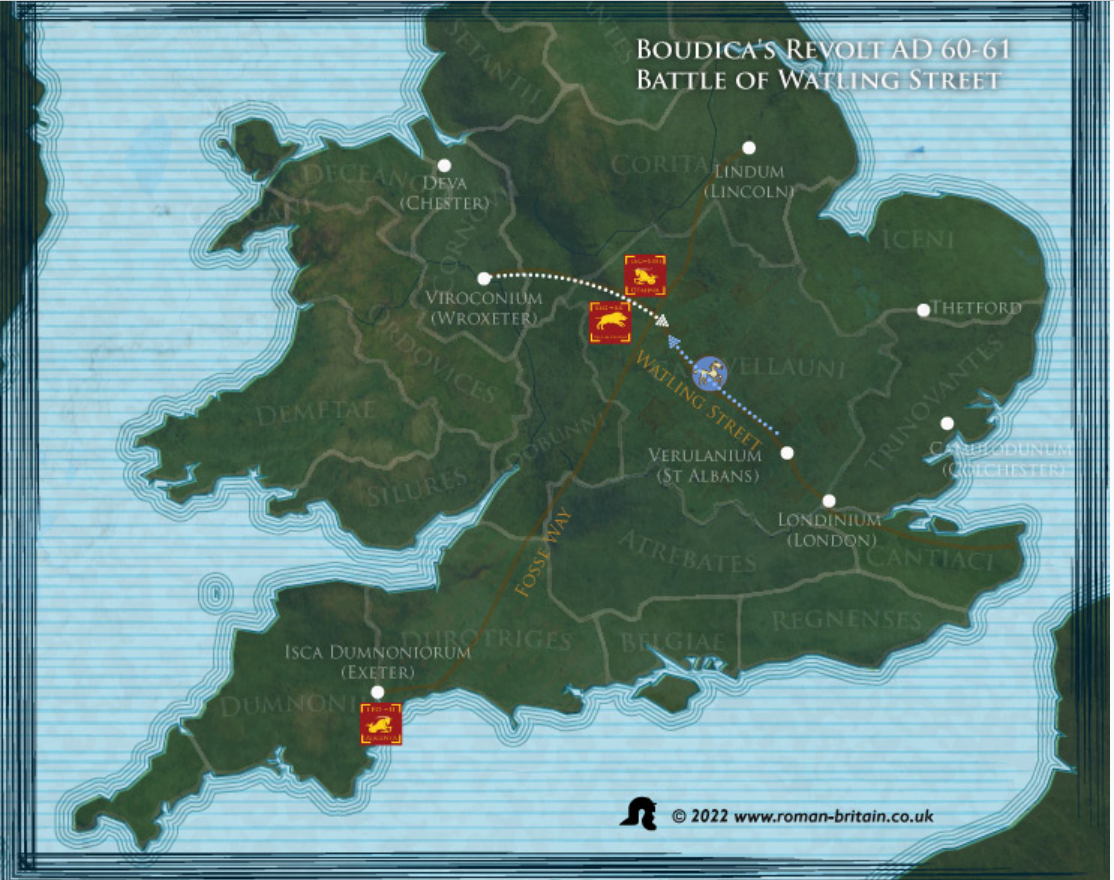
10 things you might not know about Roman Britain

1. Roman cruelty was the cause of the rebellion in Britannia. Prasutagus, (the king of the Iceni tribe), thought he had secured independence for his people, by leaving his lands jointly to his daughters and also to the Roman emperor, Nero. However, when he died in AD 61 his will was ignored. The Romans seized his lands and violently humiliated his family: his widow Boudica was publicly flogged and her two daughters brutally raped.

2. The island of Mona, (Anglesey) off the northwest coast of Wales, was a refuge for British rebels and a stronghold of the druid community. It was regarded as the spiritual centre of Britannia. Druids had a variety of functions outside of the temple. They were teachers, scientists, philosophers, and judges in equal measure. Druids were the arbiters of the British justice system at that time. The Roman emperor Nero knew that if he killed the druids on Mona, then the native population would capitulate.

3. The tribes of Picts in Caledonia, (Scotland) were violent warriors and they were able to resist Roman invasion. In 122 AD, the Roman Emperor Hadrian decided to build a wall across the middle of Britain, in order to keep the Pics out of Britannia. This structure helped defend the new lands of the Roman Empire from the barbarians in Caledonia. When Hadrian’s Wall was completed it spanned 73 miles, (the entire width of the land, from Wallsend on the River Tyne, in the east, to Bowness-on-Solway in the west) and fluctuated in height, from 3 to 6 metres, along the entire length. The structure was 3 to 6 metres wide, with a deep, ditch-like construction, called a vallum, running immediately south of the wall. Soldiers were garrisoned along the line of the wall in large forts, smaller milecastles and intervening turrets. The remains of the wall are now part of the ‘UNESCO Transnational World Heritage Site Frontiers of the Roman Empire’.

4. In 410 AD, the majority of the Roman troops were forced to leave Britannia in order to defend their capital city against various barbarian tribes. The Goths and Vandals sacked the city of Rome twice in the 5th century, (in 410 and 455) As the Roman Empire declined in power, the Western Roman Empire collapsed in 476.
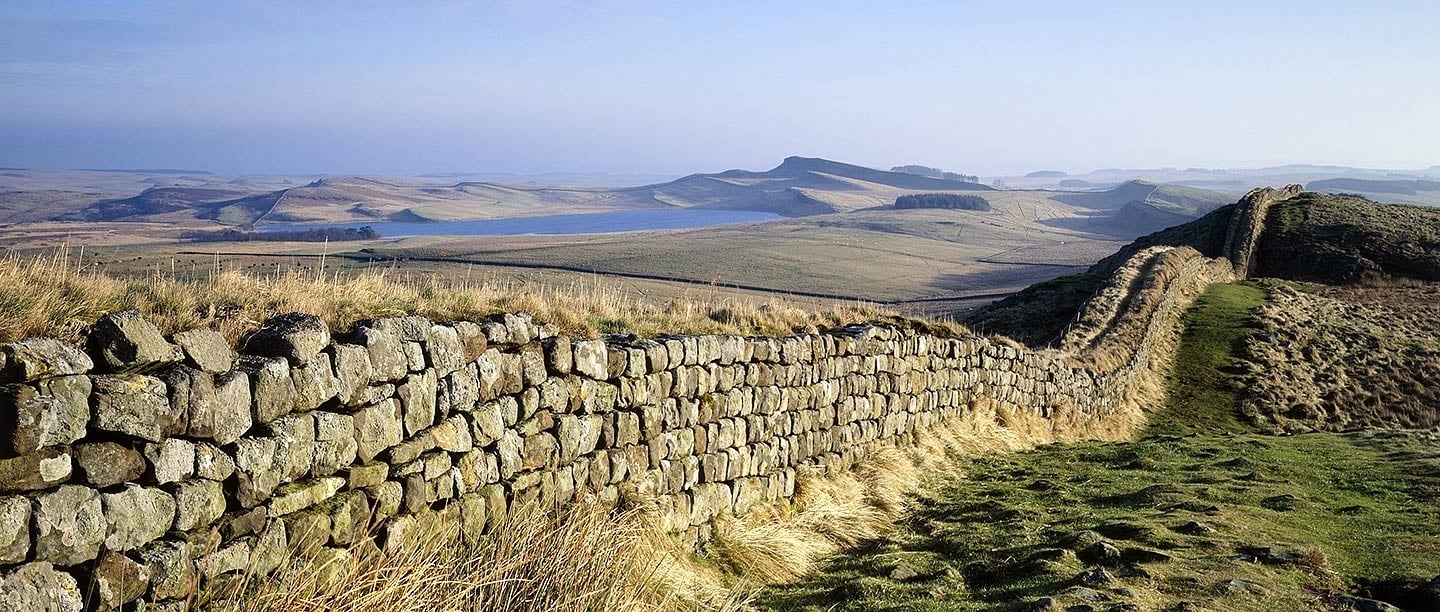
Hadrian’s Wall

5. The Roman legacy in Britannia is considerable. The Romans were master builders and had advanced engineering skills, which allowed them to build technologically advanced walls, roads and aqueducts, to transport water. They also introduced concrete to the islands. They built many miles of roads in Britannia, (around 55,000 miles). Some of these roads are still in use today, such as the A1 from York, (Eboracum).

6. They left behind a rich and sophisticated Roman culture, in the form of government systems, laws, the Latin language and the Julian calendar. The Julian calendar was the first to consist of 365 days, (with a leap year every four years). July and August were named after the early rulers Julius Caesar and Emperor Augustus. This calendar forms the basis of the Gregorian calendar that we use today.

7. The Romans left an advanced system of currency in Britain. Some of the tribes in the South of England produced coins before the Romans arrived, however, they were not used for purchasing things. The Romans brought in their own coinage, which was the same across the Empire. A denarius minted in Rome could be spent in Britain, North Africa or Turkey.

8. Bathing was an extremely important part of Roman life. Going to the baths was a social event. Baths were also places for exercise, gambling and catching up on the gossip. They usually contained hot rooms, both dry and wet, cold plunge pools and warm baths. The city of Aqua Sulis, (Bath) was named after the elaborate Roman baths built there. Although the Romans didn’t have central heating, they did have ways (other than fireplaces) to keep buildings warm. Raised floors, laid on squat columns, allowed hot air to circulate. Fires would be lit in stoke-holes, which allowed hot air to circulate and so the Romans brought the concept of underfloor heating to Britain as well.

9. The Romans introduced street stalls, selling food. With more than 10,000 soldiers in Britain, based at forts such as Birdoswald, having access to convenient food in towns and cities was vitally important and vendors serving fast food would have been commonplace. The Romans also introduced some staple foods, such as apples, pears and peas to Britain.

10. In ‘Life of Brian’ the infamous Monty Python film, John Cleese, playing Reg, (the leader of the revolutionary group ‘The People’s Front of Judea’) says: “All right, but apart from the sanitation, the medicine, education, wine, public order, irrigation, roads, a fresh water system and public health, what have the Romans ever done for us?” That just about sums up the influence of the Roman Empire on Britain.
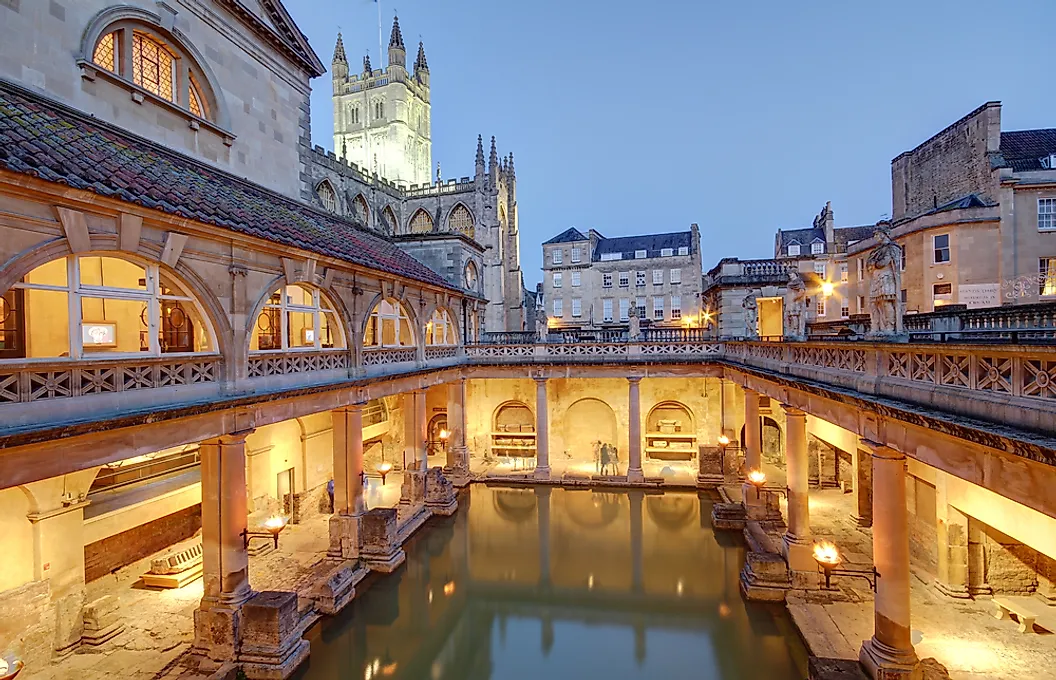
Roman Baths in Bath, UK

Following the Roman retreat, Britain plunged into a period known as the ‘Dark Ages’. The 5th and 6th centuries are wrapped in obscurity. Records are few, difficult to interpret, propagandist, or written long after the events they describe. After 350 years of Roman rule, all Britons were, in a sense, Romans. However, Britain was no longer protected by an imperial power, so these people were vulnerable to attack. At first, the chief enemies of an independent Britain were Irish raiders from the west and Picts from the north. Later, Angles, Saxons and Jutes arrived from across the North Sea.
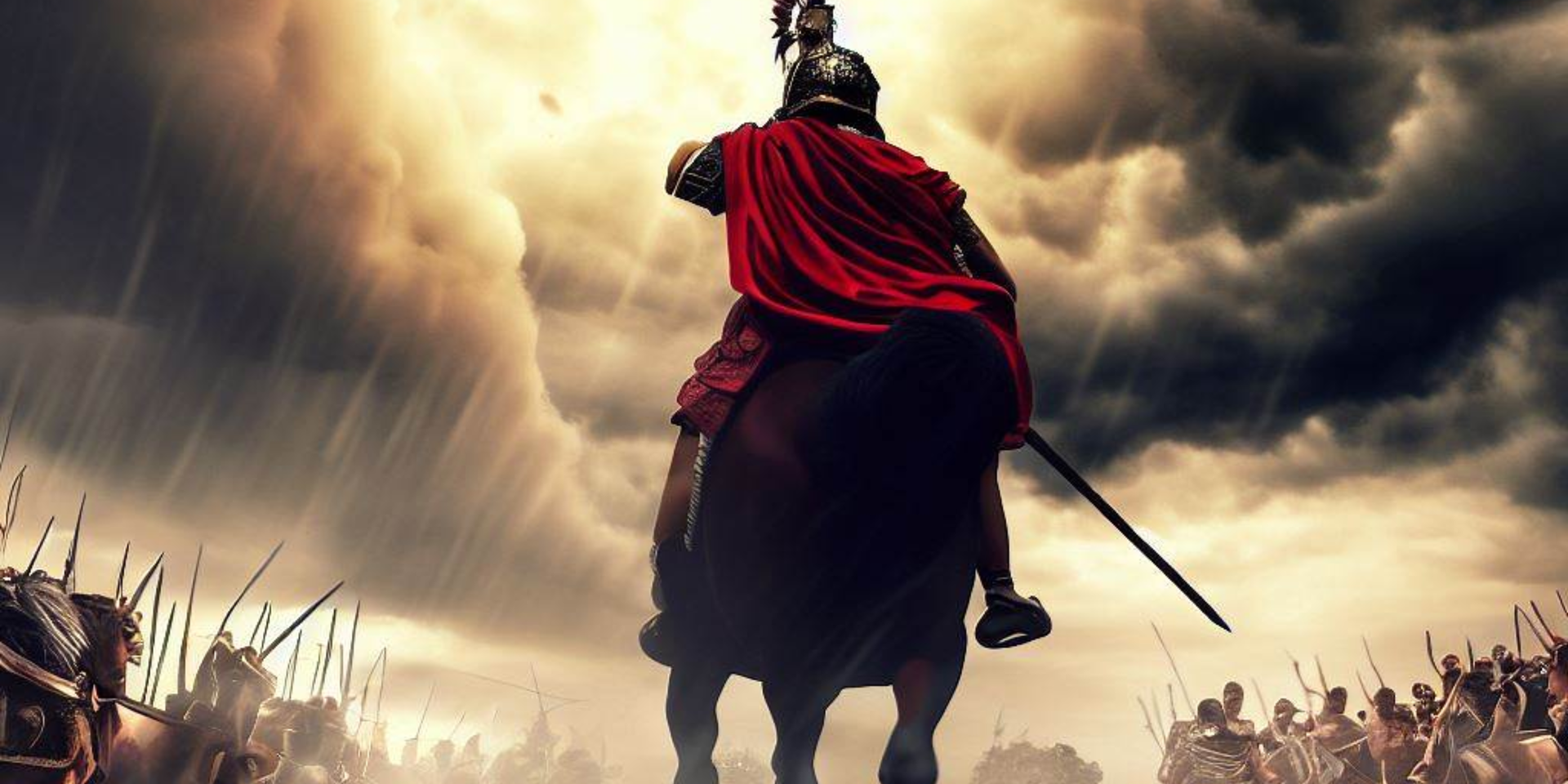
Photo credit, History Skills


What Does the Future Hold for Ride and Seek?

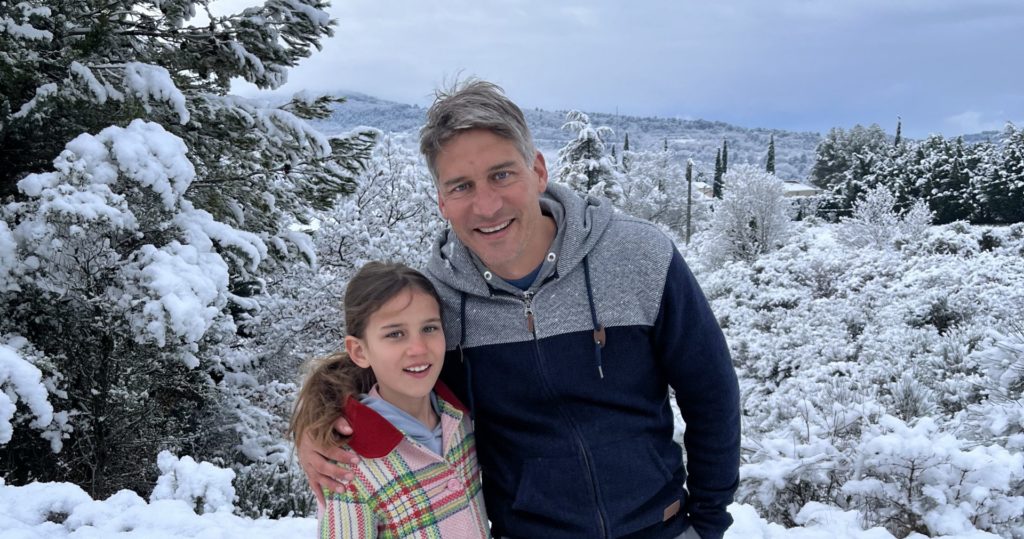
Greetings from a snowy Provence. As the snow fell earlier this month at our base in the shadow of Mont Ventoux we were being sent photos from sunny Australia where our Strzelecki Tour (Sydney to Hobart) had just embarked from Sydney. Life is full of contrasts and in that context, there was a sense of the surreal to think we are back on the road again – the 2023 season for Ride and Seek is a go! Indeed, the group has just wrapped up the tour in Hobart, Tasmania after a tour for the ages.

With this being our shortest ‘off-season’ to date, I thought it would be an opportune time to share with you our thoughts on moving forward as a company. With the pandemic seemingly behind us and demand for travel booming it would easy to simply jump back on the hamster wheel but we are trying to be more measured in our approach. Your appetite for exploring the world by bike is undoubted and our zeal for creating new itineraries is unabated. However, if 2 years of Covid reflection taught us anything it was the importance of maintaining perspective and identifying what we consider really important. 

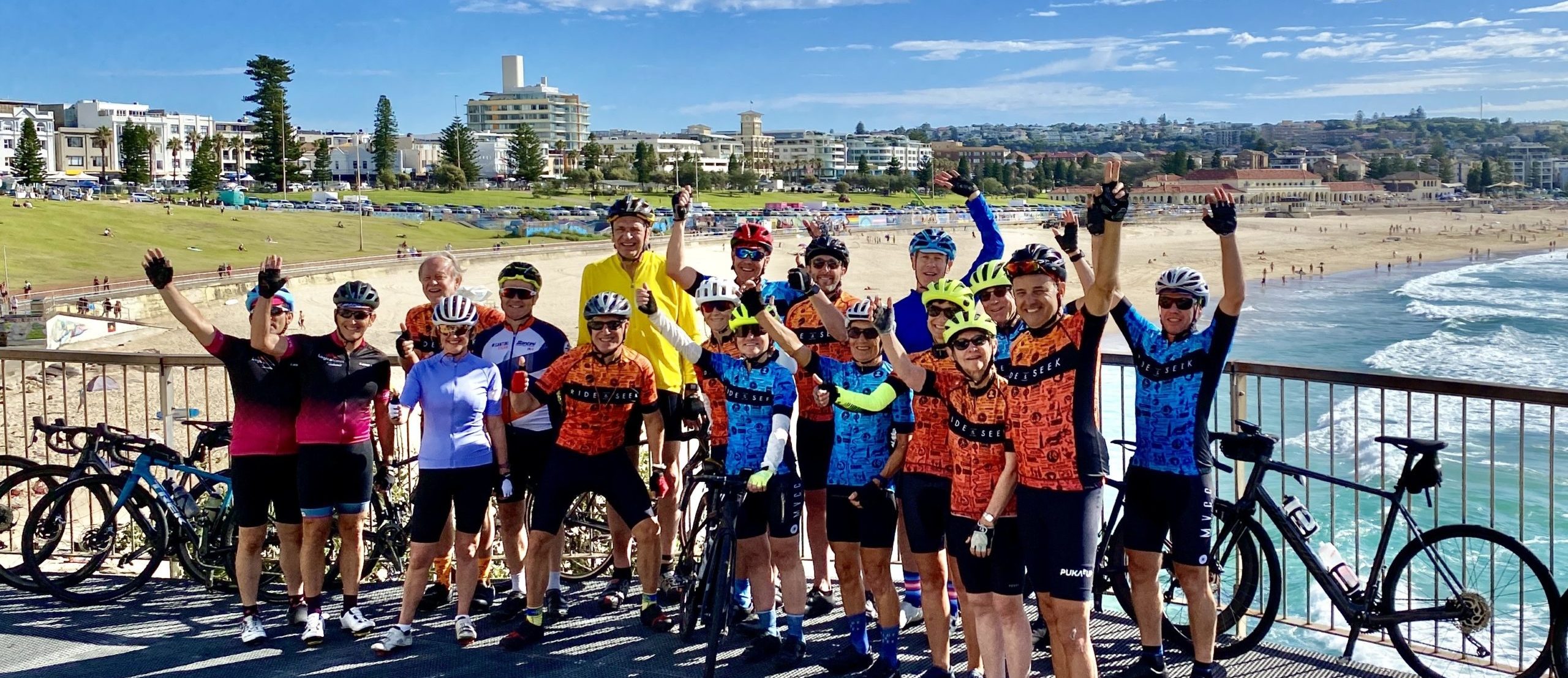
Strzelecki group at Bondi Beach, Sydney
Snowy Provence

As such, we are keen to offer you a road map for what we are trying to achieve with our tours both in terms of the seeming paradox of consolidation and growth. Our in-house mantra has always been that you are ‘only as good as your last tour’. This lies at the heart of our striving to offer the world’s best cycling adventures with every tour we run and will continue to be the rationale that ensures we will never rest on our laurels.

Last year was our 10-year anniversary of running bike tours as Ride and Seek. I have actually been leading and designing bike tours now for almost 30 years so it is fair to say it is a vocation. From the inauspicious beginnings of running Hannibal for the first time in 2012 with a motley crew of family and friends, we celebrated the 10th edition of our signature tour with an awesome group of fideli and newcomers in September 2022. It was a proud occasion to reflect back on what we have achieved.

Hannibal – 10 years and counting!
10-year Anniversary Hannibal Group

Reflection has been a theme for us as we approached the 2023 season both in the context of how busy we were through 2022 and with the hindsight of lessons learned through COVID. Obviously, from a commercial perspective, the pandemic was not helpful to put it lightly. Like many in the cycling tour business, we went from having had our best year to date in 2019 to two years of roadblocks and uncertainty.

Rather than batten down the hatches though, as a team, we sought to seek out the ‘road most optimistic’ and constructively prepare for the future. The support we received from many of you who left tour monies in the business and in some cases, simply sent us money to keep us afloat was both humbling and confidence-building.

Through the pandemic, we looked to keep the team together by planning for the future and running tours that made little commercial sense. Hannibal with 2 riders was a all time low! The offshoot of this though is that we kept the proverbial wheels turning and were ready to roll once the travel became viable again. Unlike many companies post-pandemic we have not been impacted by the exodus of guides from the industry. All of those in the video remain in the Ride and Seek family, which we are very proud of. The only change is the kids have all grown up significantly!

We also trialled new initiatives such as a complementary weekly laundry service, coffee vouchers, more gourmet picnic lunches, and smaller group sizes. All of these were confirmed for 2022 and will remain in place for the foreseeable future. We also made plans for a range of new Epic Adventures that we will be launching over the next two months. 

The smaller group size commitment in particular made little commercial sense but was deemed important by us in our quest to run the best tours we can. To ensure the personalised nature of the tour experience we provide, we felt that we need to cap the Epic tour group number to 20. Whilst this runs counter to the general trend in the A to B cycle tour space where groups of 30 plus are common, we are committed to consolidating on the ‘full service’ epic historical cycling adventures we pioneered all those years ago.

More Epic Symbols to Come

It meant that an inaugural tour like the Conquest of the Moors sold out in record time and had a waiting list of 20 at one point but the result was a better tour as a result. With a return booking rate of around 75% we believe the long-term returns merit the short-term losses that we incur by adding more value to the tours through limiting numbers and adding more ‘frills’. Optional room upgrades, more massage options with our tour soigneurs, and the new titanium bikes are among the improvements for 2023.

The less is more approach has also been central to our aim of consolidating Epic Adventures as our core business. In this space, we have created our own cycling tour niche, and it is what we do best. As such we will be running fewer ‘Local’ adventures than before. 

We also plan to avoid too much crossover with the Epics that now run from February through to November. By this, we mean that even though we have a number of new tours, the calendar will not be too busy to ensure we can focus on one tour at a time. So while the Epic map has a few new symbols to be added, we will not be overlapping too many tours as a result. Rather, more tours will become bi-annual as a result.

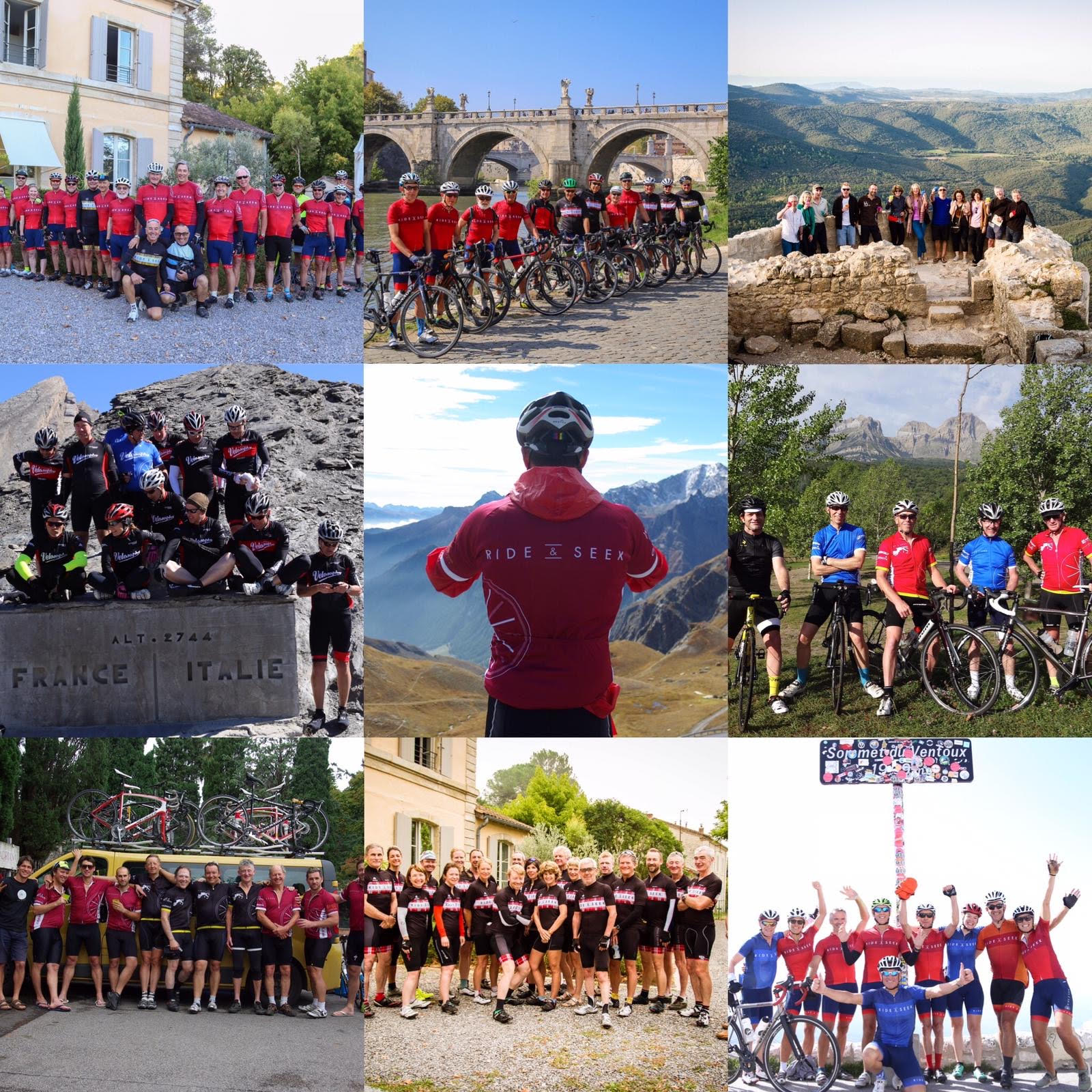
Our 2022 Season Collage

Returning to the theme of reflection it is fair to say that these decisions are not only steeped in quality control though but are also focused on creating a more sustainable business model in terms of work/life balance and our environmental footprint. 2022 was a huge year for us in terms of tours run and guest numbers, but the team fatigue at the end of the season suggested we needed a reassessment.

There is a fair amount of lamenting one hears about some of the circumstantial positives that people experienced through the pandemic, such as more time with family, a slower pace of life, and a chance to explore other interests. Even though our business came to a standstill, we recognised at the time that getting off the hamster wheel was no bad thing. As we move into the future, the team and I are keen to heed those lessons.

That team is now made up of Ben manning the fort as General Manager and a new position being created for Benjamin as the Logistics Manager in Provence. Tiffany, Sarah, and Raffaella continue to manage the office, accounts, and hotels respectively. 

Design-wise Dean continues to work his magic, and Megan is focused on the customer experience. As stated previously, the guide team remains as solid as ever, and we now have more clearly defined Trip Specialist roles. With such a strong and capable team managing the day-to-day elements of the business has allowed me to indulge my passion for creating and planning new itineraries, which I have been doing with gusto! 

We feel well-positioned to grow in an organic and effective manner in the coming years.

Meeting the new 2022 Guides in Provence

So whilst you might end up cycling with us to the place pictured below in 2024, it won’t simply mean that we will add this tour to the calendar in addition to all the others – we already have 12 Epics to choose from – but rather it will slot in place of another tour.

Indeed, we have 6 new Epics to announce, so get your diaries ready for the upcoming ‘Braking News’ launches. Following the 2018 poll on ‘Where To Go Next?’ we think you’ll be pleased with the tours that have been chosen.

The first person who leaves a comment below with the country where the photo was taken will win a prize and a bonus for naming the city itself.

Our plan over the next couple of months is to set out our stall through to 2025, which will hopefully help you with your cycle adventure planning. With a clearer road map, we will also be able to develop our sustainability strategies which we have been working on both in-house and with Beatrice, who has taken on the role of our sustainability consultant

Mystery Destination – Where is this?  We’ll be here in 2024!

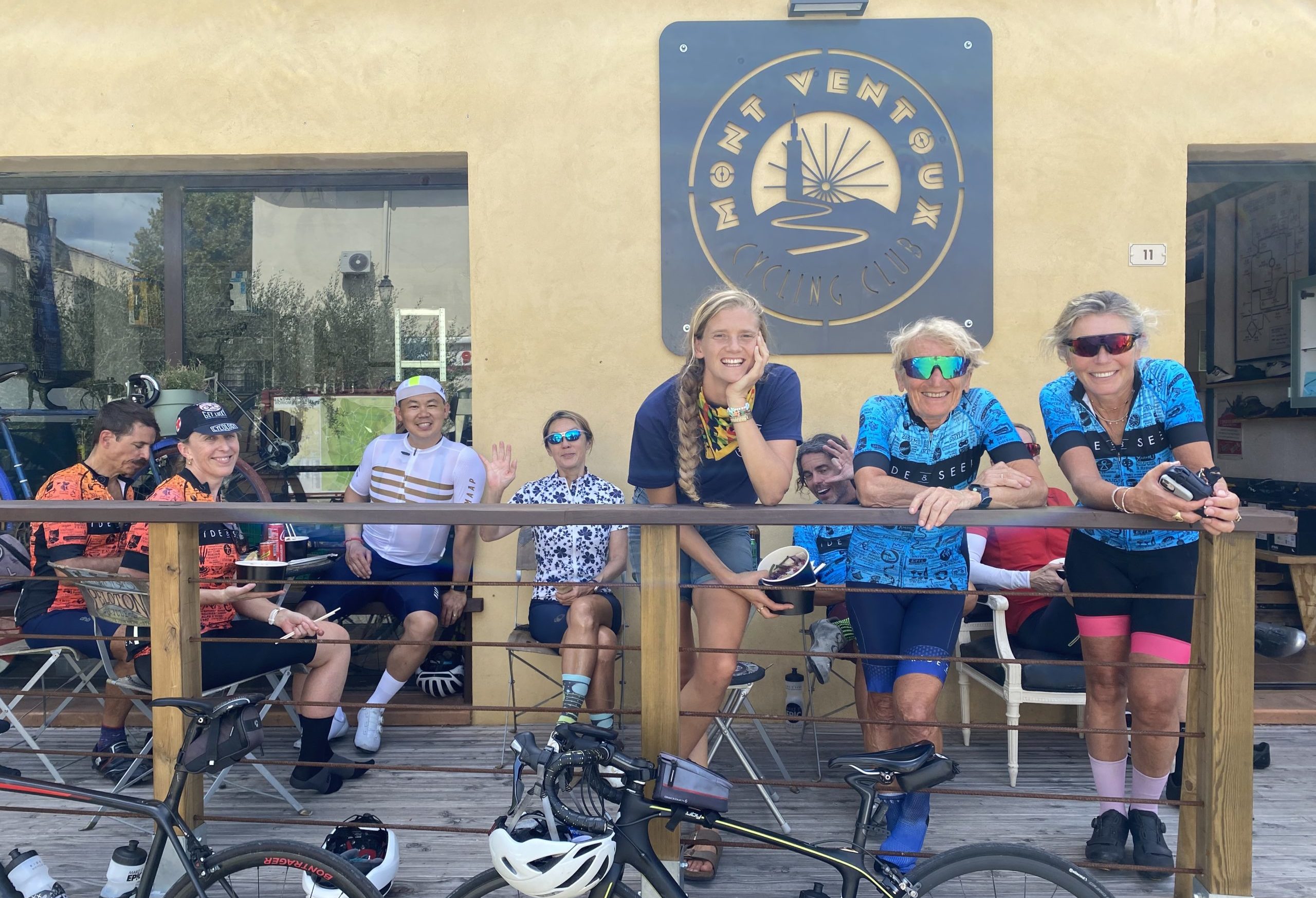
We presently cycle in 30 countries and plan to make that 38 by the end of 2025. We look forward to inspiring you with our new tours in the coming months. And we’ll also reveal more about our plans for the Mont Ventoux Cycling Club (MVCC), which is our logistics base, and so much more. As a club, workshop, and rental hub, we are excited to see how it develops over the coming years.

In part linked to MVCC we are pleased to announce some other improvements that we are delighted to announce. The bike fleet has been upgraded, with all bikes now running disc brakes. We’ve stayed with titanium but have moved across to Van Nicholas as our core road bike. In addition, we have also partnered with Merida and have a range of road e-bikes available.

Mont Ventoux Cycling Club

Continuing on the technological side of things, we also have the larger screen Garmin 1030’s as our standard GPS unit and have incorporated a number of digital elements that are geared towards improving your customer experience without compromising the personal touch. We look forward to introducing them.

And finally, whilst this is what we have in store, we will never forget that we are running tours for you, so I would be very grateful to hear from any of you that have any feedback on how we can improve your experience with us.

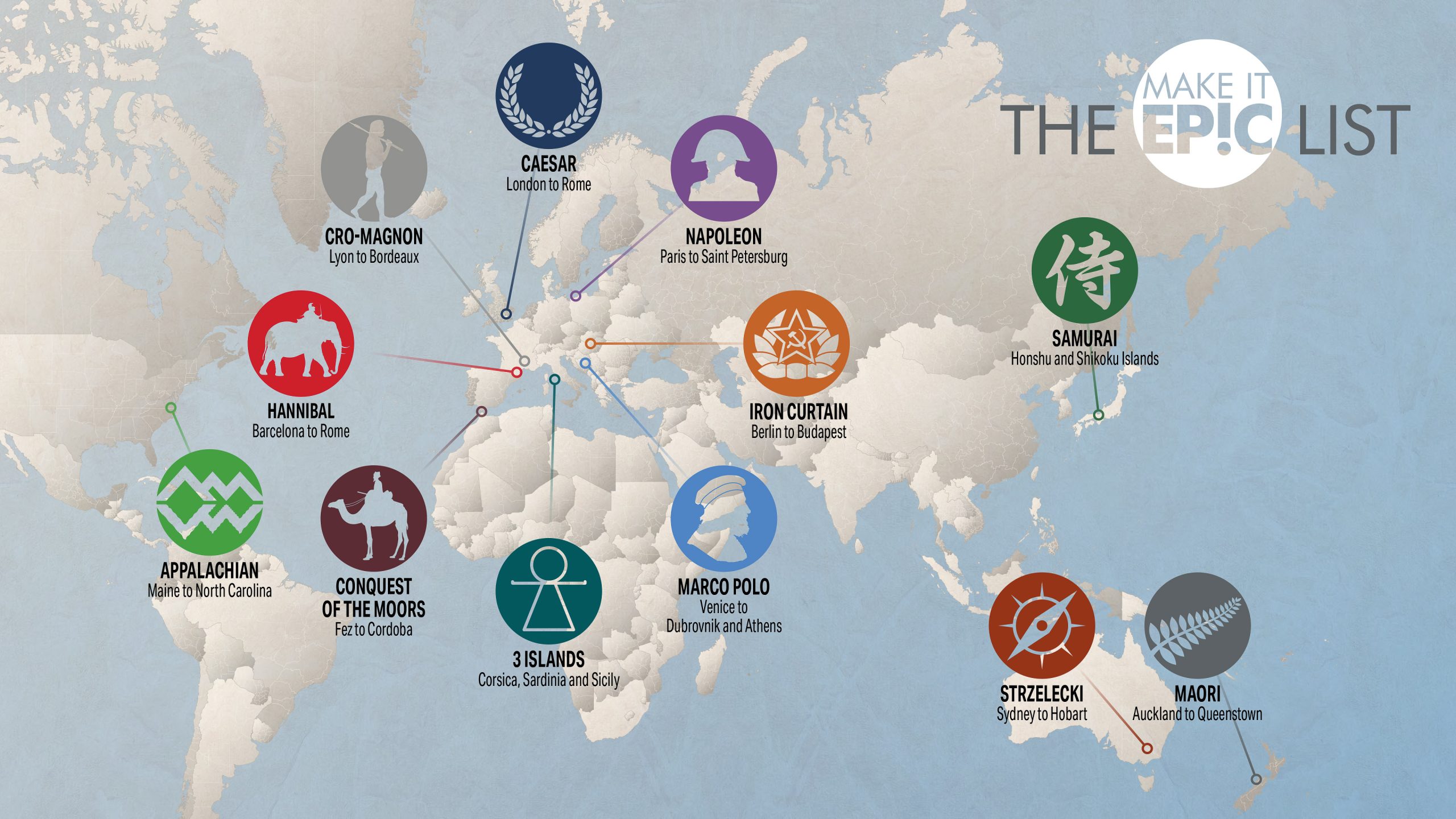
Onwards and upwards with the rubber side down we are delighted to have you along for the ride with us. The Epic List is in the process of being updated. We’ll keep you posted.

May the road rise to meet you. May the wind be always at your back. May the sun shine warm upon your face.

See you on the road soon!

Dylan


Our first foray into Africa (Morocco) – 14 years in the making!

Morocco is now on the tour roster with the Conquest of the Moors

Some of our tours move quickly from conceptualisation to design and execution. Our Caesar Tour from London to Rome, for instance, went from being discussed over coffee in June 2015 to planned, scouted and on the website by September of that same year. We went on to run the inaugural Caesar Tour in May of 2016 with a turn around of less than 12 months for a 34-day Epic. It still holds the record for our fastest Epic Tour creation.

The creation of that tour though was aided by the fact I had already been running bike tours in Europe for 15 years. In addition, we had done a family bike trip back in 1988 from Cambridge to Cognac that incorporated much of the route we chose for Caesar as well. In a nutshell, the tour design had been done before we even came up with the idea of creating the tour. All that remained to be done was join the dots.

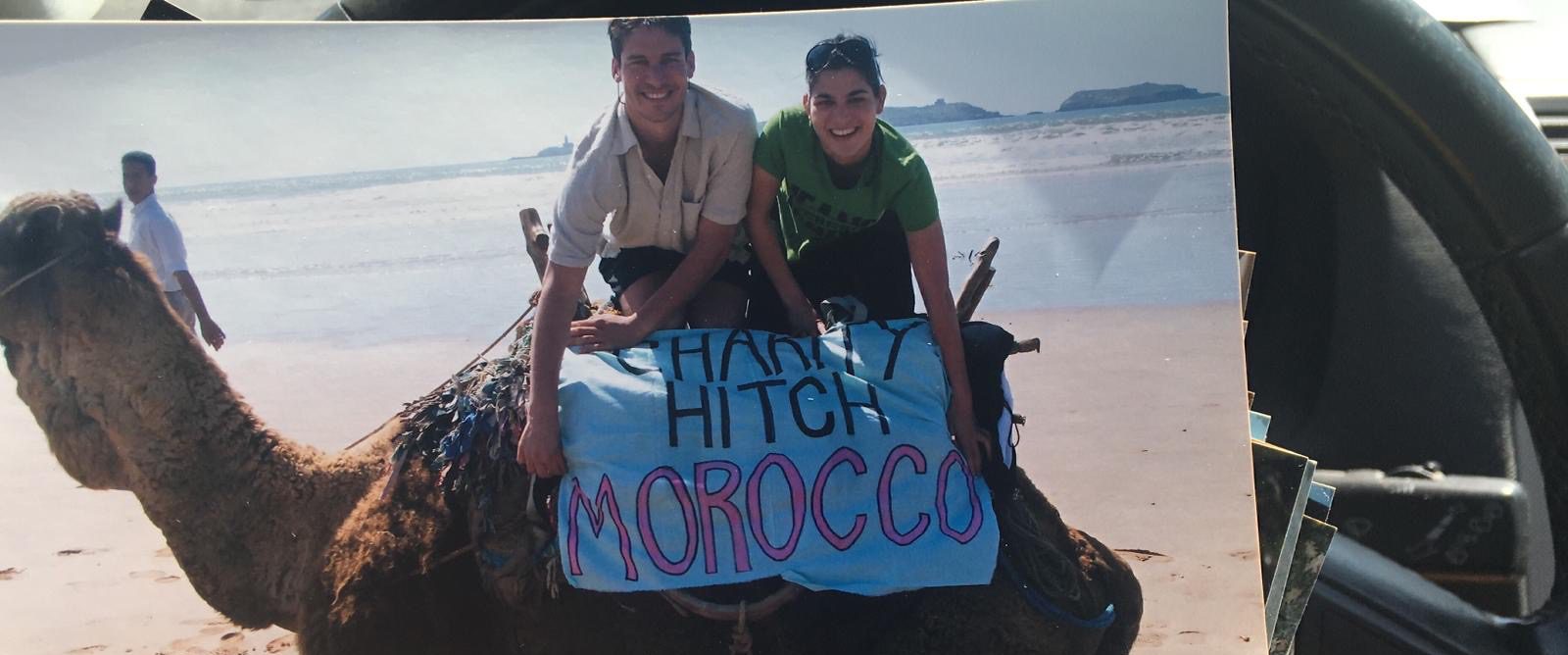
Joining those dots took rather longer with respect to our new tour that incorporates Morocco and marks our first foray on to the African continent. In this case, the tour idea dates back almost 15 years.  Back in 2006, I took part in a charity hitchhike with my sister, Anika, from Brighton (England) to Morocco and it was then that the idea was born.

The hitchhike itself was a wonderful experience to share with my sister and felt like a throwback to a more innocent time. Our parents had hitchhiked around Europe in their younger years but by the time we felt our own wanderlust bubble up, it was no longer considered a ‘normal’ way to travel. The chance to do it together though, and as a charitable endeavor convinced us to give it a go. Over the course of 5 days, 2500km and 12 lifts we crossed the English Channel and travelled down through France and Spain.

As an experience, it is one I’ll never forget and it left me with the lasting impression that it is a very hospitable world out there. There is a lot to be said, within reason, for leaving your comfort zone, just hitting the road and following your instincts. The hospitality that was extended to us on that journey and the great conversations we had along the way were a testament to what happens when you take on a challenge with a smile. Taking on challenges and smiling at those we meet is the bedrock behind the Epic List we now have!

Morooco hitchhiking

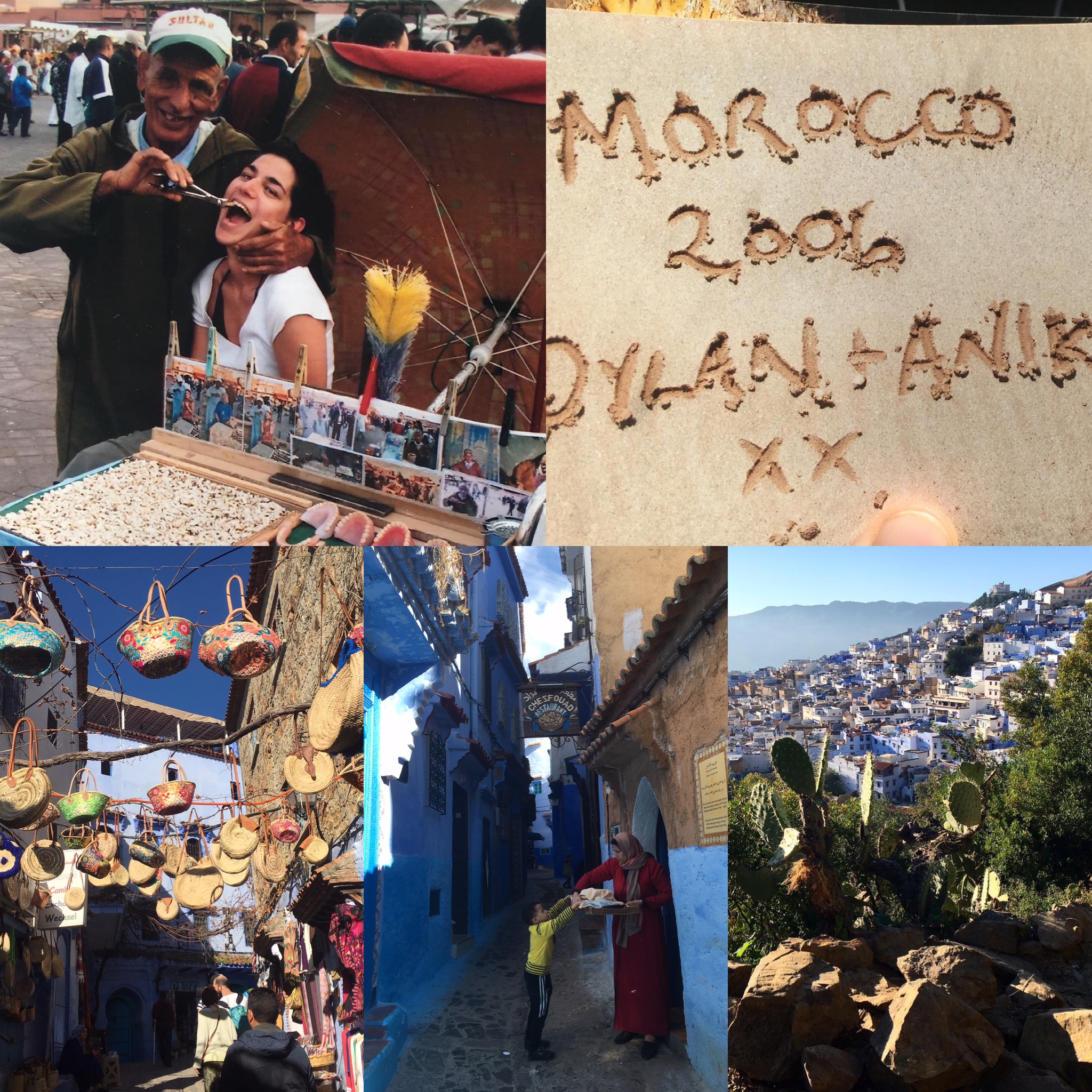
The undoubted highlight of the whole trip was Morocco. Our final lift got us to the enchanting city of Almeria in Andalucia (Spain) where we hiked up to the top of the Alcazbar castle -the second-largest Moorish fortress in Andalucia after Granada’s Alhambra. It was on this day that my interest in the Moorish occupation of the Iberian peninsula began, an occupation that was to last over 700 years from the year 707. In this context finishing the hitchhike in Morocco was an apt way to complete the journey. Until this trip, I had little idea of how great an influence the Moors had wielded over modern-day southern Europe.

Not that our initial arrival into Morocco wielded too many clues having caught a ferry from Almeria to the Spanish enclave of Melilla. In effect, we travelled from Spain, across the Mediterranean to once again arrive Spain! Melilla, alongside Ceuta, form the European Union’s only land borders in Africa and was an inauspicious start to our post hitch hike holiday in ‘Morocco’. It caused a fair amount of confusion when we disembarked that’s for sure 🙂

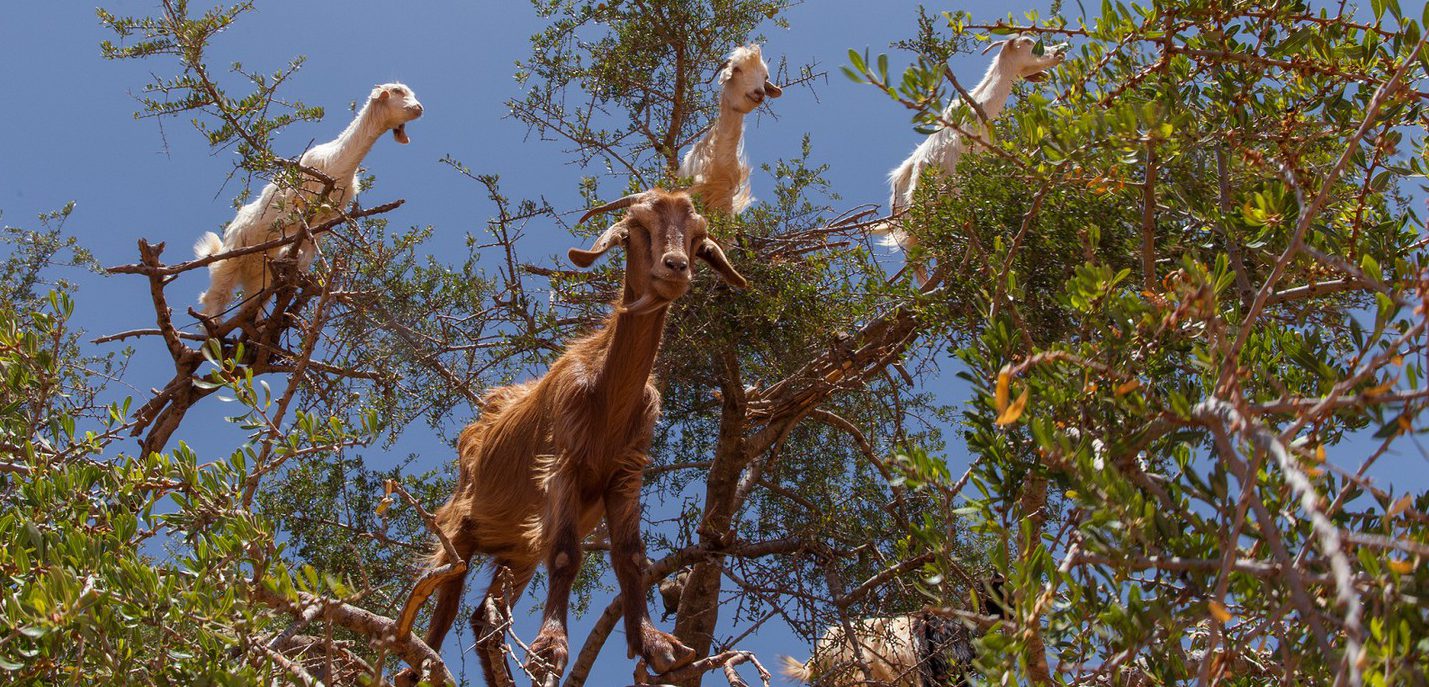
Once we got out of Melilla though we embarked on what, to this day, remains one of my best ever trips. There is something amazing about travelling with limited expectations about what you’ll see and experience. Back in 2006, the opportunity to tap into online travel review sites was limited and certainly not something I was familiar with doing. As such, I felt like I was travelling ‘blind’ and every new place we visited seemed to blow me away. Bumping into a camel in the tight alleys of the Fes Medina, seeing the ‘Blue City’ of Chefchaeun from afar and seeing goats in Argan trees were just three standout moments. From that point, I was hooked and determined to ride my bike in Morocco and run a tour there.

Riding my bike there was the easy part though and indeed, I did that the next year with a mountain bike trip through the Atlas mountains. Setting up a tour there was a different matter altogether. At that point, the tours I guided were all in Europe and my then employer had little appetite to venture any further south. Since that first trip to Morocco, I’ve been back 11 times and it never ceases to enchant me as a travel destination. Setting up Ride and Seek back in 2011 marked the point when I seriously started planning it in my head as a real possibility.

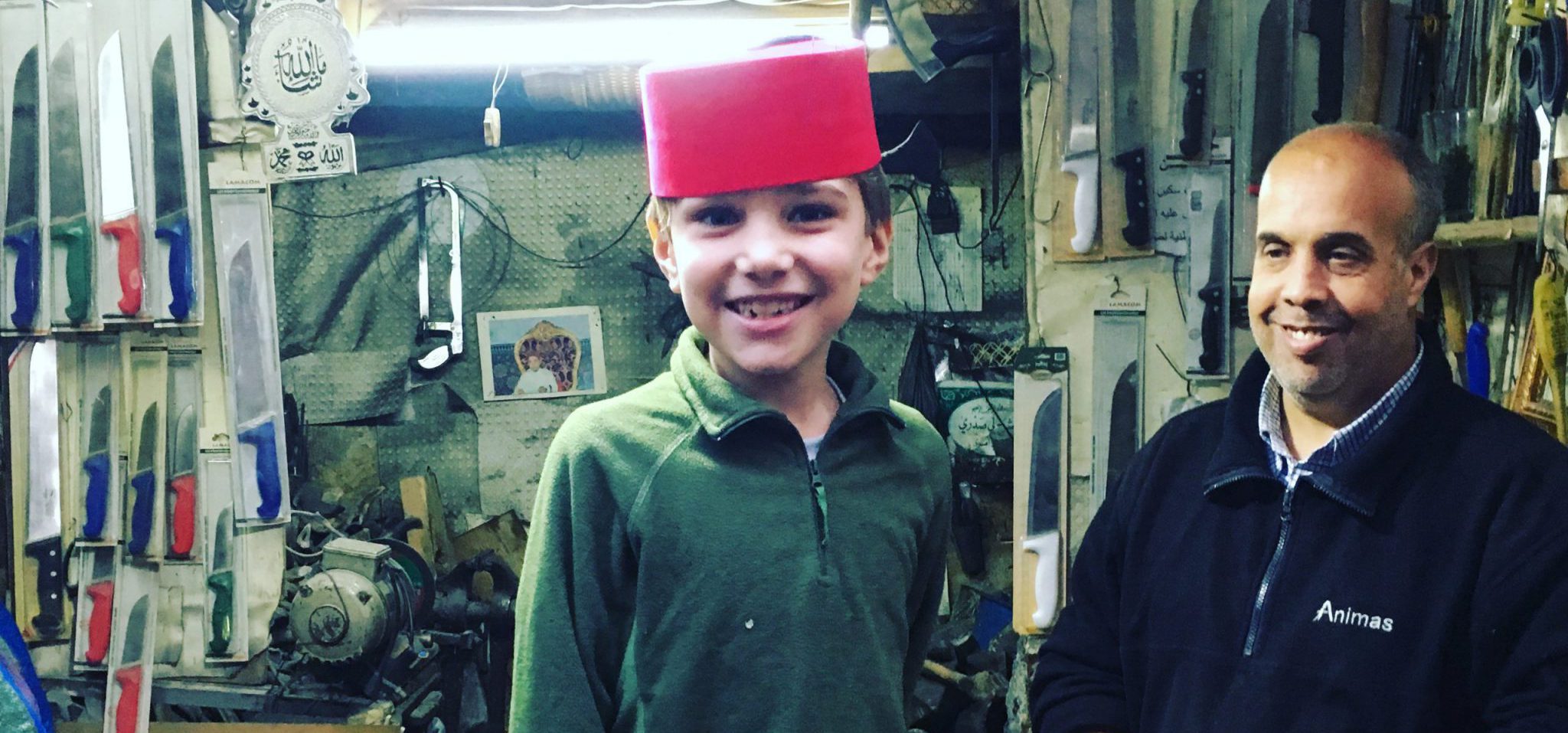
It was at the end of 2017 that we finally committed to running a tour in Morocco and the first round of scouting was a true family affair. I would like to thank our youngest guide Luka – my son- for his sterling work in helping to put this tour together! Here he is below getting into the spirit of things with his headwear in the knife quarter of the remarkable Fez Medina.

Morroco will be the 30th country that we have cycled in and from a personal perspective, it is the one I am arguably most excited about, particularly as it has taken more than 14 years to make it happen! The inaugural Conquest of the Moors Tour will run in October 2020 and I am delighted to be one of the guides on the Moroccan stage.  Through many wonderful hours of ‘scouting’ with the family, and now with the guide team, this tour is one we have waited a long time to realise!

Fez medina


Ride and Seek’s Tips for travel in 2022

Considering taking a trip this year? Read Ride and Seek’s guide to travelling in 2022, covering insurance, tests, and choosing the right companies!

Travelling in the pandemic has looked different depending on where you’re from and where you’re going. While travelling is an inherently bold act, the need for caution along with boldness has been a difficult balance to strike. Ride and Seek design and run epic bicycle trips all around the world, so our own sense of adventure and boldness is perhaps higher than the average tour operator.

As a company that has operated responsibly throughout the pandemic, we feel it’s partly our role to offer travel advice to anyone considering booking a trip in 2022 — even if that trip isn’t with us!

The whole world is out there and while it’s fine if some people want to wait a little longer before they venture out, we hope this guide can offer practical tips and reassurances to those of you who are already planning your 2022 adventure. If you decide you’d like to head out on one of our Epic Cycling Adventure Tours and you’d like to know more, please don’t hesitate to get in touch.

Everyone Feels Differently About Travel During Covid

Firstly, it’s important to remember that while there may be some absolute value of safety when travelling during covid, we don’t really know what that is. This means that the sense of safety and security is largely a subjective thing, seen through the lens of different countries’ news outlets, different ages, pre-existing health conditions, etc.

In our experience, adventurous travellers are a little more considerate of other cultures and ways of life than those who don’t travel very much. This is simply a by-product of getting out into the world and meeting different kinds of people. Remember that everyone has had a different pandemic experience; this will help you navigate your travels better.

Always Check Travel Companies’ Terms and Conditions

The pandemic didn’t start yesterday, so travel companies don’t have a good excuse for not changing their terms and conditions to accommodate these strange times we’re living in. While not all travel companies have the flexibility to offer incredibly relaxed reschedule and cancellation policies, almost all of them should at least try to make sure that their policies are customer friendly.

Look for lenient cancellation policies and anything else in a tour operator’s messaging that implies they are happy to accommodate last-minute changes due to travel restrictions, positive covid tests, or any other complications that arise. And if you’re in any doubt about the policies, don’t be afraid to ask.

Shop Around for Good Health and Travel Insurance

This advice is good for any travel, regardless of whether we’re in a pandemic. But travel insurance with good healthcare cover is especially important right now. Even if you usually throw caution to the wind, we highly recommend investing in especially comprehensive cover.

As Ride and Seek’s tours often travel through several countries, the insurance cover needs to cover different laws and regulations in different countries’ infrastructure. If you are visiting several countries in one trip, make sure you’re covered for this!

Travel with Companies Who Have Operated Throughout the Pandemic

While it is completely understandable why some specific tour operators haven’t been able to work during the pandemic, there is an undeniable learning curve to running a tourism company during covid. There has been a lot to learn over the last two years and companies who learned on the job are much more likely to have done the practical tests and hard work required to ensure their tours and experiences run without a hitch (or very few hitches, at least).

So, if you’re in any doubt, read a company’s blog and look on their social media to see how they functioned during the pandemic.

COVID-19 Tests Before and During Your Trip

Unfortunately, it looks like we’ll all be swabbing our throats and our noses for a while yet. While PCR tests will likely be a prerequisite for long-haul travel for the foreseeable future, it’s also a good idea to pack several rapid-antigen tests too. While many countries will offer lateral flow tests for free or for an affordable price, there aren’t any guarantees, so if you know where you can get some in your own country, we advise bringing several tests with you, just in case.

Pre-Travel Logistics

Somewhat linked to PCR tests is the additional pre-travel logistics required on the run-up to your trip. While we have always had to sort out the various Visas and travel insurances required to travel, many countries have additional paperwork requirements to ensure things are as safe as possible for both locals and tourists.

By all means, do a little research before your trip, but any good tour company will have done most of the work for you, so don’t be afraid to call or email to ask for advice.

There are so many more things to say about travelling in 2022, but the main point we haven’t covered yet is for you to make sure you have an incredible time! Travel is an absolute joy and a privilege, and all of the additional logistics and worries about traveling during a pandemic may distract some of us as we head out into the world on our next adventure.

So, remind yourself to have a wonderful time, to make all the requisite preparations and to then relax and enjoy your trip. If anything we’ve said in this short guide has inspired you to travel with us, you might like to consider a couple of our upcoming epic and mini-epic cycling trips, such as our Berlin to Budapest Bike Tour in August and our Paris to Saint Petersburg Bike Tour in July.

We hope we’ve offered some helpful advice with this guide, but we also hope we’ve emboldened a few readers to stop dreaming and start actively planning their next adventure! 2022 has so much to offer if you can just reach out and grab it!


Conquest of the Moors Food Safari

The culinary experience is a fundamental element of our tours and is one of the reasons we are so excited by our Conquest of the Moors Cycling tour. On our Epic cycling tours, we travel through multiple regions, experiencing the very best of each locale. Eating on tour not only refuels us but gives us a true sense of place as you travel to each special region of a country. Our routes are primarily steered towards riding the most picturesque, quiet roads, but often we also route plan to experience a particularly wonderful dish, wine, or restaurant.

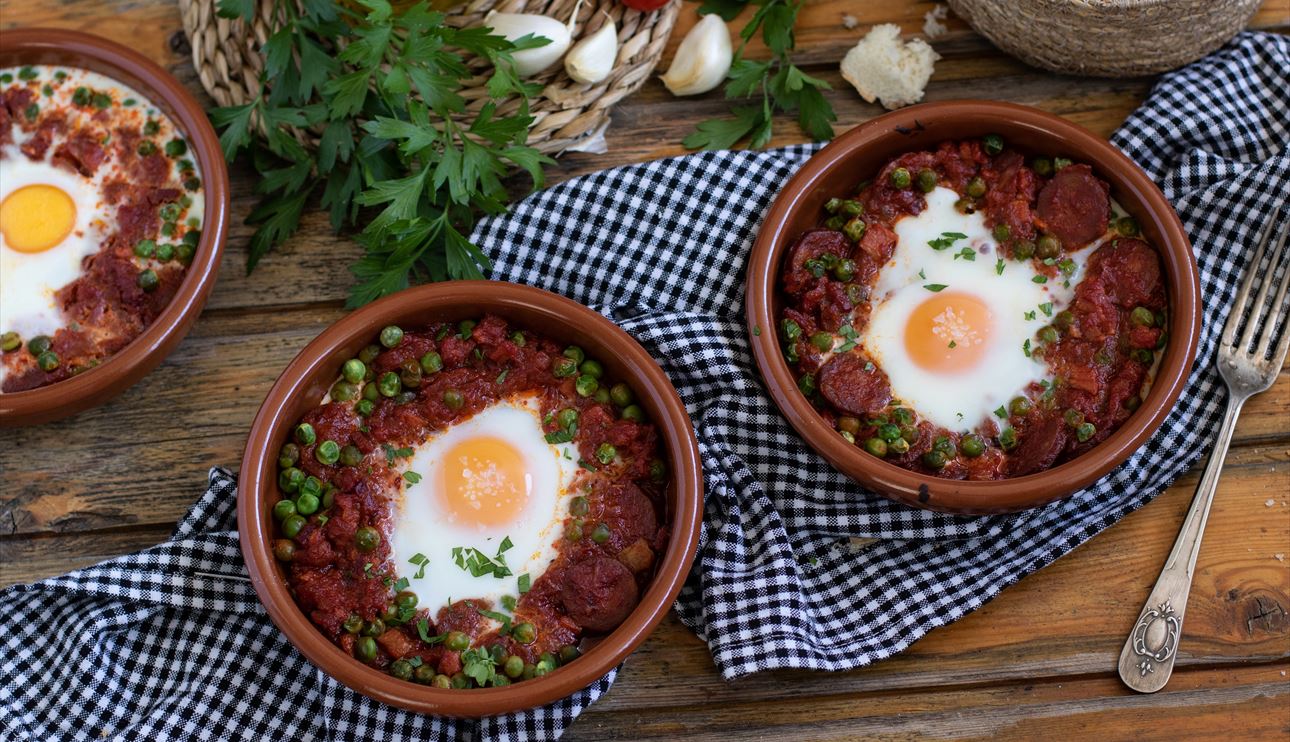
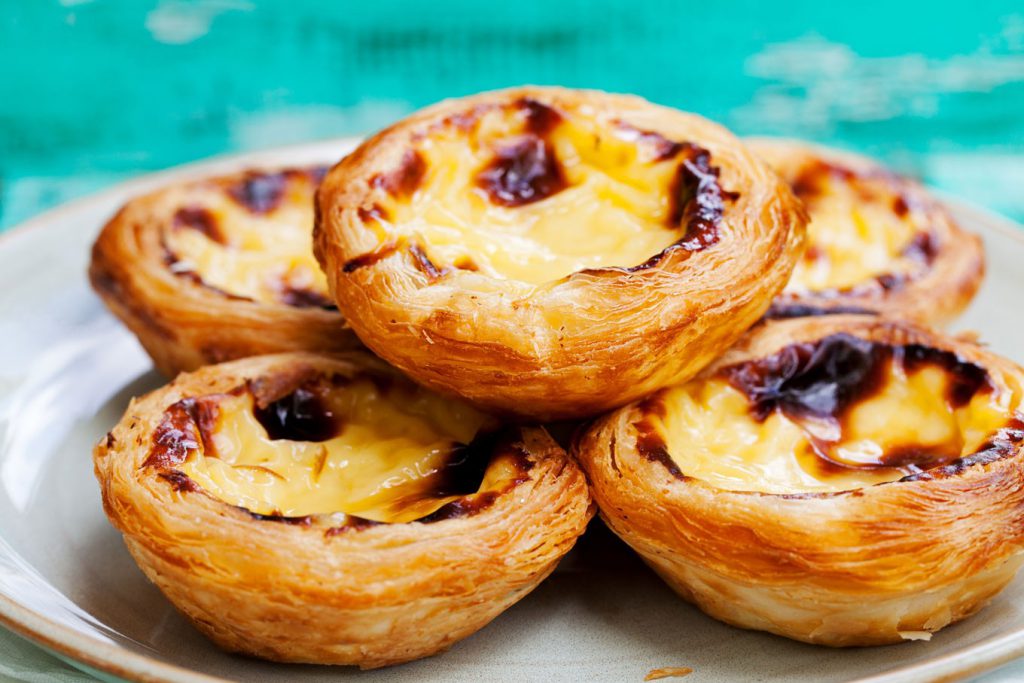
With this in mind, we give you three delicious recipes, chosen to represent some of the incredible yet distinct cuisines of three special countries that feature on this tour – Morocco, Spain, and Portugal.


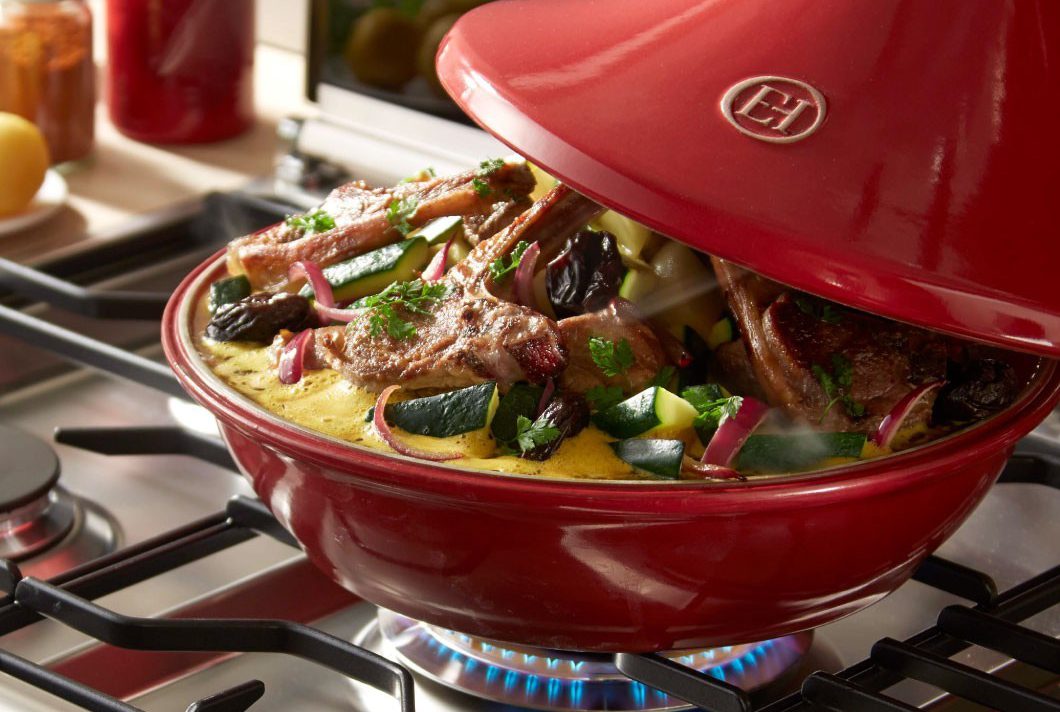
Morocco- Fruity lamb tagine (serves 4)

Lamb tagine

What trip to Morocco is complete without a tagine? Subtle in flavour and so satisfying, this dish can be used anywhere from on a weeknight to a dinner party. We have also frozen excess quantities of this dish and confirm that is freezes well for those who like to prepare ahead.

For those who prefer a vegetarian option, we have also made this dish without the lamb but added chunks of potato and zucchini (courgette). It was just as delicious.


Ingredients


Guide Soul Rides – Sardinia (Italy)

Simone Scalas is a proud Sardinian who is the trip specialist on our 3 Islands Bike Tour. Having written books on cycling in Sardinia and with 20 years of bike guiding to call on, his ‘soul ride’ from his hometown of Pula is guaranteed to be a cracker.

Coastal riding at its finest

My soul ride takes place in the amazing Costa del Sud in southwestern Sardinia. It starts in Pula, a lively village that relies on tourism yet has its own authenticity. The local cyclists gather at the Piazza de Popolo main square to start this ride, or for biking into the mountains. A perfect place to have a coffee while waiting for the late riders to join the group.

Our author – Simone Scalas

The ride begins with 15 km of flat roads, parallel to the main road, and you can decide to pedal along the coast breathing the sea breeze, or immersed in a peaceful countryside coasting the hills, or combining a bit of the two landscapes.

Then you head inland towards Domus De Maria village, starting to taste the more rural Sardinia. For lazy riders like myself, it’s the perfect first coffee stop :). From here we start climbing, and it’s a gentle, with almost no cars, solitary and scented climb among wild Sardinian maquis and granite.

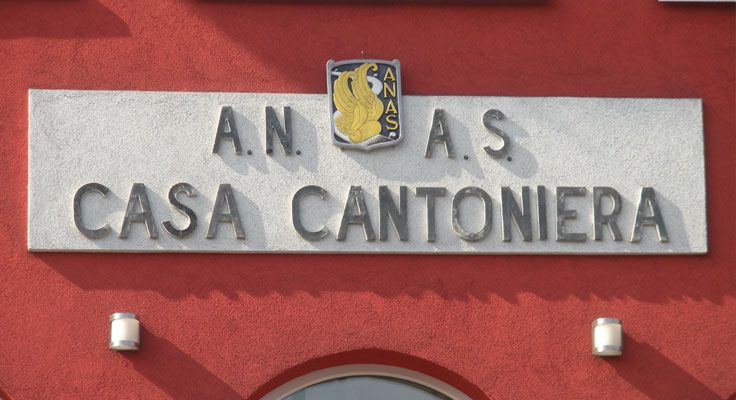
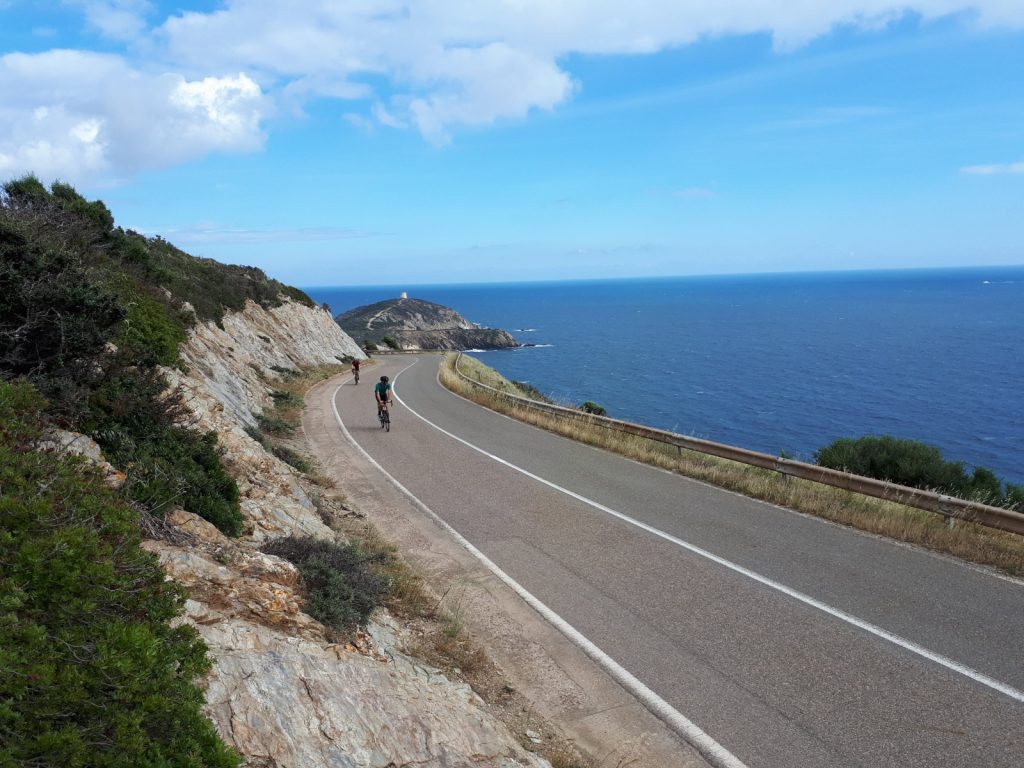
Marking the top there’s a “Casa Cantoniera”, one of the several ancient roadman’s houses, all of them coloured with pompeii red paint and always in scenic locations. From here you can stop to admire the landscape embracing the fisherman natural harbor down the coast and the spectacular twisting road all the way until Teulada, the next village of the ride.

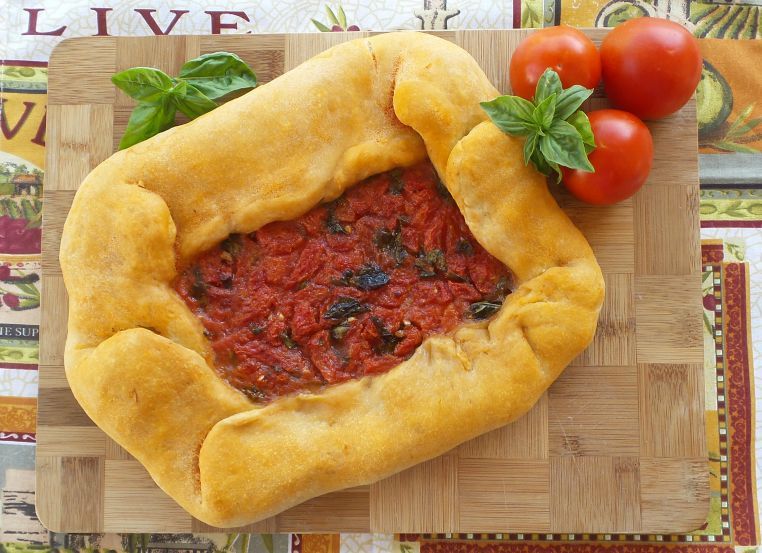
Teulada deserves a stop, first of all, to let your brakes recover, then to taste its “Pani cun Tomata” bread with tomato, which is typical from the village and absolutely tasty. If you don’t find it at the main square bar (shame on them), just walk to the nearby supermarket or bakery and get it fresh, fantastico!

Well, so far the ride has been just beautiful, yet the best has to come :).
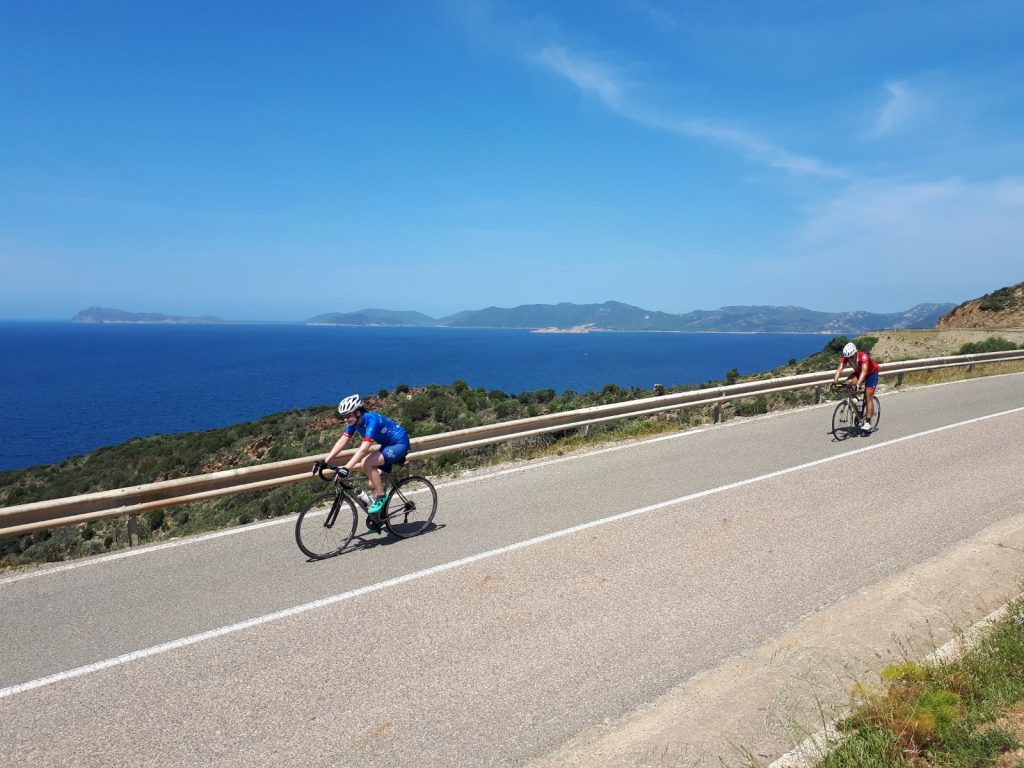
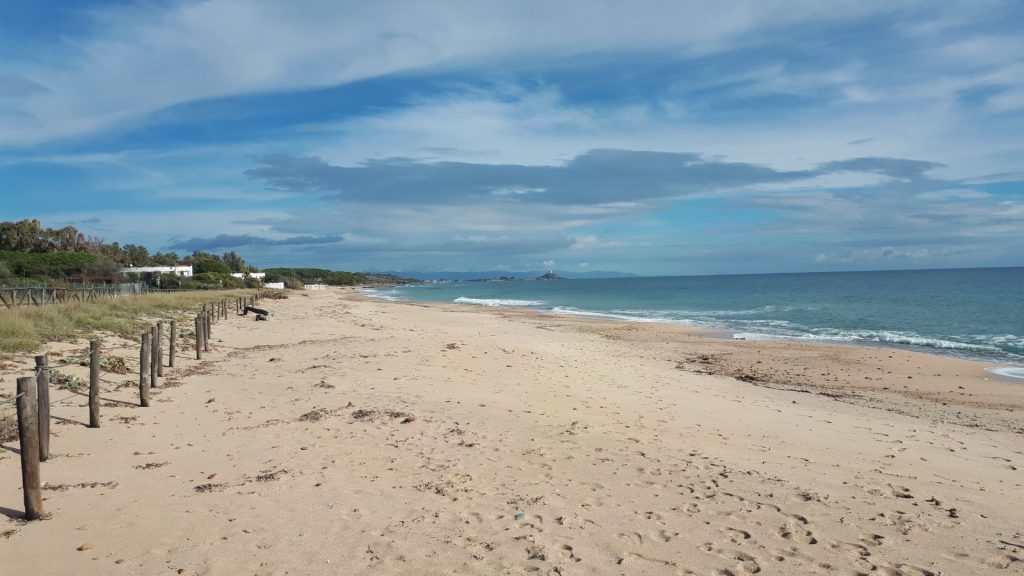
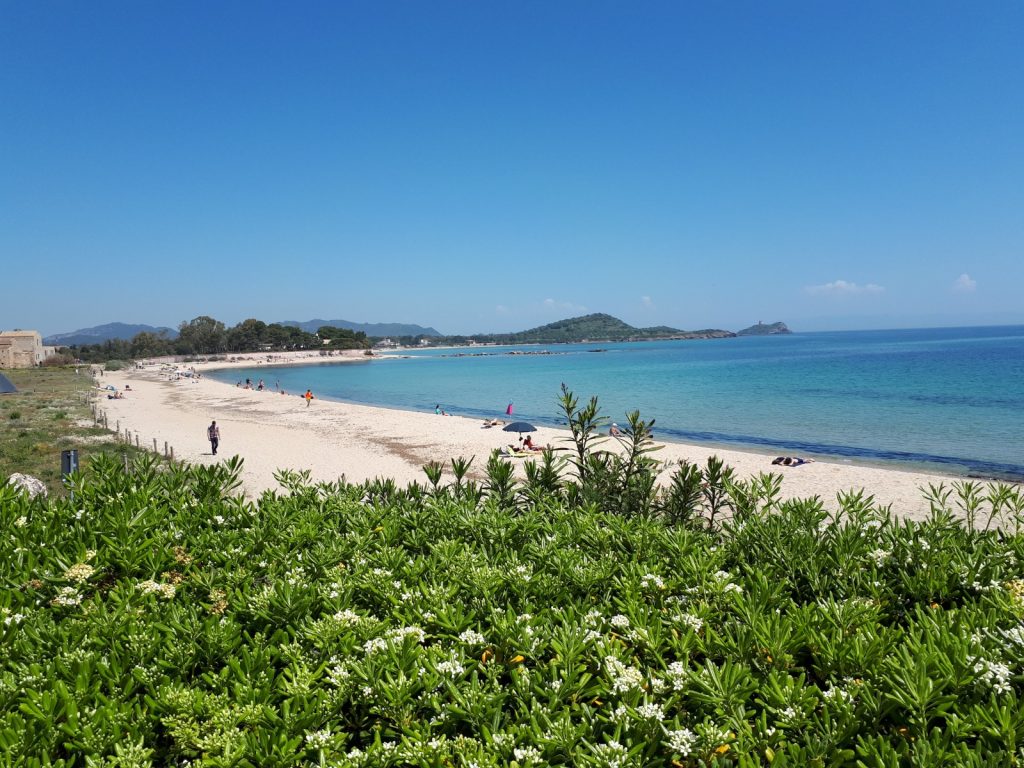
Soon after a few km, you’ll hit the coast at a Porto Budello natural harbour, and here starts the absolute beauty. You’ll ride for about 25 km, up and down along the coast, enchanted by the never-ending long sandy beaches, small secluded coves, solitary Spanish watching towers, and the silence. Well, here and there you’ll have some short yet tasty climb, but the views will let you forget all of them.

Fancy a mid ride swim?

This stretch of ride ends with some of the most picturesque beaches of Sardinia, the marvellous Tuerredda Beach with its turquoise waters, then the endless Chia Beach with its golden sand.

If you are hungry, you’ll have several restaurants to stop, but the locals (not just the cyclists) have their beer, sorry their energy drinks, at the “Mongittu” bar, you’ll recognize it by the locals, no worries.

Nora

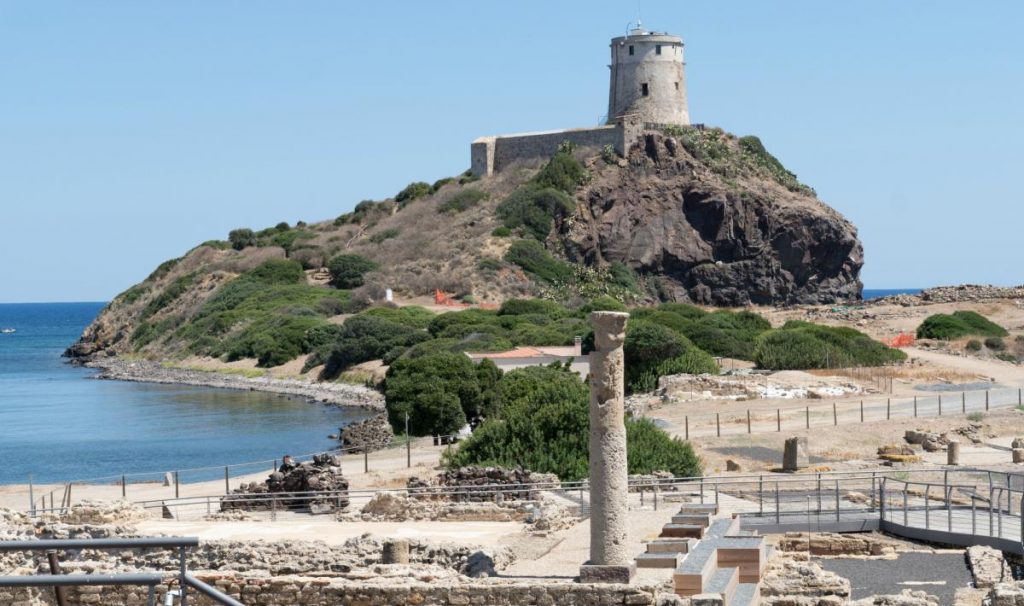
Then, after the climax like in a perfect theatre piece, you have time to chill down again and relax along the last 15 kms taking you back to Pula. Usually we finish the ride in Nora, the ancient Phoenician the Roman town, beautifully settled in a little promotory among the lagoon and the sea.
Again another great spot to celebrate the end of the ride with the last beer!


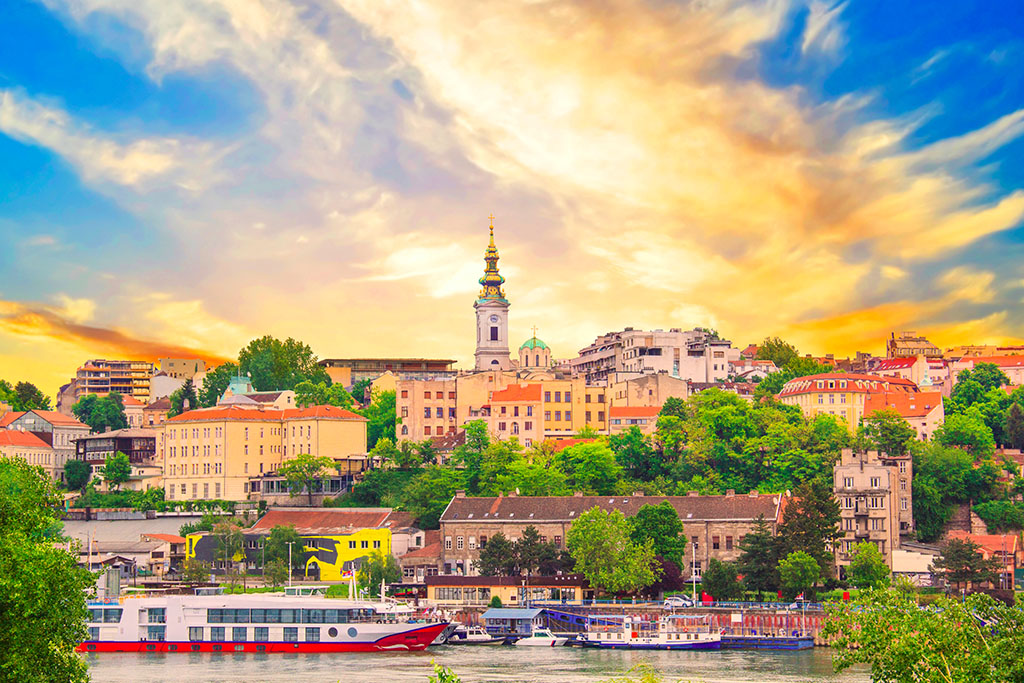
Exploring Belgrade

Belgrade, the capital of Serbia, is a dynamic city where history meets modernity. We have presented a plan for two days in the city, but you can choose to cherry-pick your own highlights based on the time you have available.

Day 1: History and Cultural Landmarks

Start your trip at Belgrade Fortress, one of the city’s most iconic landmarks. The fortress sits on a hill overlooking the confluence of the Danube and Sava Rivers. The fortress is not just a single building but a vast complex with centuries of history. You can explore its ramparts, gates, and towers while enjoying sweeping views of the rivers and the city. Within the fortress, take some time to visit the Military Museum, which provides a detailed overview of Serbia’s military history, and the Ružica Church, a quaint chapel adorned with chandeliers made of weaponry.

From the perspective of our tour focus Suleiman the Magnificent played a pivotal role in Belgrade’s history during his reign. In 1521, he captured the city from Hungary, marking a significant victory for the Ottoman Empire. Belgrade became a key Ottoman stronghold and gateway to Central Europe, integrating into the empire for nearly 350 years. Suleiman fortified the Belgrade Fortress and expanded the city’s strategic importance, establishing it as a centre of military and administrative power. The Ottoman influence transformed Belgrade’s architecture, introducing mosques, baths, and markets, while the city’s multicultural character flourished under Ottoman rule, blending Eastern and Western influences.

Surrounding the fortress is Kalemegdan Park, a peaceful green space where locals gather to relax. It’s perfect for a leisurely walk, and you might stumble upon outdoor exhibits, sculptures, or street musicians.

After the fortress, head to Republic Square, the heart of Belgrade’s historic district. The square is surrounded by key landmarks like the National Museum and the National Theatre. You can stop by the National Museum for a look at its vast collection of Serbian and international art, including works by Picasso and Monet, or just take in the lively atmosphere of the square.

From Republic Square, stroll down Knez Mihailova Street, Belgrade’s main pedestrian thoroughfare. This lively street has elegant buildings, shops, cafes, and restaurants. It’s a great spot to take in the local scene, enjoy some people-watching, or stop for a coffee break.

In the evening, head to Skadarlija, Belgrade’s bohemian quarter. Often compared to Montmartre in Paris, this cobblestone street is known for its traditional Serbian restaurants, live music, and artistic vibe. It’s the perfect place to enjoy a traditional Serbian dinner, accompanied by local musicians playing folk music. Don’t forget to try classic Serbian dishes like ćevapi (grilled minced meat) and rakija (a potent fruit brandy).

Day 2: Exploring Local Culture and Modern Belgrade

Begin your second day with a visit to the majestic St. Sava Temple, one of the largest Orthodox churches in the world. The church is still under construction, but its vast size and stunning white marble exterior are already impressive. Inside, the dome and frescoes are breathtaking, offering insight into Serbia’s religious and cultural heritage.

Afterward, visit the Nikola Tesla Museum, which is dedicated to the life and work of one of the greatest inventors of all time. The museum houses Tesla’s personal belongings, his original documents, and exhibits on his groundbreaking inventions. It’s a must-see for anyone interested in science and technology.

In the afternoon, venture to Zemun, a charming neighbourhood that feels like a small town within Belgrade. Located along the Danube River, Zemun is known for its Austro-Hungarian architecture, narrow streets, and riverside cafes. Climb the Gardos Tower for panoramic views of the area and the river, then take a leisurely walk along the Zemun Quay, where you can relax by the water or enjoy lunch at one of the floating restaurants.

For a relaxing end to your trip, visit Ada Ciganlija, an island in the Sava River that has been transformed into a recreational oasis. Known as “Belgrade’s Sea,” Ada has a lake, beaches, walking and cycling paths, and cafes. It’s a popular spot for locals to unwind, and you can swim, rent a bike, or simply enjoy the natural scenery.

Finish your day in Savamala, a trendy neighbourhood known for its vibrant nightlife and street art. This district has transformed from an industrial area to a hub of creativity, with galleries, bars, and nightclubs lining its streets. It’s a great place to experience Belgrade’s energetic nightlife, whether you’re looking for live music, cocktails, or dancing.

Additional Tips:

Public Transport: Belgrade has a reliable bus, tram, and trolley system, though many of the central sights are walkable.

Food: Serbian cuisine is hearty and meat-centric, so make sure to try local specialties like pljeskavica (Serbian burger) and kajmak (a creamy dairy product).

In two days, you’ll experience Belgrade’s mix of history, culture, and modern charm.


Le Tour du Mont Blanc with Ride & Seek

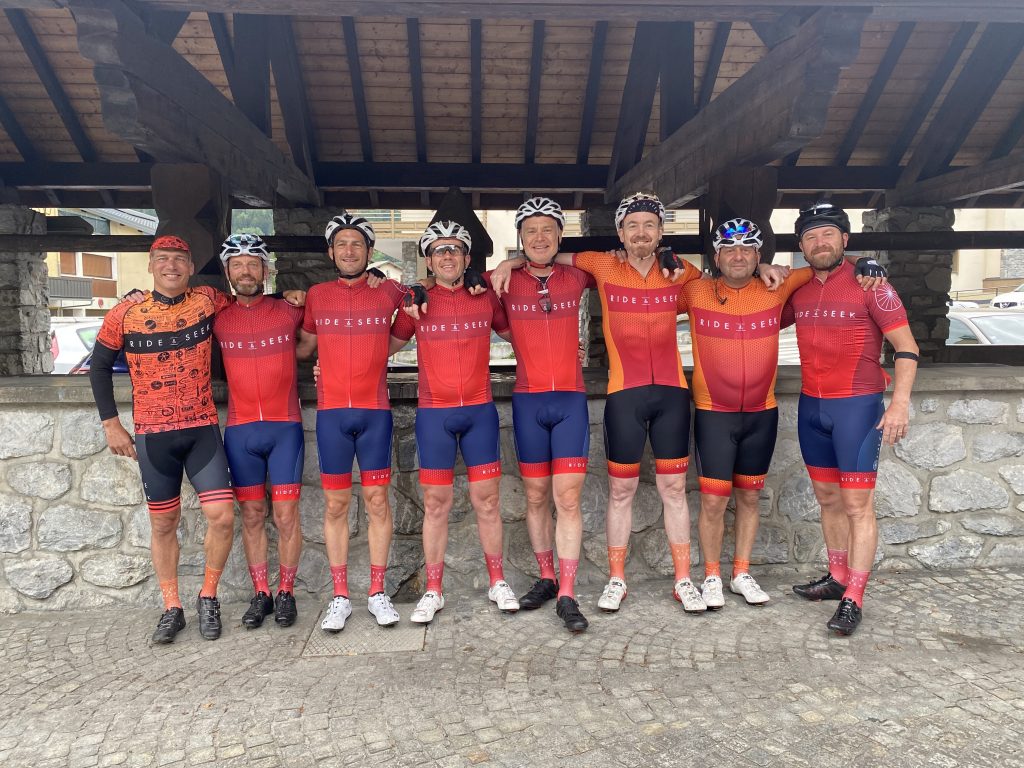
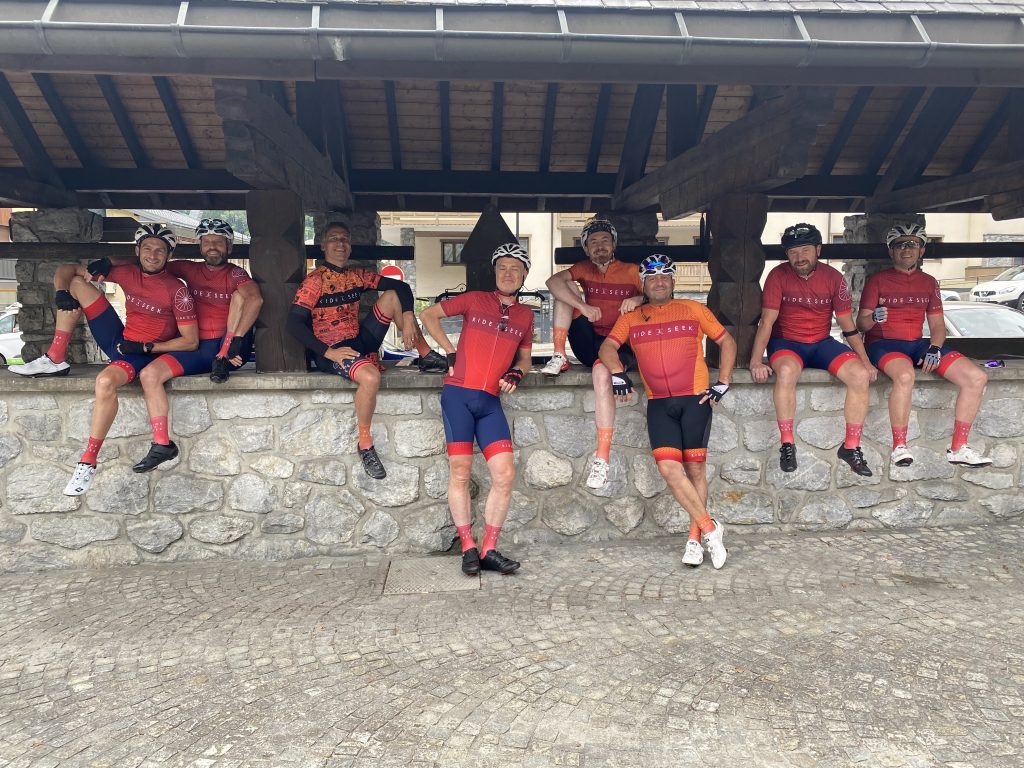
More Groupetto than GC contenders, we are a group of friends with a certain number of Alpine climbs, Etape du Tours, and Marmottes to our names even if crossing the finish line each time was never an easy accomplishment. This time we were looking for something different. For someone else to look after us, the logistics, the itinerary, the support van, the refreshments, the hotels, the food…. All we wanted to do was to show up and ride our bikes for a few days.

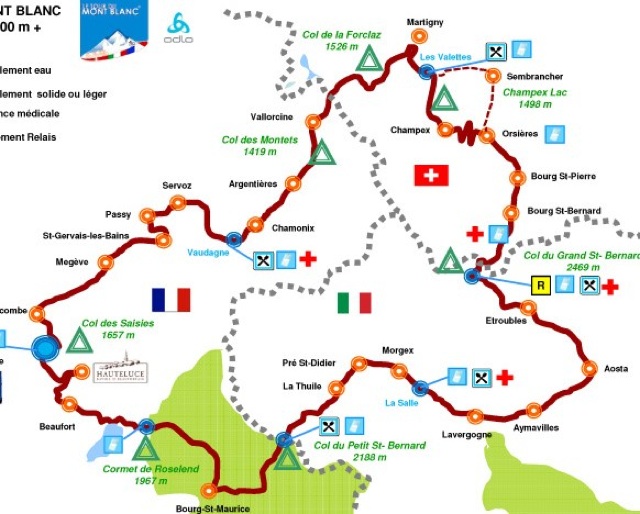
With that in mind, I reached out to Dylan at Ride & Seek. Together he and James came up with the idea of a circuit around the Mont Blanc. Largely inspired by the route of the ultra-sportive of the same name, this is a brief account of the trip: a 4-day challenge, like nothing we had ever done before. 3 countries, incredible riding, stunning views, flawless organisation, and a sense of camaraderie and achievement that will see us make this a regular fixture of our cycling calendar.

Day 1 – Megeve to Chamonix

We arrive in Megeve with Dylan and James waiting for us. We relax after the 6hr drive from Paris, unpack the bikes, transfer our bags to the support van and prepare to roll out for 50km warm-up ride from Megeve to Chamonix. Lovely back roads and 800m+ of climbing allow us to check all is well with the bikes and to prepare the legs for what is to come. Chamonix is busy, the restaurants full but a table for 8 is waiting for us 2mins from the hotel. A large plate of pasta and a tiramisu the size of the task ahead accompanied a briefing from James on the following day’s ride – the toughest of the 4 days – 90km with 3400m+ of climbing from Chamonix to the summit of the Col du Grand Saint Bernard.

Day 2 – Chamonix to the Grand Saint Bernard Pass

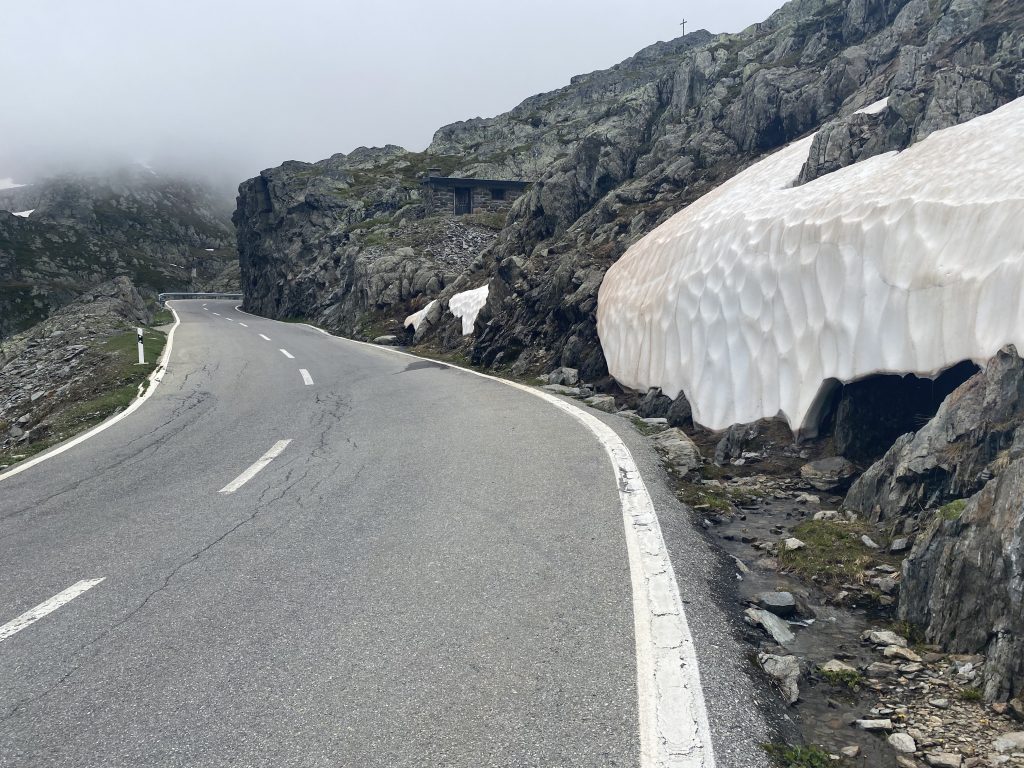
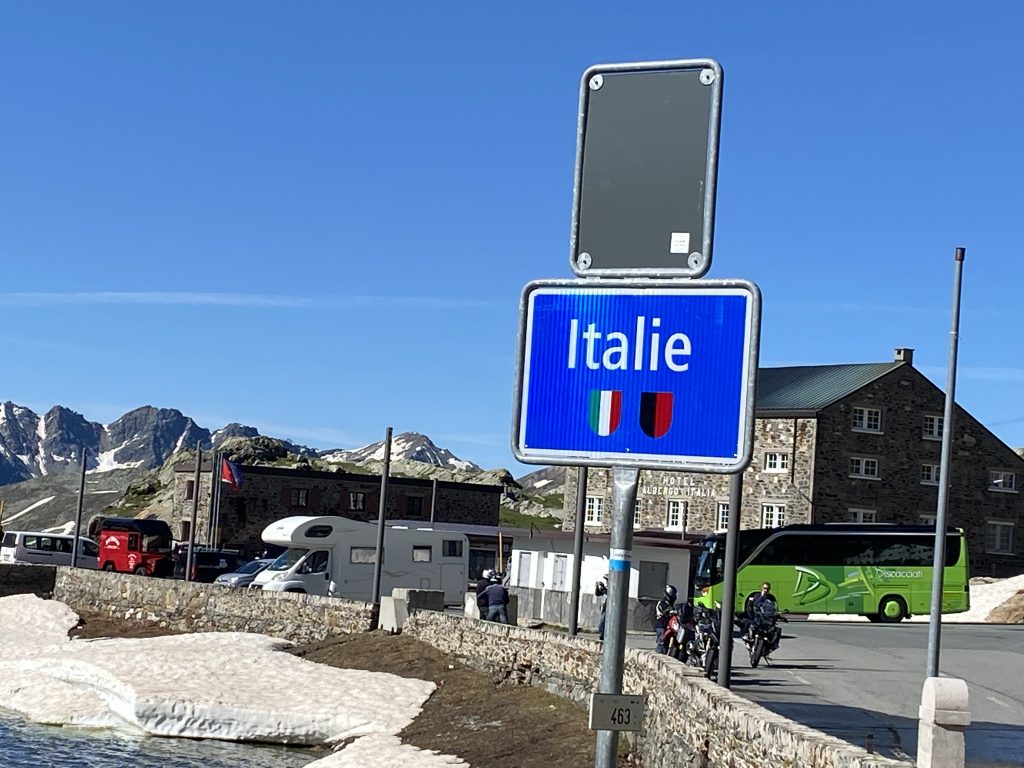
We all meet at breakfast with a view of the Mont Blanc. Excited and slightly nervous, we roll out for the first of 4 climbs – Col de Montets, with its 9km at 5.1%. A gentle start to the day is in order. Once past the summit, we freewheel down across the Swiss border, the PCR tests and COVID vaccination certificates remain firmly tucked away in our jerseys as Swiss customs seem wholly uninterested in our presence. Next up was the Col de Forclaz – 6.9km at 6% – this was tougher and the coffee stop at the top was a welcome break. Things started to get serious now as we headed to the foot of Col de Champex – 14.6km at 7.6% – this one started to sting but was a beautiful climb with panoramic views and a steady gradient. As we arrive at the summit we are 1800m+ into the day and the picnic lunch next to the Champex Lac was picturesque and perfect timing. After lunch, the final difficulty of the day beckoned. The Col du Grand St Bernard – 26km at 6.1% – finishing at 2469m altitude. This has figured 5 times in Le Tour and is classified HC coming from the Swiss side. The climb is long and grinding but with a manageable gradient until you leave the main road for the last 6kms. The mountain pass heading up to the Auberge de l’Hospice perched at the summit is tough and rarely falls below 8.5% but the views are stunning and help with that final effort. Our rooms at the Auberge are waiting for us and the after-ride beer and generous dinner are well deserved and much appreciated. Unsurprisingly we are (very) early to bed.

Day 3 – Grand St Bernard Pass to Bourg St Maurice

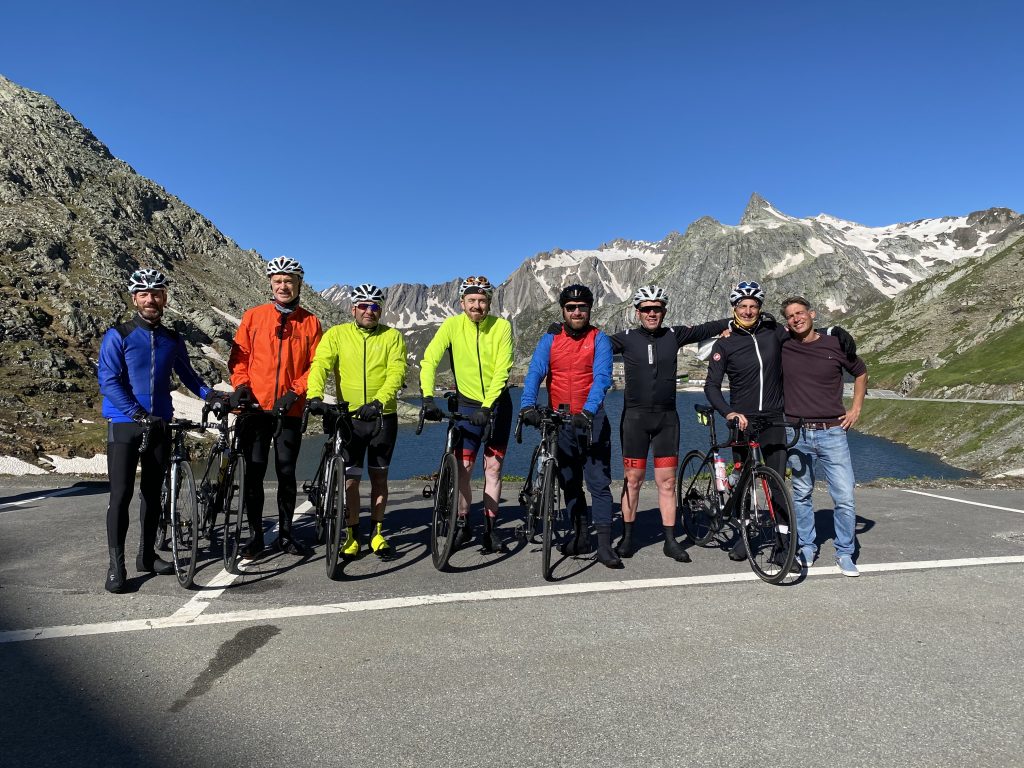
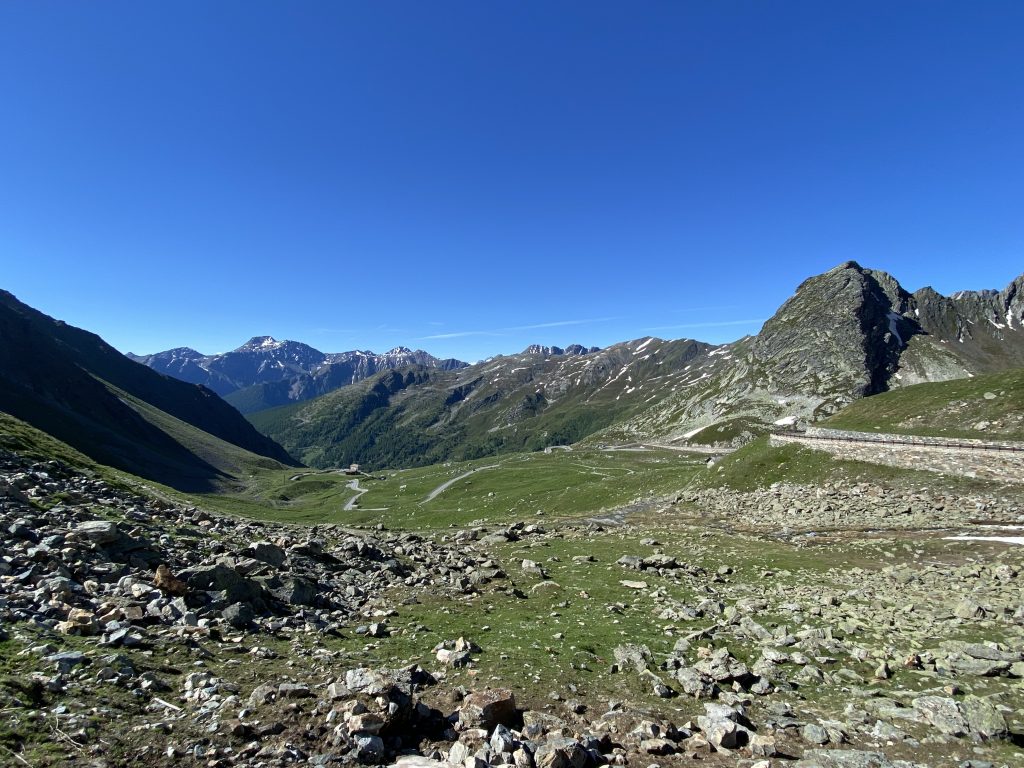
It’s 2° outside, we are at 2469m altitude, the sky is blue and views incredible. Today we are riding across Italy to finish in Bourg St Maurice. We don winter kit, long bib shorts, arm warmers, thick winter gloves, take some pictures and begin our 30km descent into Italy. Once into the valley, we make a mental note to someday climb the Col du Grand St Bernard from the Italian side – it was breathtaking. The support van awaits and we change back into summer kit as the Italian sun bakes down on us. A cup of coffee and we set off for 30kms along the valley, once again with the Mont Blanc surveying our progress. We pass Aoste and stop at a restaurant in Morgex at the foot of the Col du Petit St Bernard. On the menu is pizza, coca-cola, and some minor bike maintenance. Dessert is a 27.6km climb at 4.5%. We plan a stop halfway up at the beautiful mountain village of La Thuile where the van is waiting with refreshments and encouragement. So far so good, nothing too tough up until now. The remaining 13.3km alternate between 4.5% and 7% with a long segment of 1.2km at 8%. The last 2km are ‘only’ 4.5% but by now we have a headwind, often a risk at the top of this climb, and we finish in the same gearing as the section at 8%. On the descent down to our hotel in Bourg St Maurice we nip into an inviting bar at the ski resort of La Rosiere for a sneaky beer and to catch the last 45mins of the TdF stage. Once arrived at the hotel, we log our 120km and 1800m+ into Strava and head out for dinner.

Day 4 -Bourg St Maurice to Megeve

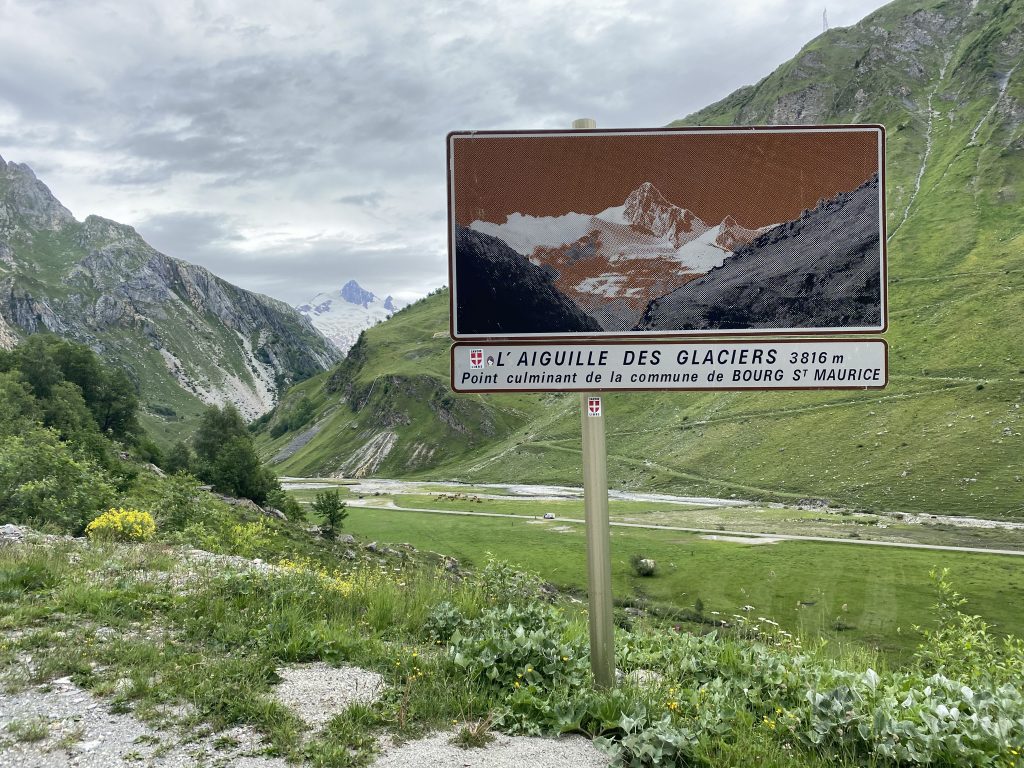
The final day and another big one with 75km and 2300m climbing taking us back to Megeve. The Cormet de Roseland – 18.6km at 6.1% – begins within 500m of leaving the hotel. No doubt the most visually stunning climb of the trip so far. We even have the pleasure of a crowd to cheer us on towards the top, as the camping cars, polka dot flags and cowbells jostle for space ahead of the TdF passage the following day. Another well-timed coffee stop on the way down to Beaufort, before attacking the final climb of trip – the Col de Saisies, 15km at 6.6%. By now the legs were screaming and it’s all in the head for the last big effort. The climb was fairly constant and no doubt the views were stunning however my eyes are glued to the Garmin, focusing on every pedal stroke and slowly ticking off the distance to the top. Reaching the summit was an immense sense of achievement, equal to any of the “Finisher medals” we had amassed, Lunch followed, one final group photo huddled around the summit sign, and off we went. By now the rain was coming down for the first time of the trip, making our final challenge to navigate a mountain descent on wet roads. Despite a couple of scares, we all stay upright, regrouping at the bottom and forming a peloton for the final 7km into Megeve.

As the town was frantically preparing to host the Tour de France the following day, our Grande Boucle was coming to an end, we had the pain of 330km and 8100m+ in our legs and smiles across our faces. Another ticked box on our cycling bucket list. This was exactly the challenge we had come looking for. Over dinner that evening there was only one topic of discussion: Where would Ride & Seek be taking us next year?

Thanks Dylan, thanks James, thanks to Ride & Seek and see you all next year.

Les Cinglés


Fidele Soul Rides – South Island (New Zealand)

Cathy was born and raised in New Zealand but now resides in Sydney, Australia. She joined us on the inaugural New Zealand Maori tour in 2020 which gave her a chance to reacquaint with her homeland. It is from that tour that she has chosen her soul ride.


In 2020 I was lucky enough to join the inaugural Ride and Seek Maori Epic, starting in Auckland and finishing in Queenstown, something like 20 riding days and 2000 km. Completed just prior to border closures and lockdowns.
For me the whole journey was something of a Soul Ride, having grown up in New Zealand and having a good deal of familiarity with where we were going.

One day we rode past a friend’s house and they were able to tell us a bit about the local history, another day we stayed in a hotel that I am fairly sure we had stayed in on family holidays (which is going back a long time), and so it went on. I am sure everyone was a bit tired of hearing my nostalgic tales.


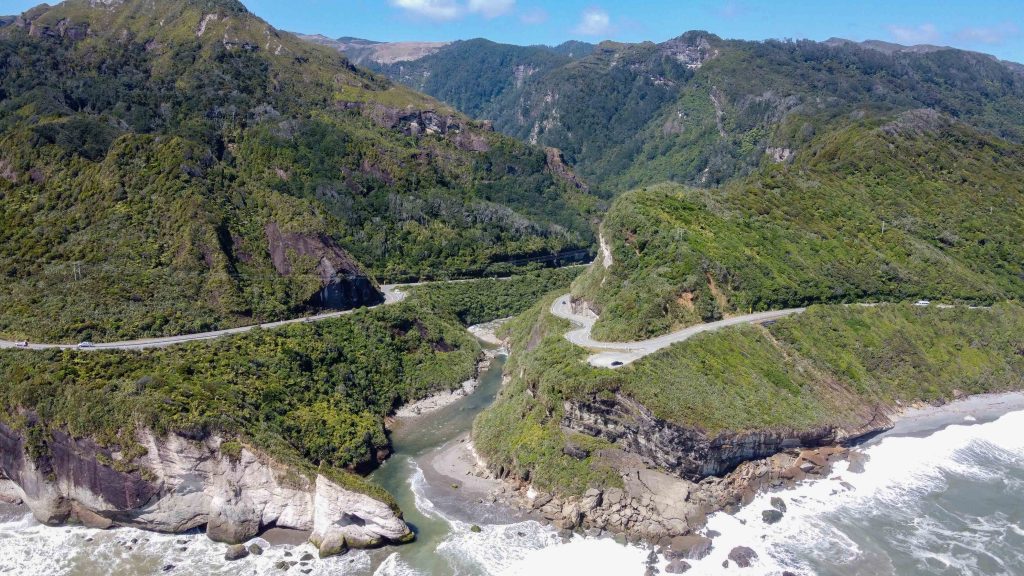
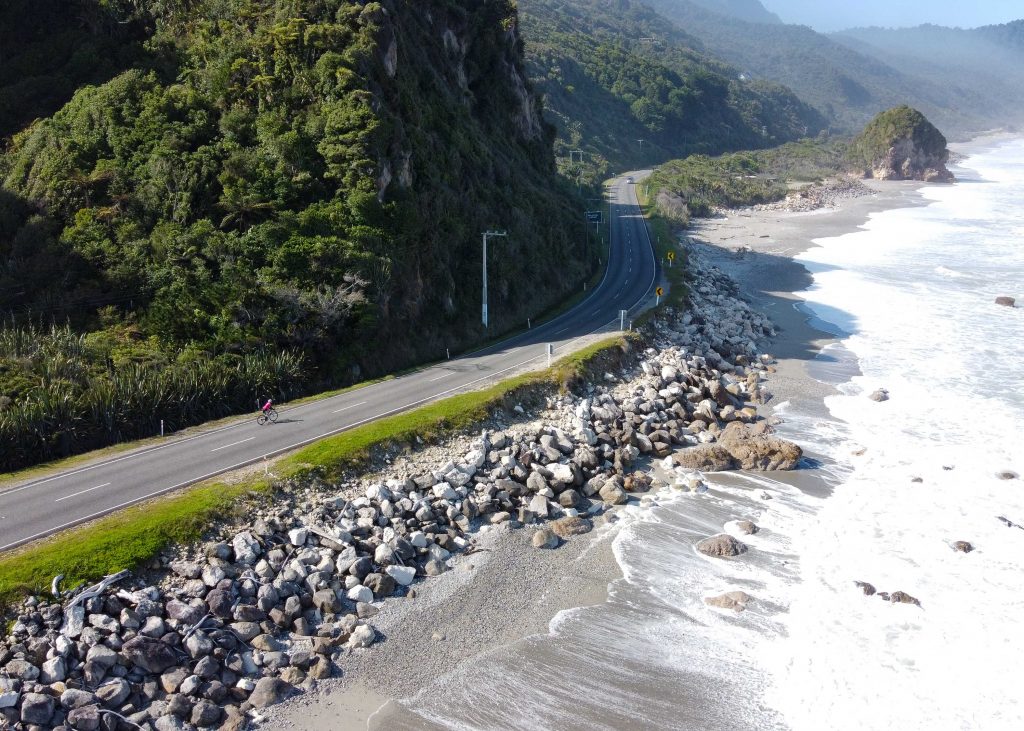
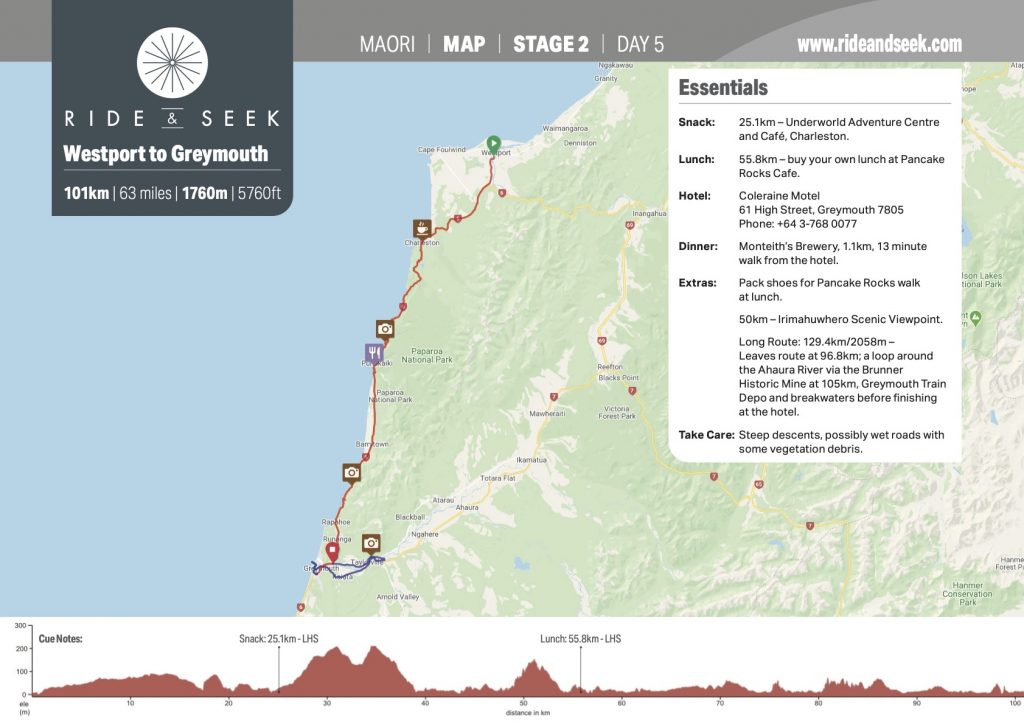
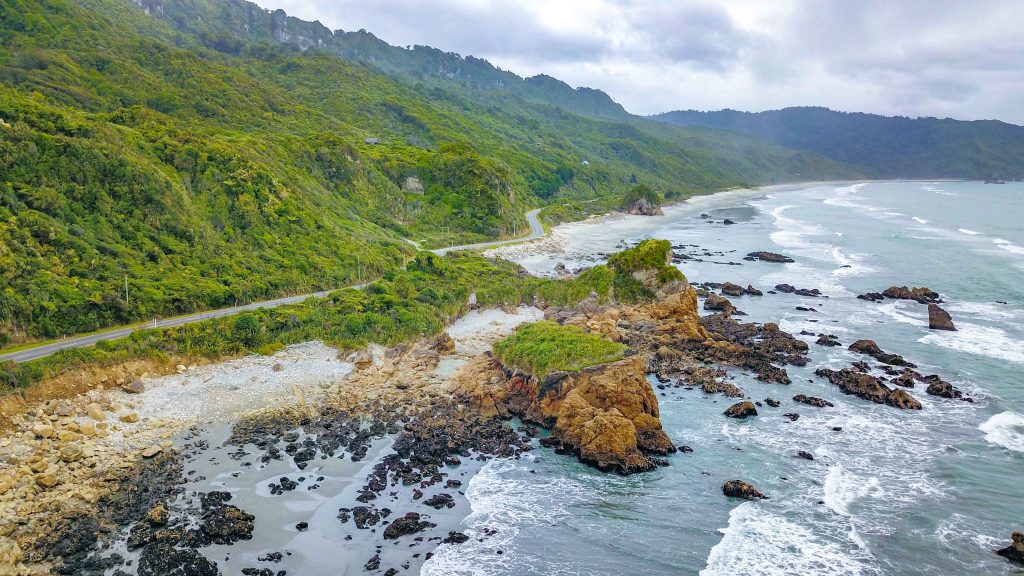
However, as my Soul Ride, I am selecting one day’s riding in particular, From Westport to Greymouth, on the South Island stage on the often-wild West Coast. The whole of that coast is very remote and is often subject to wild weather, which thankfully we mostly avoided. I say mostly because a few days later we did get to experience some true West Coast rain at Haast. (annual rainfall in Haast is 4300 mm or 169.3 inches.) But for this ride the Coast was at its sparkling best!

The ride was about 100k, although we did an extra that day taking it up to 123km and 1244m of elevation. (R&S Extra Loop – challenge accepted!)

To me, the essence of the West Coast is its remoteness and wild beauty. I have been there many times; hiking, travelling by car, and also once before on a bike (tandem) following a similar route, before returning for this much more extensive cycling adventure.

Today the West Coast is much less populated than in its heyday but this is set against its history of early Maori migration and also in European times of fur sealers, as well as mining for gold and coal. So on the ride we had to use our imagination to picture these different aspects of its history.
There is a bit of information here https://theculturetrip.com/pacific/new-zealand/articles/a-brief-history-of-new-zealands-south-island/
https://westcoast.recollect.co.nz/nodes/view/434

The ride started out from our accommodation in Westport, crossing fairly open terrain, inland to start with, and then reached the coast at the tiny town of Charleston, in the 1870s and 1880s a thriving gold-mining settlement.
Once on the coast, we were never far from the rugged rocky shoreline, climbing and descending with spectacular bushland on one side and crashing waves on the other.

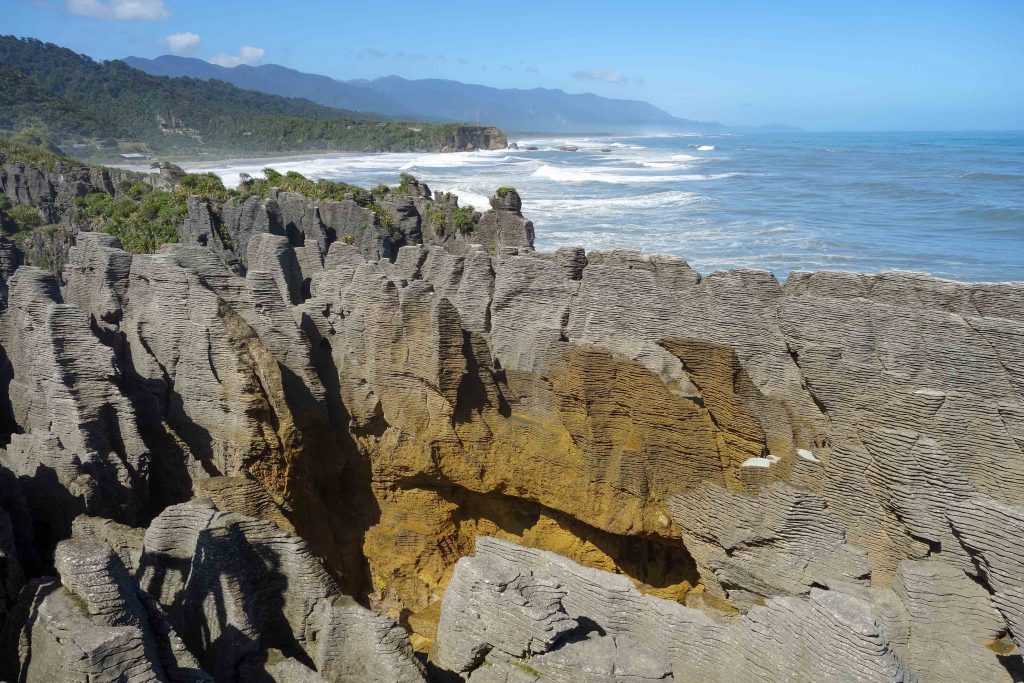
The most spectacular views were to be seen on the section where we stopped for lunch at Punakaiki also known as Pancake Rocks for the magnificent layered rock formations, crashing waves forming blowholes of surf and spray.

https://punakaiki.co.nz

From there we continued on to Greymouth taking in an extra loop to visit a disused mine, the site of the Brunner Mine disaster, one of the worst in New Zealand’s history.
https://en.wikipedia.org/wiki/Brunner_Mine_disaster

From there we retraced our path to take us on to Greymouth. First checking out the wild entrance to the port before heading to our accommodation and a fine meal at a local brewery.

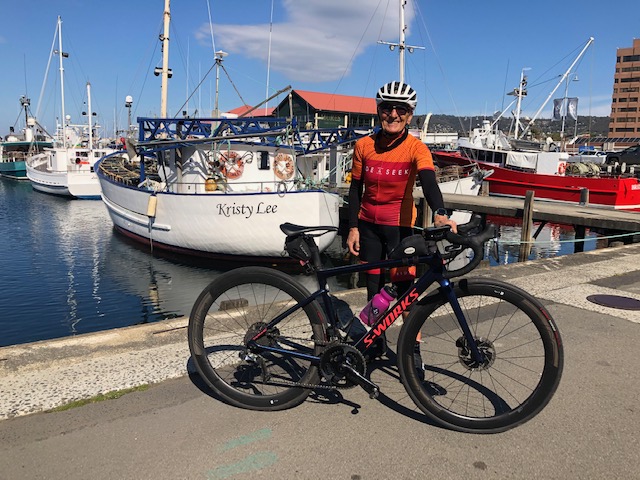
Our author Cathy on the recent Strzelecki tour

I’d do it all over again!


Guide Soul Rides – Chianti Classico (Tuscany, Italy)

Chris Small is originally from Scotland but moved to Italy 20 years ago to pursue his career as a professional squash player. Now based in Florence with a wife and two kids he has transferred his sporting prowess from squash to cycling. He guides for us all over Italy but his true passion still rests in the hills of Tuscany. His soul ride below is a cracking ride which actually features in part on our Hannibal tour.

A ride through the land of Chianti Classico

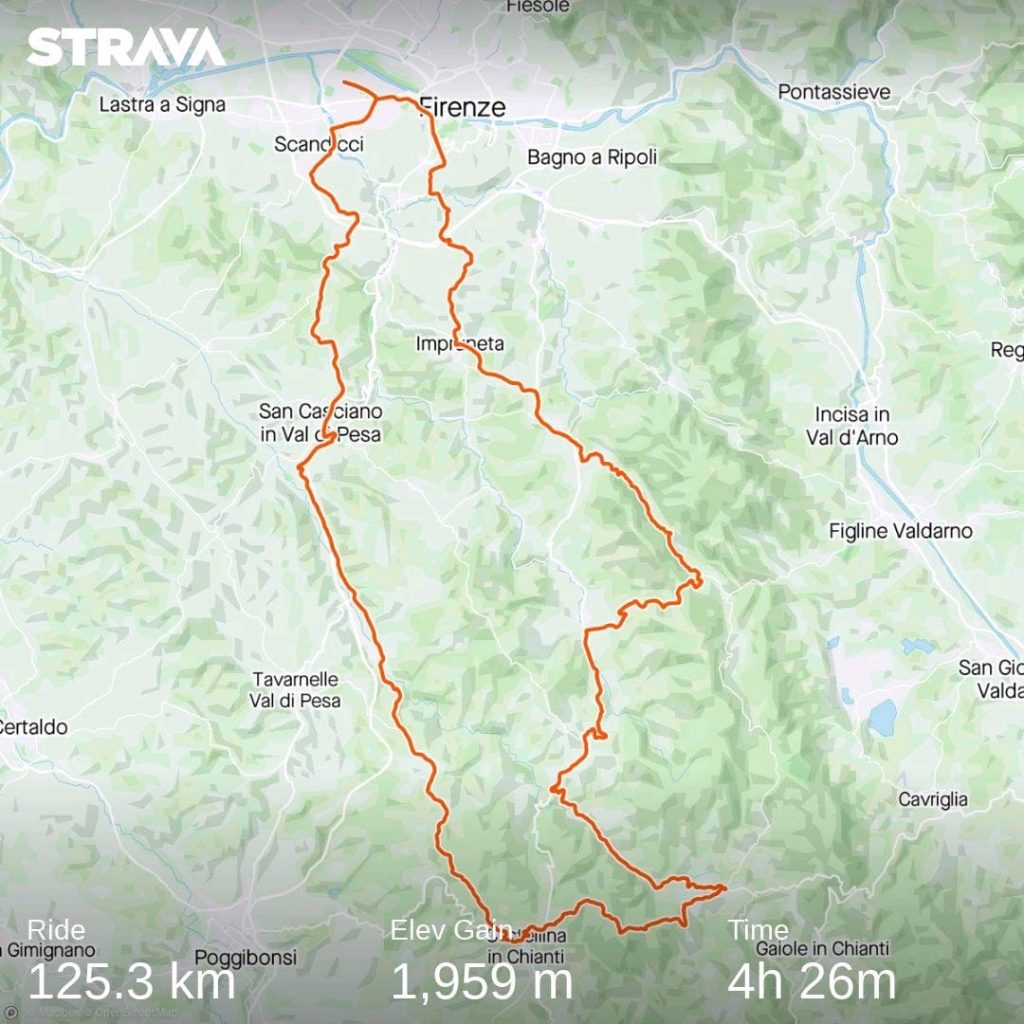
Living in Florence, Italy as a cyclist during times of Covid-19 isn’t really a hardship and the choice of rides is infinite. Florence is a city of just under 400000 people and 10 minutes of riding in any direction take you out of the bowl where the city lies up into the hills. As a rule of thumb here every 60km is around 1000m of vertical and my favourite ride is no different.

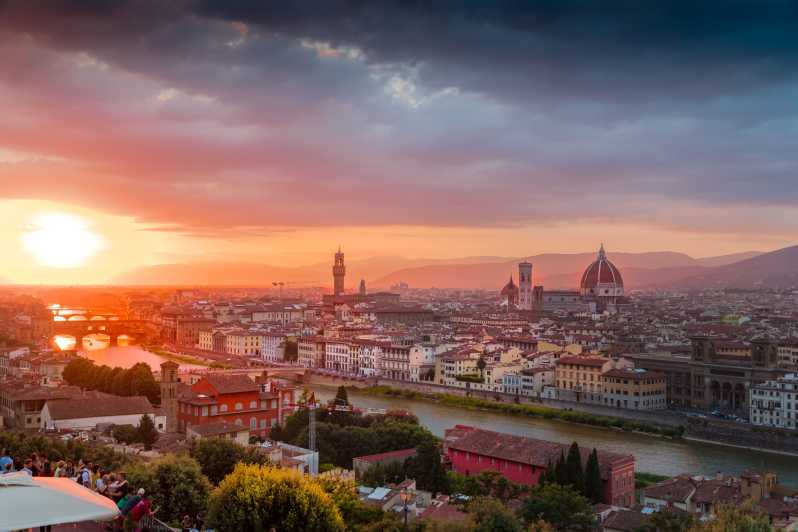
The view from Piazzale Michelangelo over Florence

I start by setting off in the direction of Piazzale Michelangelo which is the postcard viewpoint over the top of Florence before starting the long 10km climb to Imprunetta. On arrival in Imprunetta, I continue south on rolling terrain before starting a beautiful climb called La Panca which is 6km long at 4%. After a short descent from here followed by a 2km climb through the vineyards I get rewarded with an unbelievable 6km fast descent with vineyards and olive groves on either side.

Greve in Chianti

The next 35km is a loop round 4 of the most famous towns of the Chianti Classico wine region, Greve in Chianti, Panzano in Chianti, Radda in Chianti and Castellina in Chianti. Any one of these towns would make for a fantastic week-long holiday and I pass through them all on the one ride. These were the roads that made up a large part of stage 10 of the 2016 Giro D’Italia Timetrial won by a fairly unknown Primos Roglic.

From Castellina its only 40km back to Florence and the terrain is simply a dream. 3 long downhills on silky smooth asphalt and only one gentle climb to the town of San Casciano. 116km with 1600m of vertical and back in the house in time to feed the cat before making a hearty pasta lunch. Riding a bike doesn’t get much better than this and if you are ever in the area I can drop the tcx file or feel free.

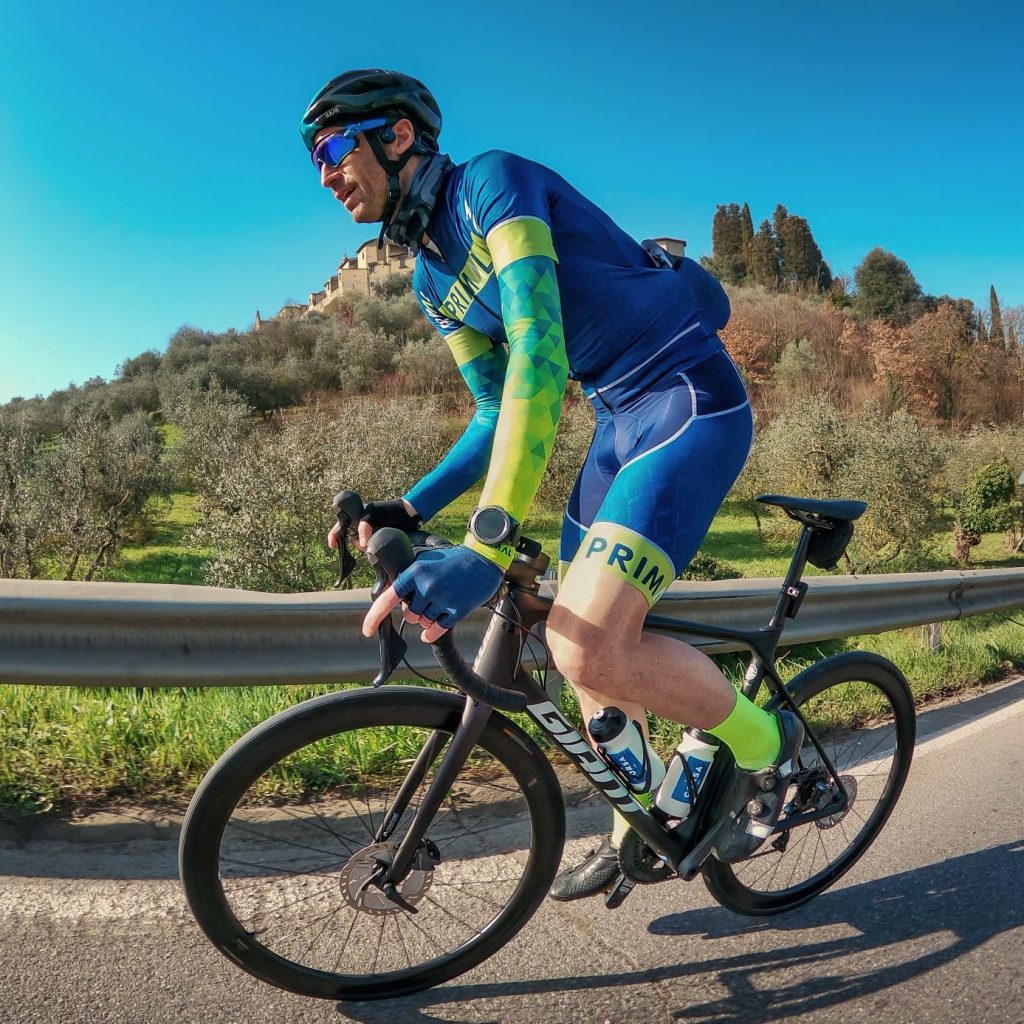
Chris Small on his local roads in Tuscany


Fidele Soul Rides – Frenchmans Cap (Tasmania)

Doug Bruce has offered up two for the price of one with his soul rides in Tasmania. Regularly towards the top of the Ride and Seek Strava Club classification he would have been spoilt for choice for Tassie soul rides.

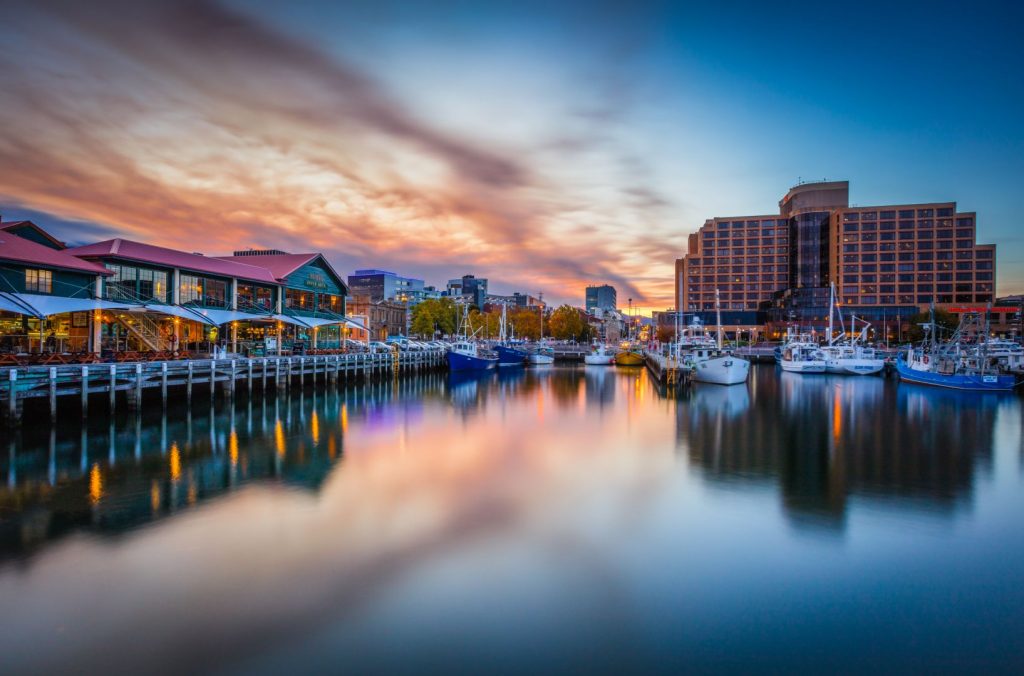
Hobart, Tasmania (credit Tourism Australia)

A “Soul Ride” eh? Well, I’m greedy so I’m going to list two rides: my “go to” ride from home and then the ride I love above all others, my true “Soul Ride”. I reckon this is fair enough because I can only rarely do my Soul Ride – or bits thereof – because it requires fairly involved logistics. The “Go To” ride is a tremendously varied loop that takes me from where I live overlooking the city of Hobart, across the Derwent Estuary, through terrific countryside and then back again.

Here’s the Strava link to my “Go To” Soul Ride :

https://www.strava.com/activities/4820938554

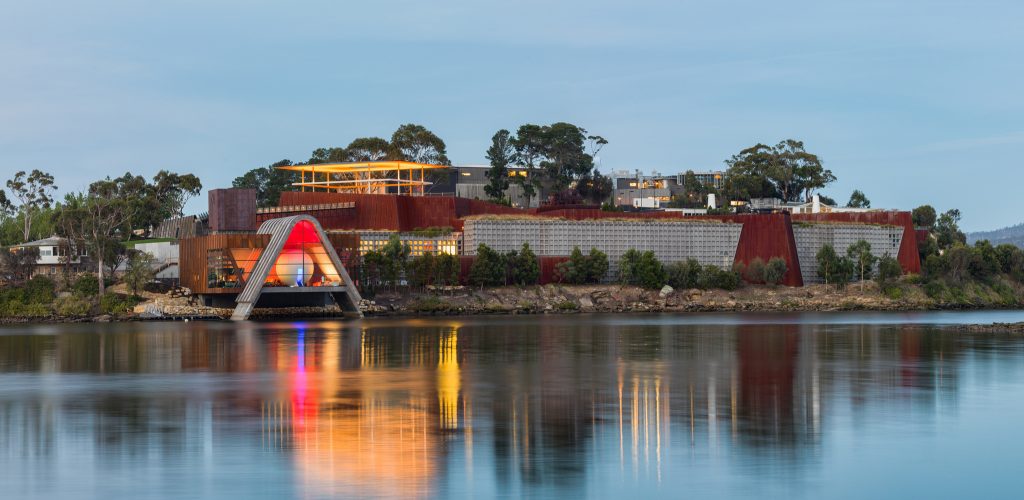
MONA museum (credit MONA)

It takes me down into town, around the historic Hobart waterfront, along the Intercity Cycleway for ~ 10 kms, out past the famous world class MONA, alongside and across the river, along a quiet road through an industrial park, through countryside where there are horses, sheep, alpacas, miniature ponies, cattle, even goats.

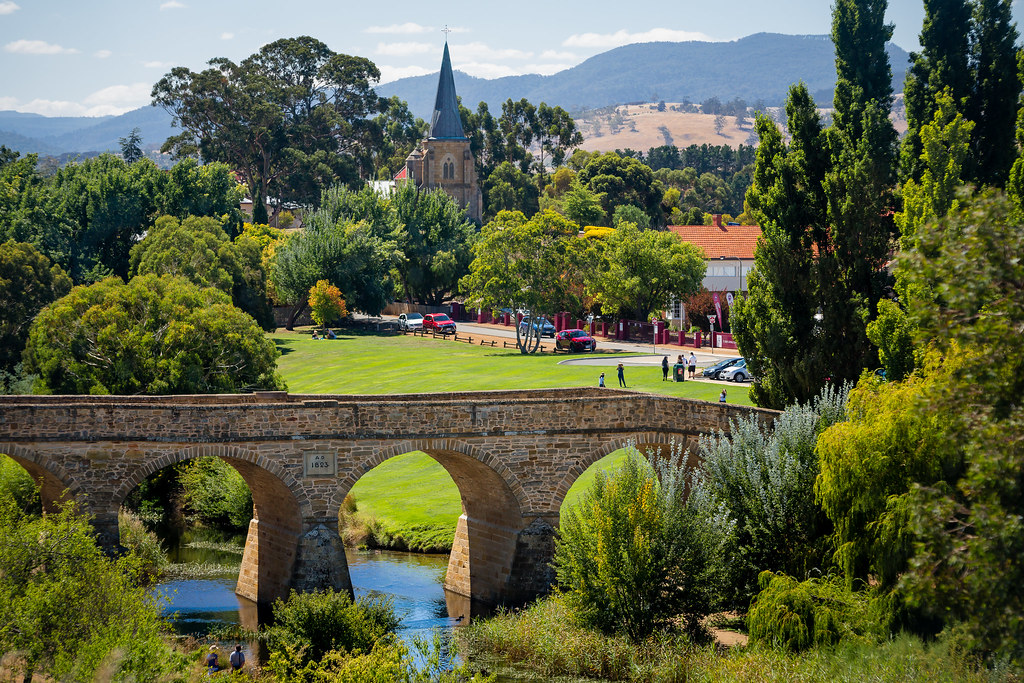
On past hayfields, market gardens, vineyards, and a couple of cellar doors and the road winds its way to Richmond, a historic town with the oldest bridge in Australia. Usually, I stop here for a coffee, especially if I’m with my favorite riding partner.

Richmond, Tasmania

Five kilometers after leaving coffee one arrives at the base of Grasstree Hill, a much-loved steady climb of just over 4km in length. The descent takes you back down towards the Derwent River and the Bowen Bridge. Across the other side, the route winds its way back along the river with wonderful views of kunanyi, the Hors Categorie climb that stands 1272 metres above the city. If you’re likely to visit Hobart sometime down the track and would like to start and finish this ride from a cafe favoured by cyclists have a look at this version of the ride:

https://ridewithgps.com/routes/35708832

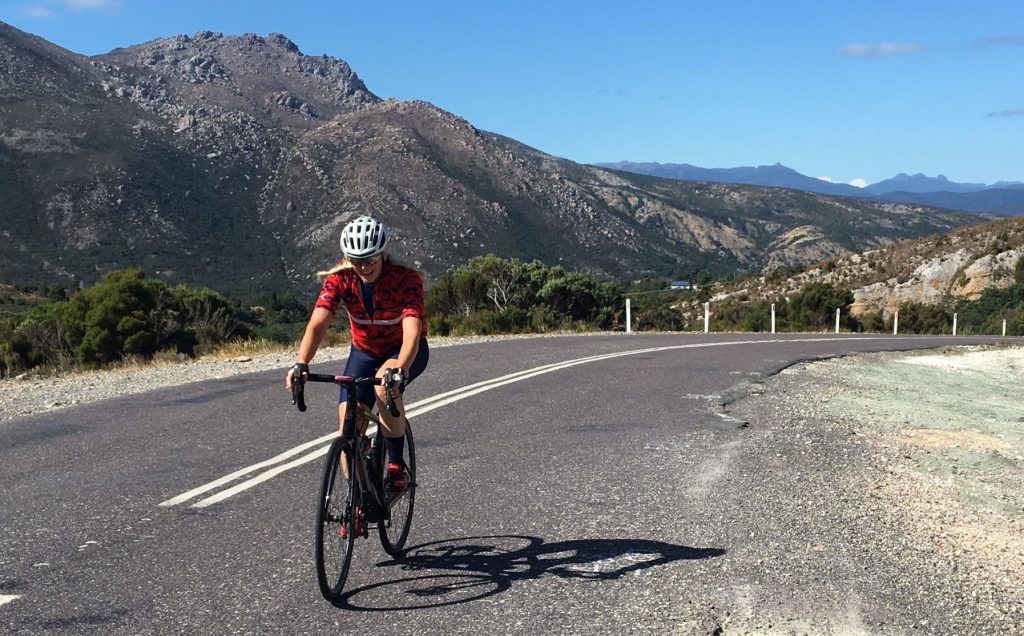
Di riding just above the descent into Queenstown

Were I a better climber, the ascent of kunanyi from Hobart’s waterfront would have to be my Soul Ride. Back in the day it was the penultimate stage of the Tour of Tasmania, where in 1999 Cadel Evans announced himself – via the dulcet tones of one Phil Liggett – as a possible future champion of the Tour De France. That prediction would come to fruition with victory in Le Tour in 2010. It’s 22 kms to the top of kunanyi from the city and on a clear day the 360 degree views are absolutely stunning. For me, the climb to the top is something of an ordeal but it’s all worth it for the fabulous descent!

View of Frenchmans Cap on my Soul Ride

As for my Soul Ride, it’s got to be this one:

https://ridewithgps.com/routes/35709038

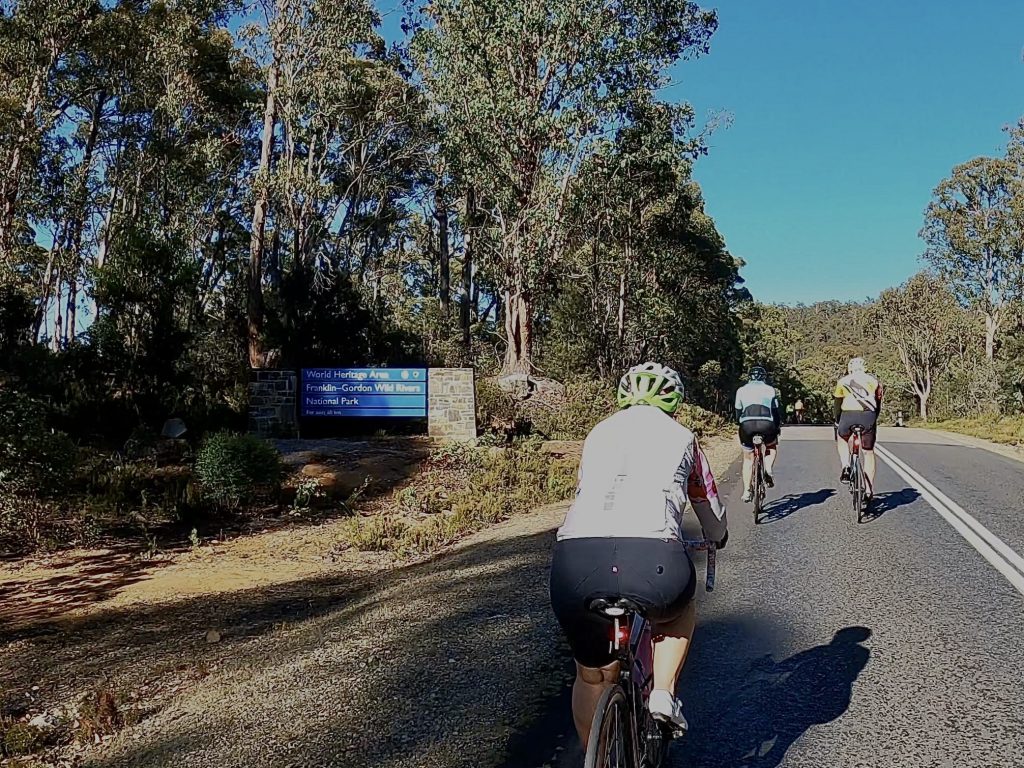
This is especially ‘soul’ if I can organise to do it with Dianne, my wife, and life partner. The route starts at Lake St Clair, the deepest lake in Australia and the terminus for the Overland Track which is the most famous multi-day wilderness hike in Australia. Of the total 90 or so kilometers of riding all but a few kilometers traverse the Southwest Tasmania Wilderness World Heritage Area.

Southwest Tasmania Wilderness World Heritage Area

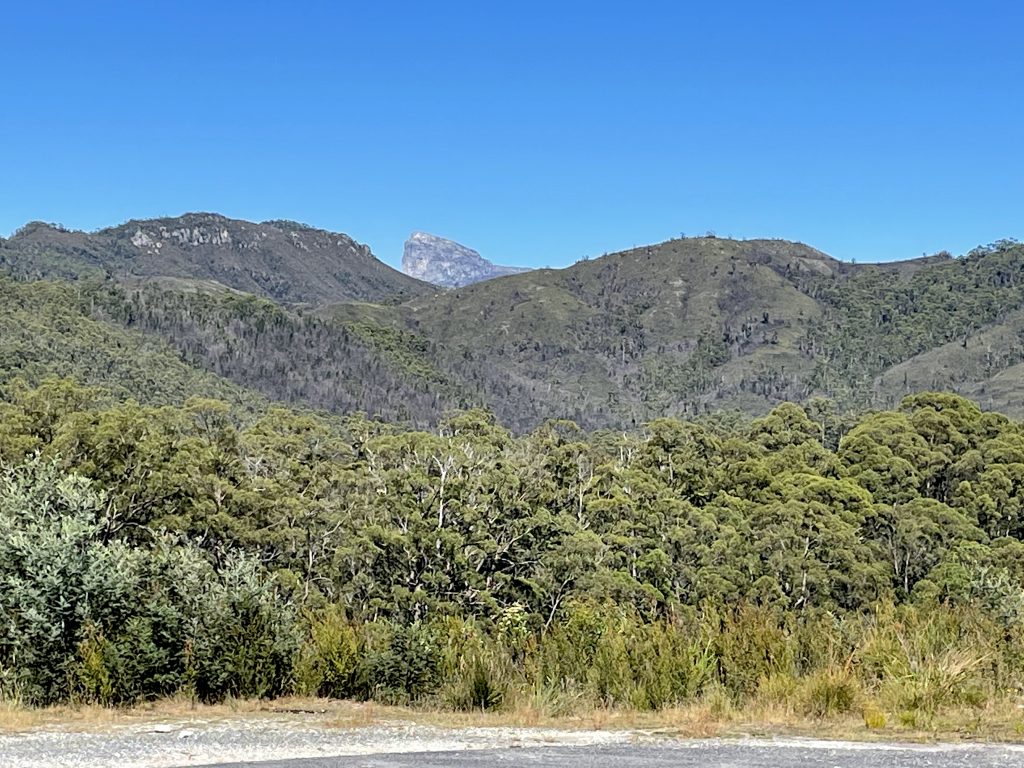
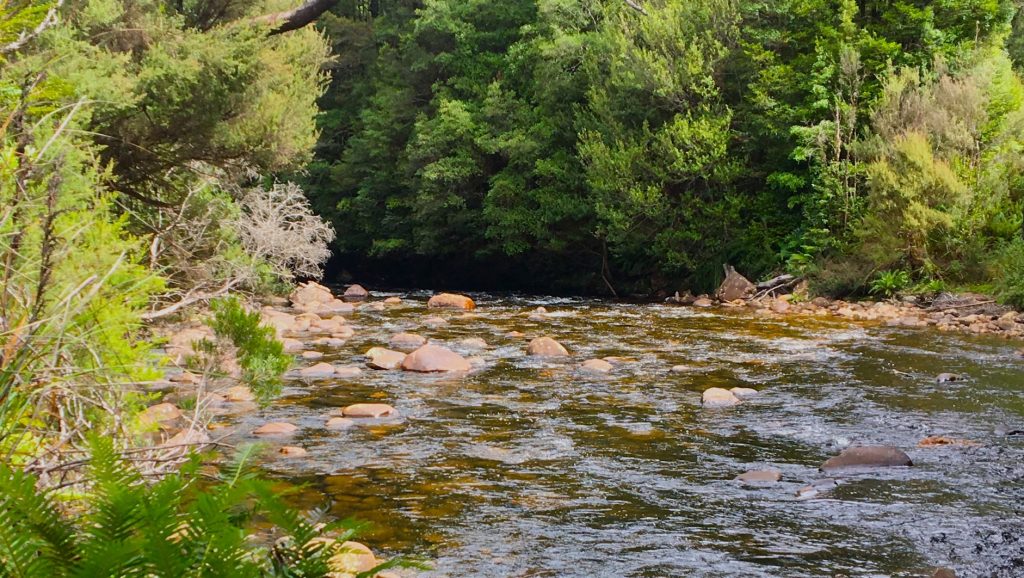
Despite a net elevation loss of 500 metres, there is still about 1000 metres of climbing, but none of it very steep or very long. A big, big highlight of the ride for me is the wonderful descent to the famous Franklin River, but the views along the way – including the mystical, remote Frenchmans Cap – are just wonderful.

Franklin River crossing

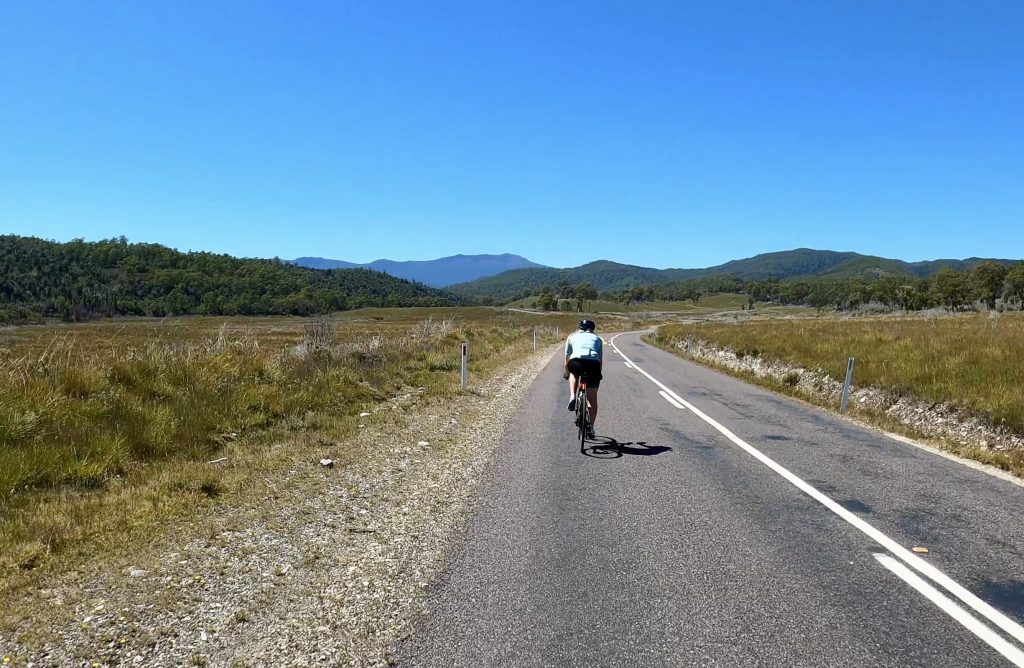
Despite this being the only road from Tasmania’s capital city to the west coast, traffic is never heavy and if you start early in the morning you will see almost no vehicles for the first couple of hours. Much of the ride traverses Buttongrass Plains, a vegetation regime endemic to southwest Tasmania. When you’re not surrounded by buttongrass you are immersed in the Tasmanian temperate rainforest, the air laden with the scent of leatherwood honey.

Buttongrass Plains

Towards the end of the ride you descend to and cross Lake Burbury, one of the large hydro dams in the Tasmania’s southwest. A steady climb takes you to the top of the so-called “99 Bends” descent into Queenstown, with the ride finishing at the historic Wilderness Railway Terminus. Between start and finish there are at least three great spots to stop, relax, sightsee and refresh your water supplies. A truly magical ride.

And as a bonus here’s a great video by Doug of the 99 bend descent down to Queenstown. Some great Tassie imagery to inspire throughout the video.

Doug & Di on Caesar 2016


COVID-19 Self-Testing Kits for USA Travellers

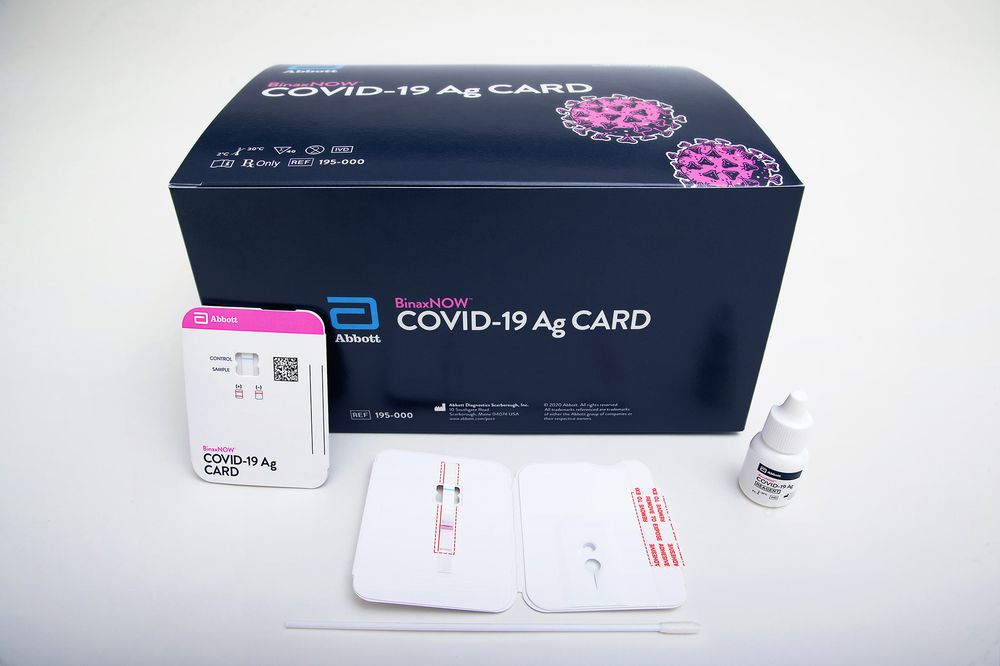
Since the CDC issued new guidelines on he 7th May, anyone travelling back to the United States can now use certain self-administered tests to satisfy the requirement to show a negative COVID-19 test result. The test need to be taken within 3 days of the return flight. We’re currently recommending the Abbott’s BinaxNOW COVID-19 Ag At-Home Rapid Test Kit , and would advise ordering a pack of these self-admnistered tests at least two weeks before departure.

How to purchase and use a self-administered test to satisfy testing requirements on return to US.

BEFORE TRAVEL
Order your test kits before leaving the USA:

We would advise ordering your tests at least a week before your planned departure date, as shipping will take around two days within the US. A pack of 6 tests costs around $150, and allow around $15 shipping costs. You will need to bring your own test kit on tour with you.

When ordering, you will fill out a brief form giving your reason for ordering tests, for which you would select the option “To obtain pre-departure COVID-19 test results for re-entry into the United States as mandated by the CDC“. The site will approve the prescription – individuals only need prescriptions to purchase a pack of tests, but results are valid with or without a prescription. The tests will have an expiration date, but usually have a 9 month shelf life.

You can pack your tests in your carry-on or checked luggage.

Download the App
To take the test during your trip you will first need to download the NAVICA app, which should work on almost all iOS and Android smartphones. Downloading the app and creating an account can be quite time conusming, so we strongly recommend that you do this before departure. Once you have taken your test, the NAVICA app will save the result and create a timestamp, whch you will then need for departure check-in. Everyone in your group will need their own account in the NAVICA app.

DURING YOUR TRIP
Taking the Test

You will need to take the test within three days prior to your flight home.

To take the test go to the eMed website and click “start test.” You do not need to make an appointment, and the service is available 24/7.

Two devices are required to complete the test – the first is the smartphone with the NAVICA app installed, and the other will need a webcam and browser so that you can connect with a doctor. The second device can be a phones, tablets or laptops – we can help with this, so do ask us.

A doctor will connect with you via video chat to confirm your identity and to validate your test result. Anyone with their own personal NAVICA app account can use a self-administered test, and verify their results via eMed website.

Travelling back to the USA

Simply show your NAVICA app at the airport to confirm your certified negative test result.


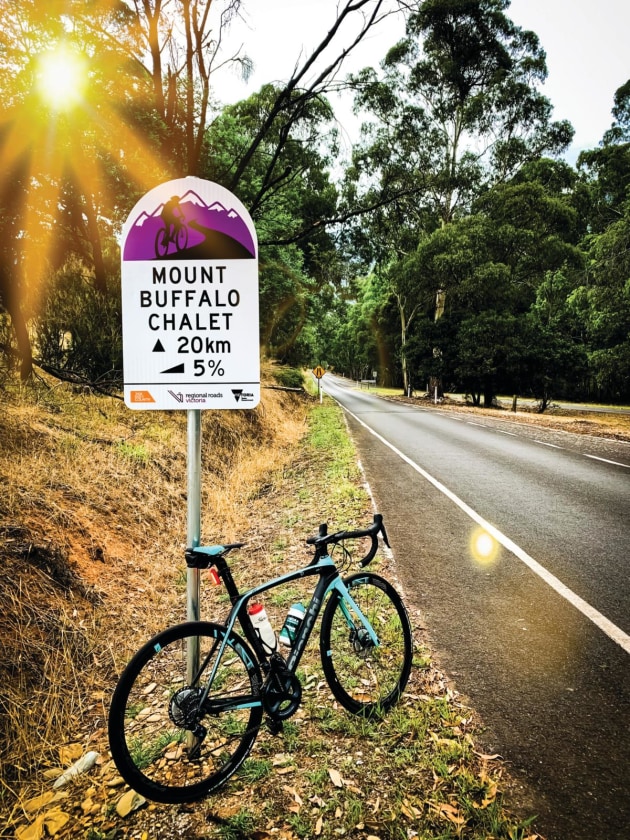
Guide Soul Rides – Mt Buffalo (Australia)

Dave Moore lives in the country town of Cootamundra in NSW, Australia. He guides on our tours Down Under and co-led the inaugural Strzelecki Tour in 2021. His soul ride is from the spectacular Victorian Alps and is a legendary Aussie climb – Mt Buffalo. This climb features as an extra loop option on Strzelecki.

Mt Buffalo was Australia’s first ski field with the Chalet opening in 1910 and is approx 70km round trip from Bright in the Victorian Alps.

The start of the climb and NP entrance

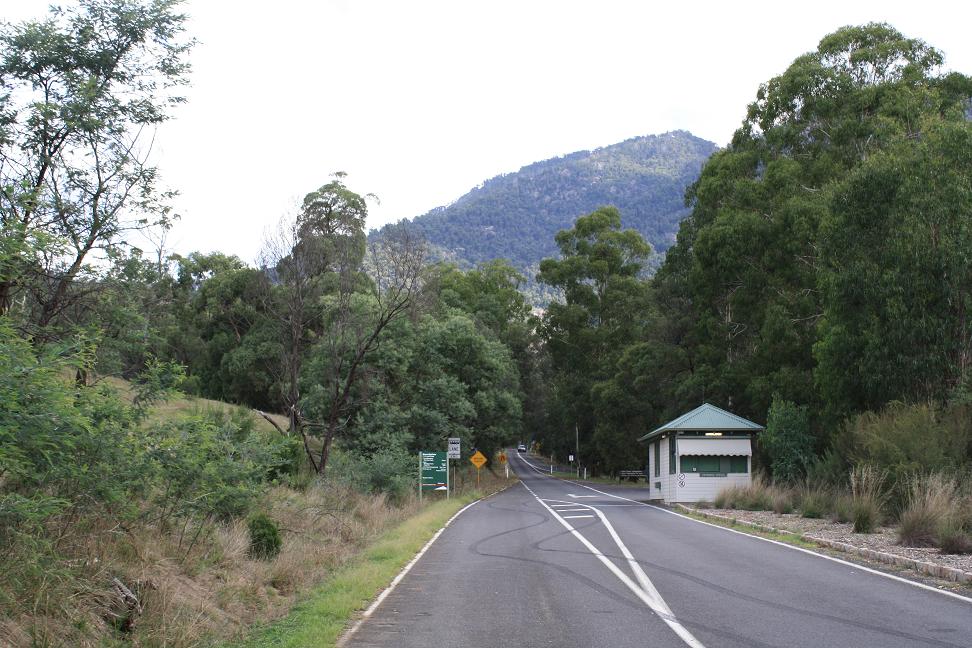
Mt Buffalo National park toll booth signifies the start of the climb, with the road sheltered by tall stands of mountain ash and thick undergrowth, providing protection from the scorching sun and the buffeting winds.

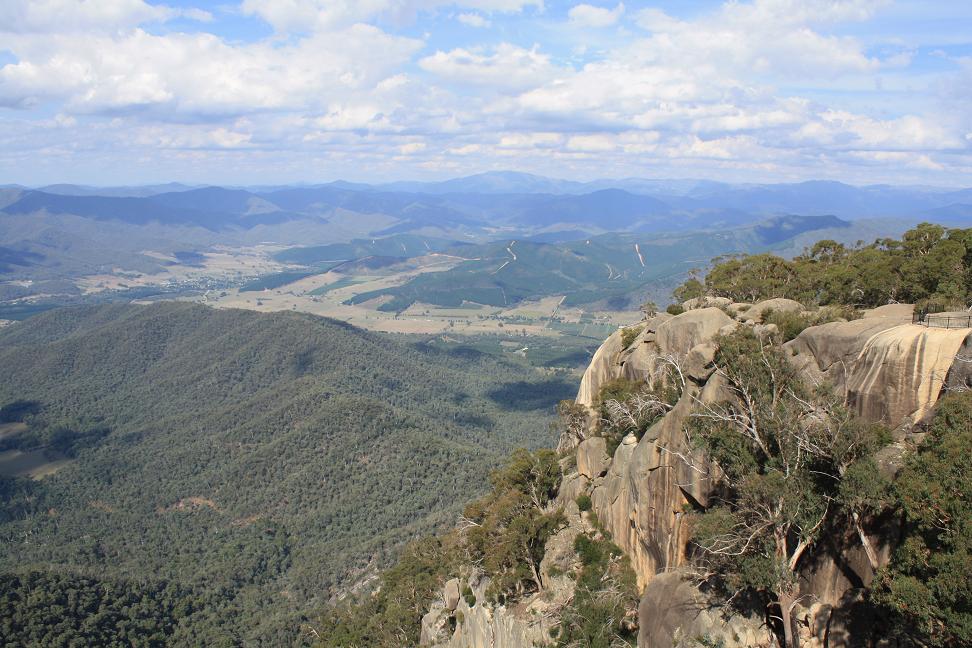
Not long into the ride you pass the car park for trekkers walking the 20kms Big Walk trail to the Chalet. With smooth road surface following the ridge line, multiple hairpins, altitude is quickly gained. Mackeys’ Lookout has views towards Bright and brings a stark change in the landscape with The Font on the left, a rock face of striking granite that seems to rise upwards forever and valley views on the right.

View from the top

A short descent to Mt Buffalo plateau is where I turn left past the cricket pitch, several sharp ramps and just under 21ks you arrive at the Chalet with stunning vistas, making the hard work worthwhile. The joy of the ride can turn to momentary disappointment if the coffee van is closed, ask Cathy who I rode the mountain with on Strzelecki :).

Instead of turning left, you can ride straight on past Lake Catani, lined by smaller snow gums, subalpine grasses, and bogs to Dingo Dell, named due to resident Alpine dingos and onto The Horn, with the final 3kms gravel.

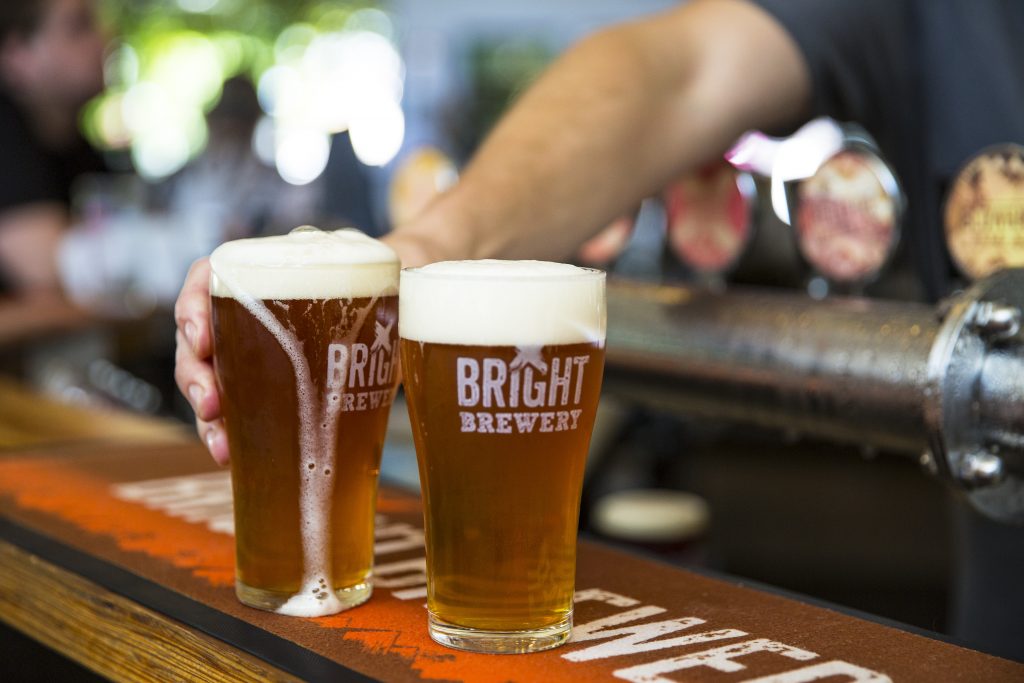
A well earned beer at the end of a legendary climb

A cracking descent followed by a refreshing ale at the Porepunkah hotel or the Bright Brewery brings my soul ride to an end.

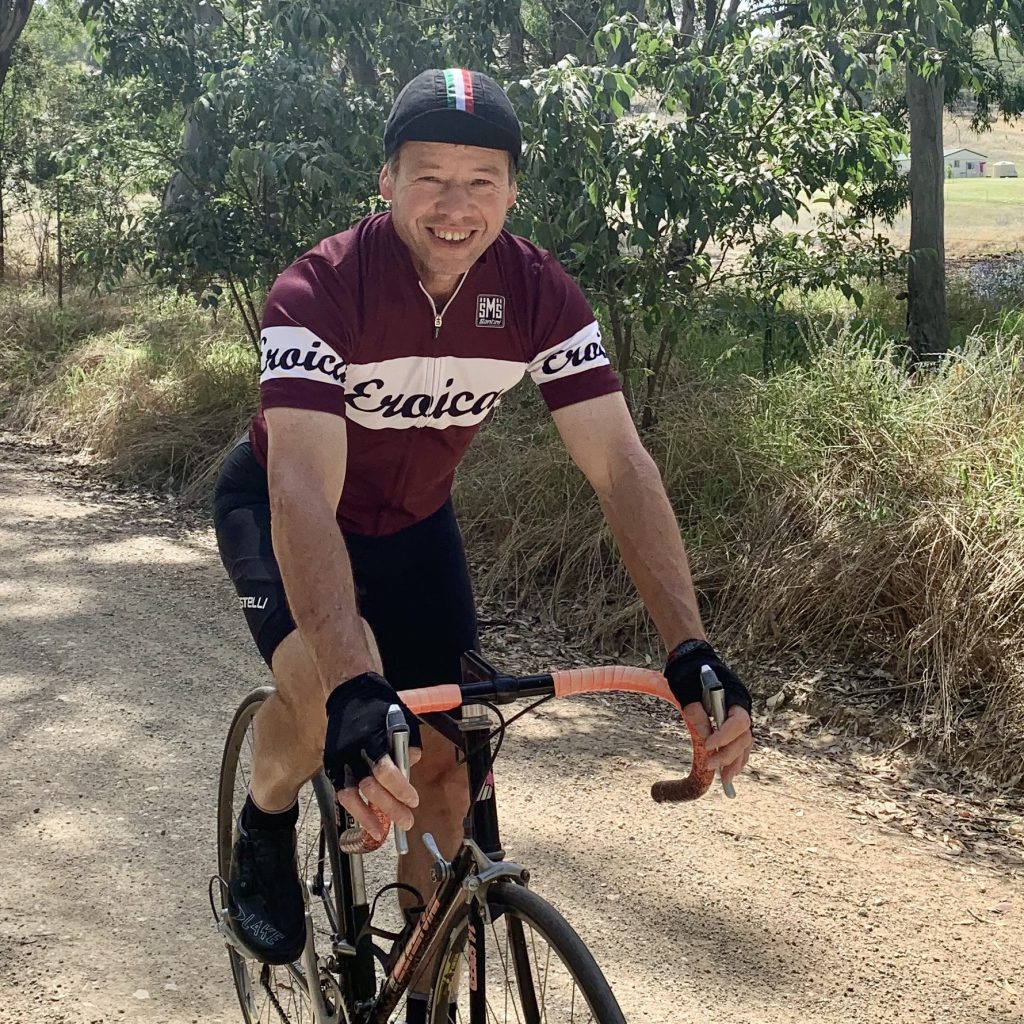
Dave Moore


Guide Soul Rides – Provence (France)
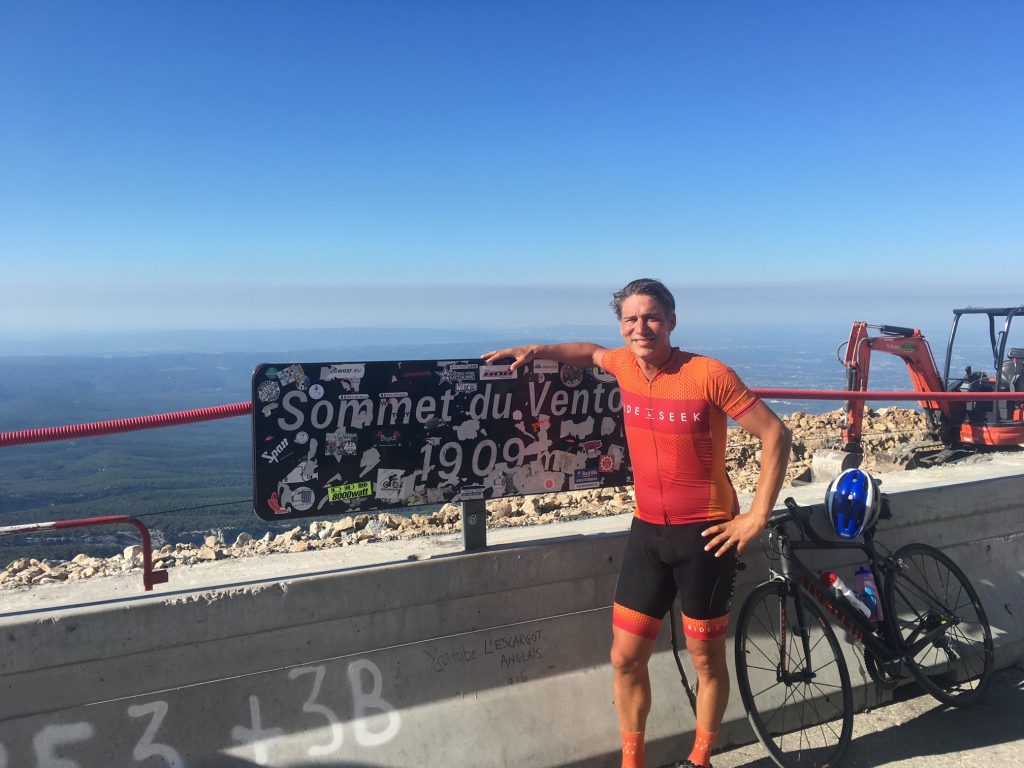
Dylan Reynolds is the founder of Ride and Seek and is based in Provence, France. His chosen soul ride is a 75km(46 miles) loop ride with 1400 metres (4593 feet) of elevation – with an optional out and back from Chalet Reynard to Mont Ventoux!
A soul ride with an iconic out and back option 🙂

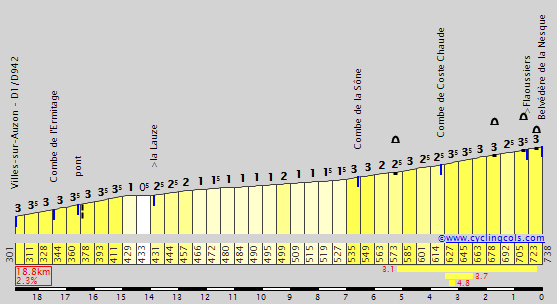
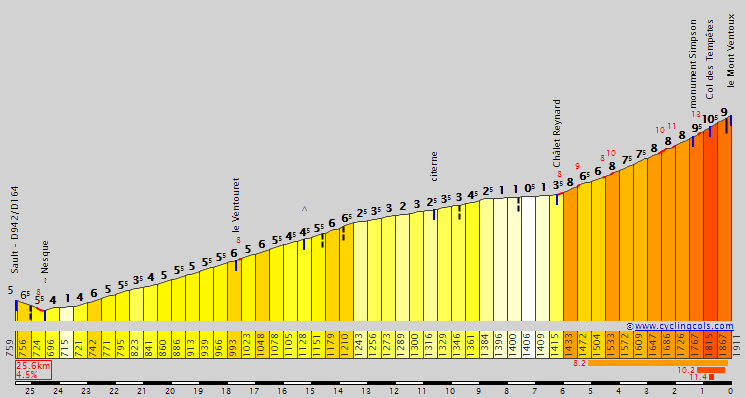
My go-to regular soul ride is an out and back up the Gorges de la Nesque which takes around 2 hours to complete. Whenever I’m short of time and need to clear my head this is my ride of choice. It combines all the elements that I consider important for a soul ride – great views, low car numbers, and not overly arduous. I have a nice warm-up on back roads to the Gorges to warm up the legs and then the climbing begins. The profile below confirms my comment regarding it not being too tough though.

Gorges de la Nesque elevation profile (credit Cycling Cols)

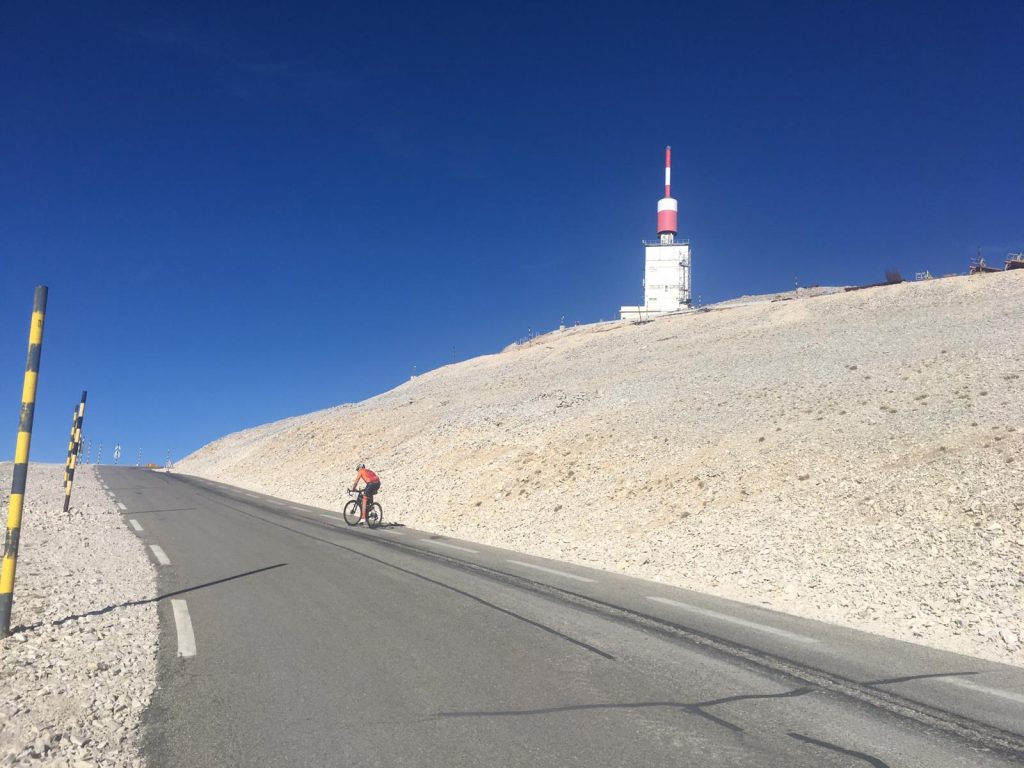
With Mont Ventoux in my backyard though it would be amiss to not include the ‘Giant of Provence’ on my choice of overall soul ride. I have taken the liberty of making the ride to the top an option though which is in keeping with the idea that a soul ride should not blow your legs off :). The ride I profile here is also my favourite loop ride when I have a bit more time on my hands. It incorporates the Gorges de la Nesque, a ride from Sault to Chalet Reynard, descent to Bedoin and then home to Mormoiron. The 6km climb from Chalet Reynard to the summit is an option!

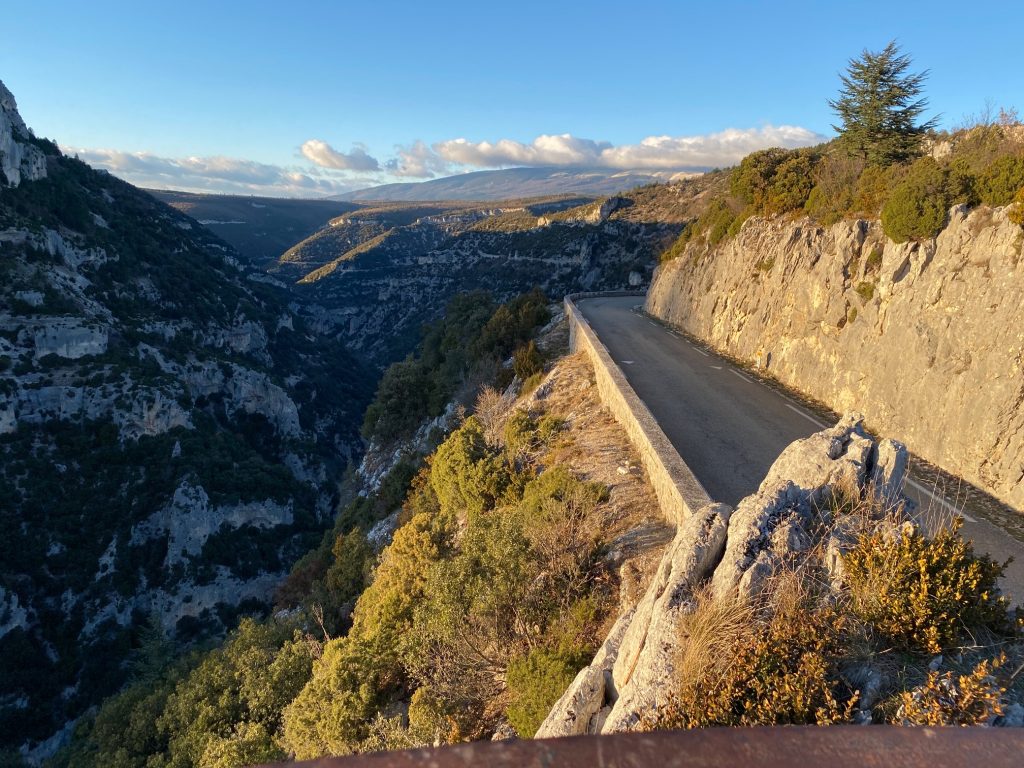
View from the top of the Gorges de la Nesque (738m)

This loop ride is shown here on Strava https://www.strava.com/activities/5018922115/embed/c5c0b00b3ce553253ab7aeb5e5334c9f00b8a48b

The first part takes us from our village to the start of the Gorges de la Nesque via a series of back roads. Once on the gorge road, the great thing is that there is a trunk road that is more direct to get to Sault and so most traffic avoids it. In the summer the tourist traffic can be a little annoying – camper vans and motorbikes in particular – but if you ride it out of season or early in the day you have to yourself.

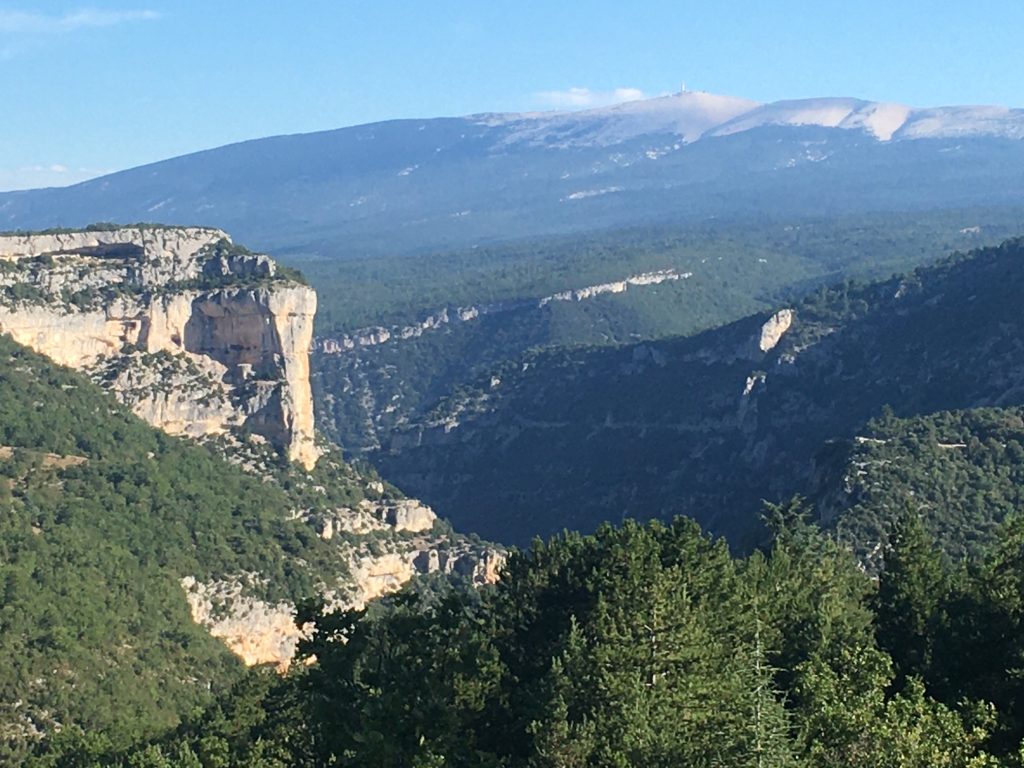
View from the Gorges with Mont Ventoux in the background

One of the surreal things about this ride is the boar you often meet at the top. For those who aren’t expecting it meeting a wild boar on arrival is something of a surprise. It is a common feature given the unofficial boar sanctuary that has been created by an American couple at the top though. Sadly Bill, who was an ex-Marine and member of the Foreign Legion, passed away in 2020 but his wife continues the project.

Meeting the locals

From the top of the Gorges, we ride towards the town of Sault. You can pass through the town for a coffee if you wish, or can turn earlier on to avoid the climb up. There is plenty of climbing to come so any respite is welcome although a pre-climb coffee can also hit the spot. The ride up Mont Ventoux from the Sault side is continued the ‘easy’ one of the 3 ascents. It’s all relative though! The profile below shows the whole climb.

Mont Ventoux from Sault (credit Cycling Cols)

You can see from the profile that the ride up to Chalet Reynard is fairly gentle in terms of gradient and hence the option to head down from there. The extra loop option to ride to the top of Mont Ventoux is more challenging and hard to resist if you’ve got as far as the Chalet though. I tend to do the final out and back climb to the top 50% of the times I do this ride. The ascent to the top is always emotional no matter how many times you have done it.

A 12km out and back up to the top – hard to resist?

Whether I go to the top or just call it a day with the climbing at Chalet Reynard I always grab a bite to eat or at least a drink there. The snack bar does a mean pizza and there is plenty of choice. From here it is time to put on the wind jacket for the super quick descent back down to Bedoin – the most celebrated side of the mountain as it is the classic Tour de France route.

Neapolitan pizza at the Chalet Reynard – anchovies anyone?

At this point, the climbing is done so enjoy the descent! At the bottom there is an option to cut the corner to head more directly back to the village in which we live – Mormoiron – or if I’ve got a bit of time on my hands a beer in Bedoin always welcome. I have hesitation in presenting this ride as an all-time favourite soul ride with or without beer and pizza.


Fidele Soul Rides – Gold Coast (Australia)

Michael Lister lives in a place called Paradise Point in Queensland, Australia. No doubt hard to leave ‘Paradise’ but when he does, his bike ride of choice takes him on a tour of the Gold Coast. Here’s the Strava link to the ride – https://www.strava.com/activities/4777672956

My soul ride takes in the Gold Coast hinterland and our beautiful beaches. I love the crisp clean air and no traffic before heading back to the golden beaches with a view up the coast. My ride starts with the “7 humps”. A series of rolling hills and what’s popularly known as “the wall”…but I ride down the wall so that’s OK.

Lower Beechmont is a popular climb with the locals. It climbs for 10km up to the bus stop. You’ll nearly always find riders sitting having a chat…and contemplating whether to head back down or continue the climb to “the roundabout” (12km) or Binna Burra (23km) with a nice little 1.5km, 15%er at the end.

This is a single day’s ride of 143km if I only go to the bus stop. But I sometimes make it shorter or longer but detouring, at any stage, to explore further or head home. There are many skyscrapers in the distance and plenty of beautiful people in the surf. There are many, many cafés and coffee shops along the coast. Popular with cyclists is Picollo at Miami, Caffene at Lands End. And they are both far enough apart so I can ride off whatever has tempted my taste buds.